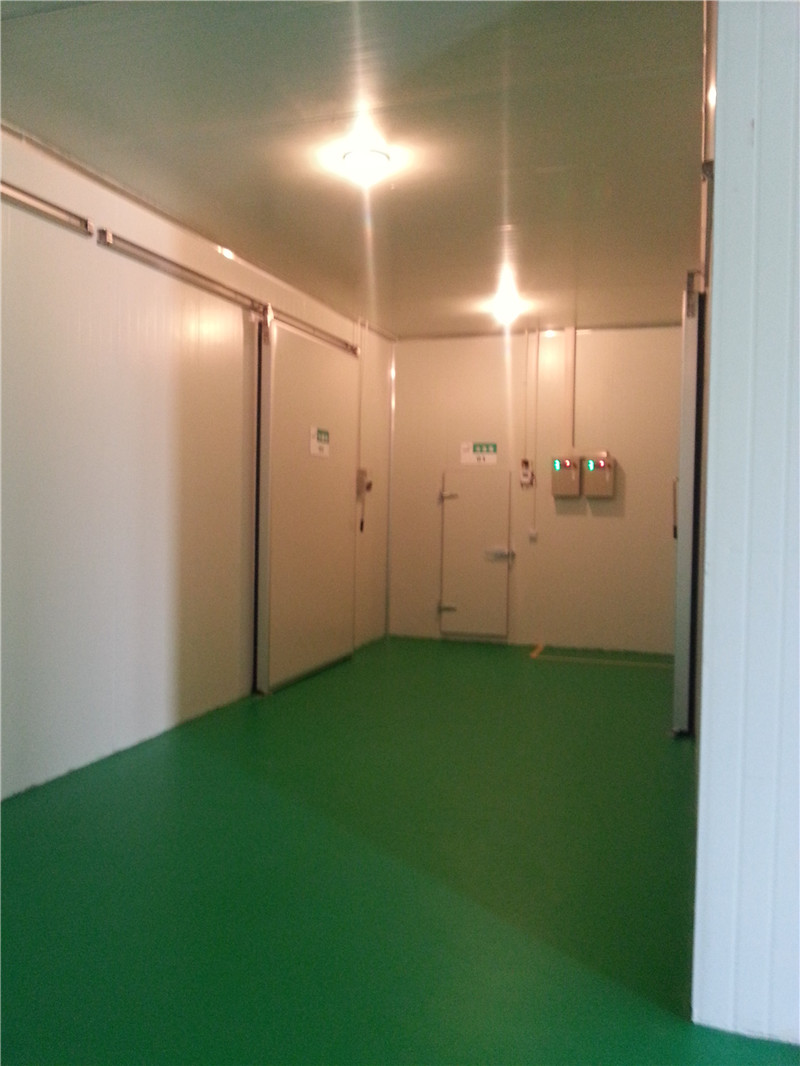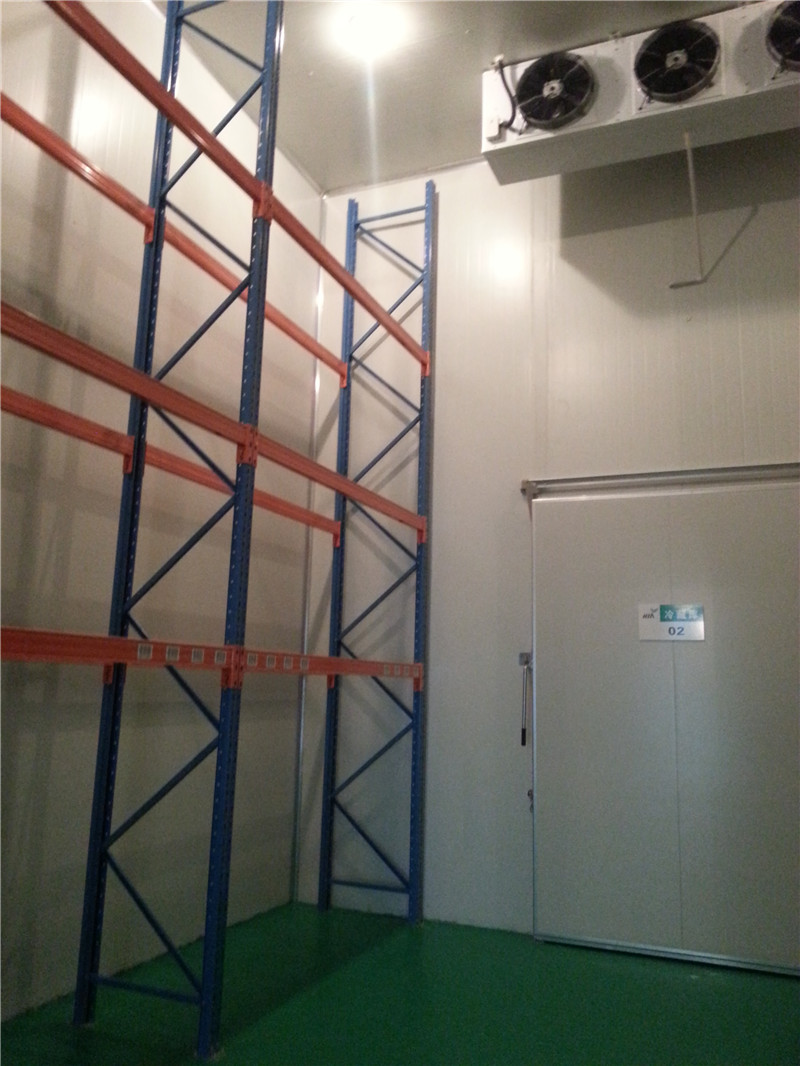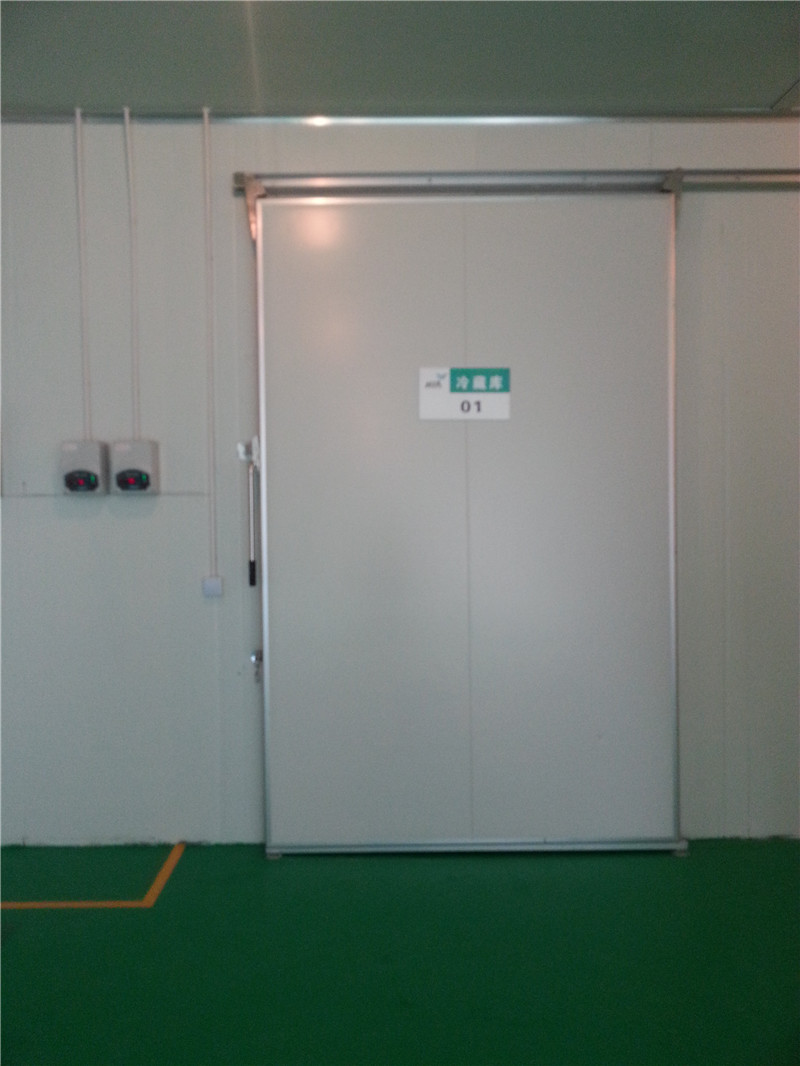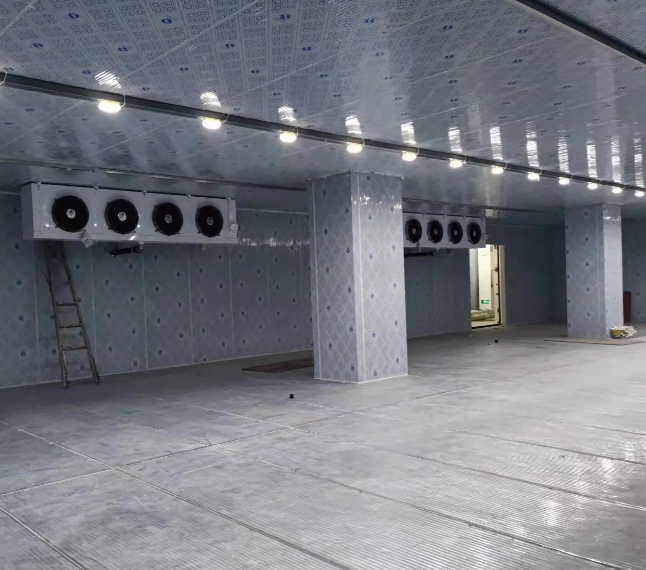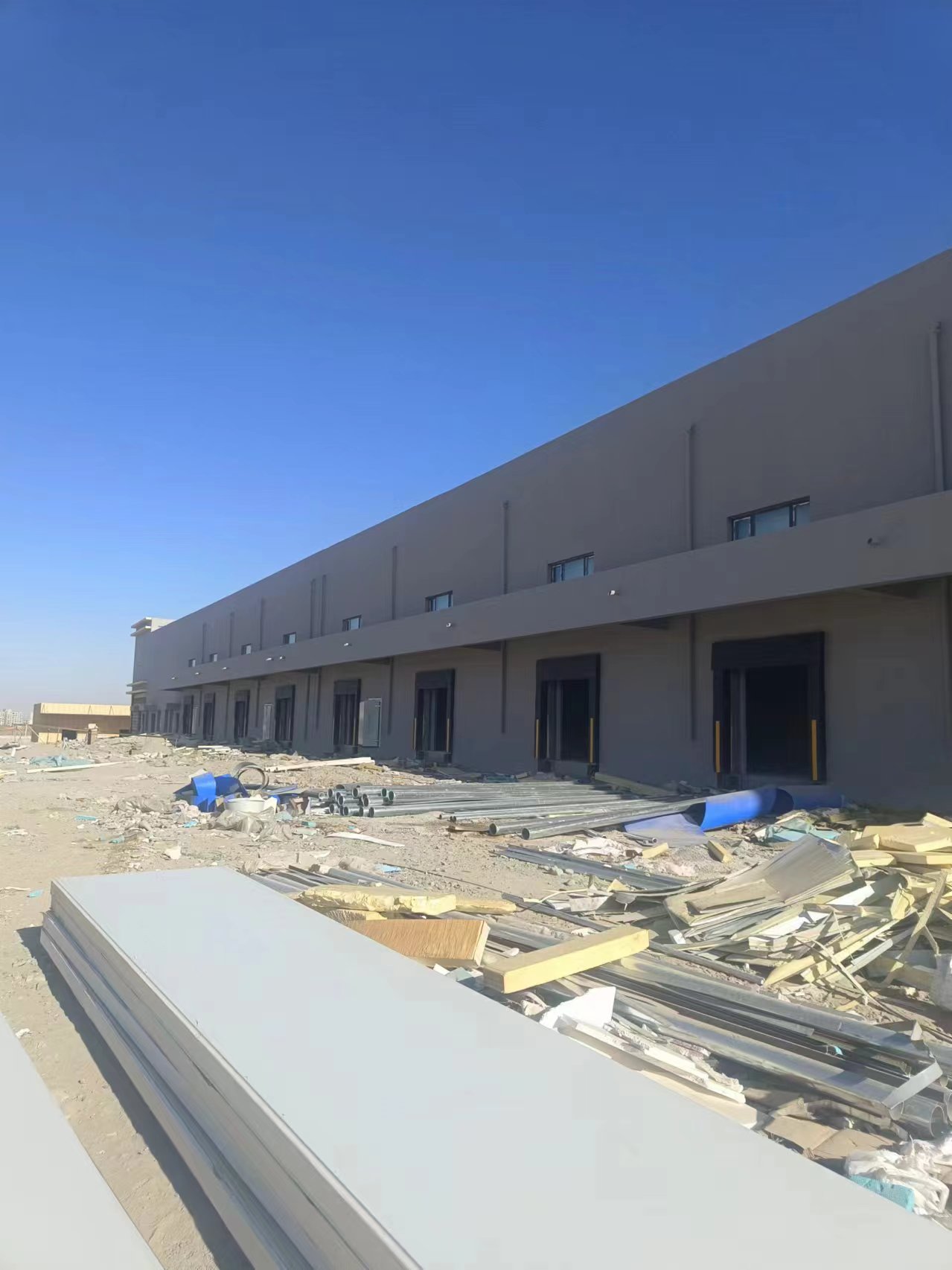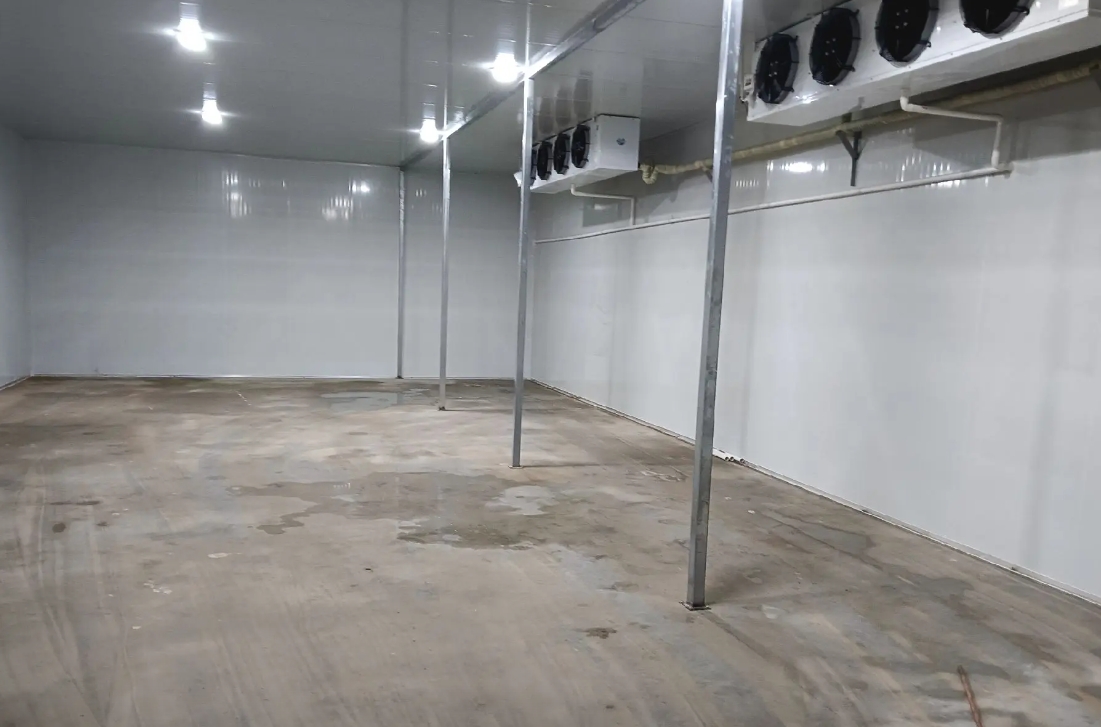
Shanghai Yuanchu Supply Chain's 600m³ low-temperature cold storage in Shanghai Free Trade Zone, equipped with Bitzer compressors and intelligent controls, ensures efficient -18℃~-20℃ logistics storage
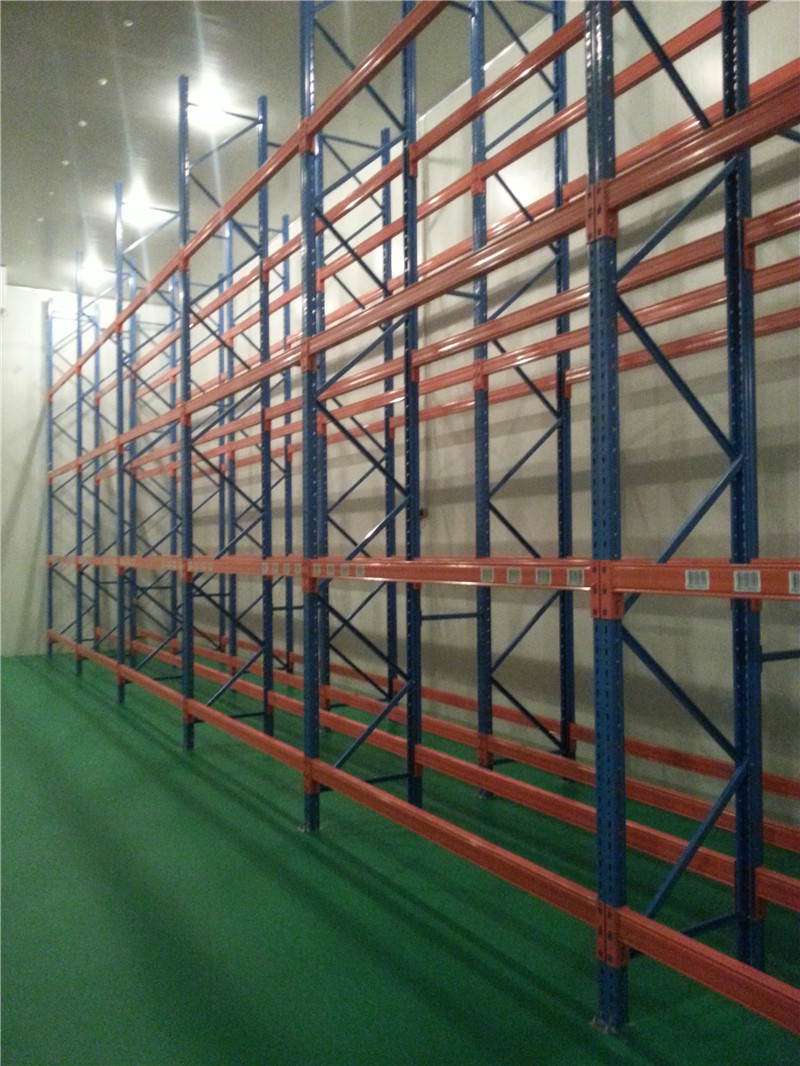
Undertaken by XNAIR for Shanghai Yuanchu Supply Chain Management Co., Ltd., this project is located within the logistics park of Lingang New Area, Shanghai Free Trade Zone, as supporting cold chain logistics warehousing facilities. Construction kicked off in September 2023, with final acceptance and commissioning completed in October the same year. Two standalone low-temperature cold storage rooms were built with a total volume of 600 cubic meters, designed for operating temperatures ranging from -18°C to -20°C. Each warehouse is equipped with a fully independent Bitzer piston refrigeration system matched with air-cooled condensing units, alongside an automatic temperature control and data acquisition system. The core objectives of the project are to fulfill the client’s demand for self-operated warehousing of imported frozen goods, improve the distribution and turnover efficiency of cold chain cargo within the free trade zone, and satisfy customs supervision requirements for traceable temperature records.
Project Background
Shanghai Yuanchu Supply Chain Management Co., Ltd. specializes in warehousing, distribution and urban delivery of imported cold chain goods within the Shanghai Free Trade Zone, with its primary clients being imported food traders. Previously, the company fully outsourced all frozen storage operations. As its business expanded, multiple drawbacks of outsourced warehouses gradually emerged:
First, outsourced facilities adopted inconsistent temperature control standards; storage temperatures rose above -18°C during certain periods, creating risks of quality degradation for frozen products.
Second, the company received low priority for storage slot allocation at third-party warehouses. During customs clearance peaks, loading and unloading waiting times exceeded 2 hours, severely delaying distribution schedules.
Third, long-term outsourced warehousing costs climbed year by year, and storage capacity could not be flexibly adjusted to match business fluctuations.
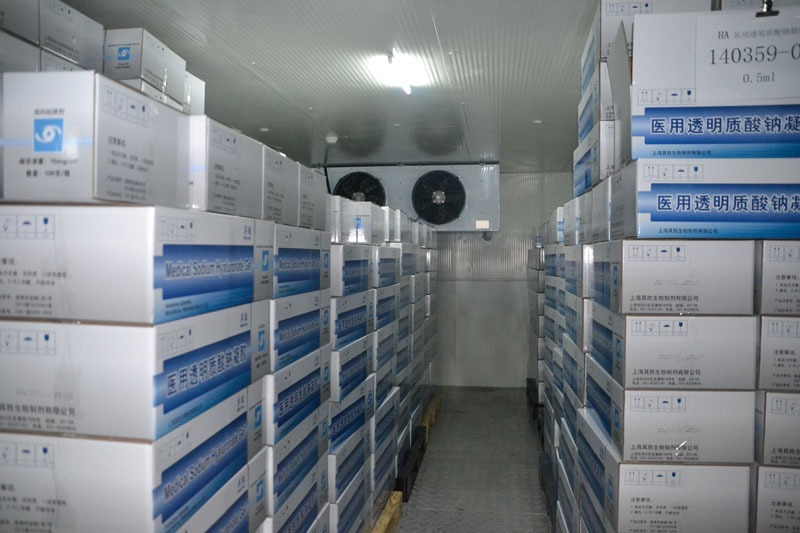
To resolve these issues, the company decided to construct two on-site low-temperature cold storage rooms inside the free trade zone logistics park, with a total volume of 600 cubic meters. The facility is designed for storing imported frozen livestock and poultry meat, quick-frozen prepared foods and other commodities. Mandatory requirements include stable operating temperatures maintained between -18°C and -20°C, built-in system redundancy, and temperature data compatibility with the park’s customs supervision platform to achieve full-lifecycle traceability.
Key Challenges
Challenge 1: Limited machinery room space complicates layout of dual independent systems
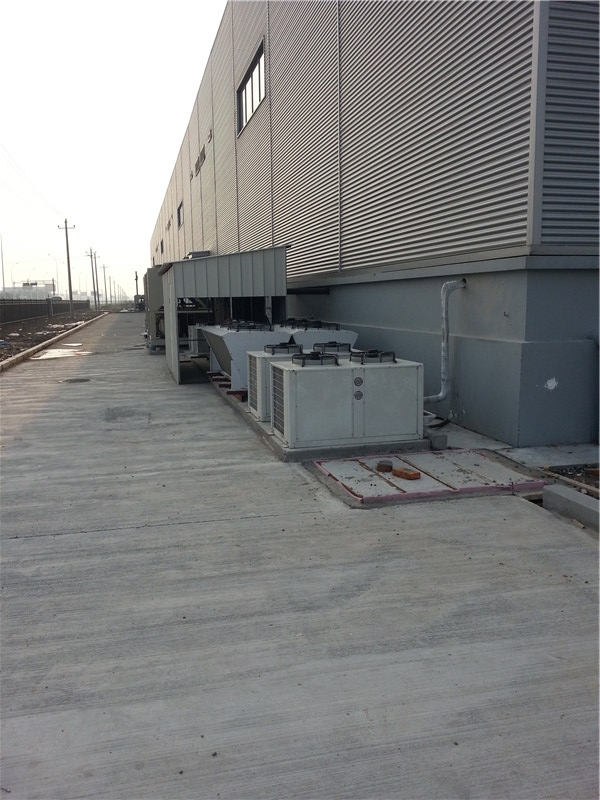
The dedicated machinery room provided by the logistics park covers merely 12 square meters, yet it must accommodate two complete sets of standalone air-cooled condensing units, control cabinets and associated piping, while reserving maintenance walkways no less than 0.8 meters wide. Conventional side-by-side equipment layouts fail to fit within the footprint. Shrinking maintenance clearance would introduce major safety hazards for future operation and maintenance, calling for customized optimization of equipment arrangement and piping routing.
Challenge 2: Frequent loading/unloading triggers severe heat load fluctuations
This distribution-focused cold storage experiences 7 to 9 door openings for cargo handling per day, with each opening lasting 8 to 12 minutes. The resultant heat infiltration far exceeds that of standard static storage warehouses. Frequent temperature swings risk pushing storage temperatures above the -18°C threshold and accelerate frost accumulation on evaporators, reducing refrigeration efficiency. The system design requires extra cooling capacity redundancy and optimized defrost logic to counteract this issue.
Challenge 3: Rigorous customs supervision mandates traceable, platform-integrated temperature data
The Shanghai Free Trade Zone enforces strict temperature monitoring rules for imported cold chain food warehouses. Temperature records must be real-time, tamper-proof, retained for a minimum of 3 years, and capable of connecting to the park’s unified supervision platform. Standard commercial temperature control systems only support local data storage and lack features including data encryption, broken-point resume transmission and platform API integration, necessitating customized development of the control system.
Design Solution
Temperature Design Logic
The warehouse design benchmark temperature is set at -20°C, with the operating control range of -18°C ~ -20°C. Ambient thermal parameters are calculated based on Shanghai’s extreme summer high temperature of 38°C.
Heat load calculation covers heat infiltration from 8 daily door openings, heat carried by incoming goods, heat dissipation from lighting and equipment. A 15% cooling capacity redundancy is reserved to guarantee stable temperatures under peak operation conditions.
Refrigeration System Design
Two fully independent piston refrigeration systems are configured, each serving one 300 m³ cold storage room, with a single system capable of fully meeting the cooling demand of its corresponding warehouse. Bypass pipelines and switching valves are installed between the two systems. If one unit malfunctions, valves can be switched to allow the other system to temporarily bear the cooling load of the faulty warehouse, securing product storage safety.
Air-cooled condensers are adopted, eliminating the need for municipal cooling water supply, matching the supporting conditions of the logistics park and lowering operation & maintenance difficulty.
Backup System Design
The control system is equipped with an uninterruptible power supply (UPS), which can sustain temperature data collection and upload functions for no less than 2 hours during mains power failure. The refrigeration system is fully fitted with pressure and temperature protection devices that automatically shut down the unit and trigger alarms once abnormal conditions occur.
| Equipment Name | Brand & Model | Function |
|---|---|---|
| Semi-Hermetic Piston Refrigeration Compressor | Bitzer 4TES-9Y | Provides power for refrigeration cycle, compressing low-pressure refrigerant into high-pressure & high-temperature gas |
| Air-Cooled Condensing Unit | Bitzer FNVT-090 | Exchanges heat with ambient air via axial fans to complete refrigerant condensation |
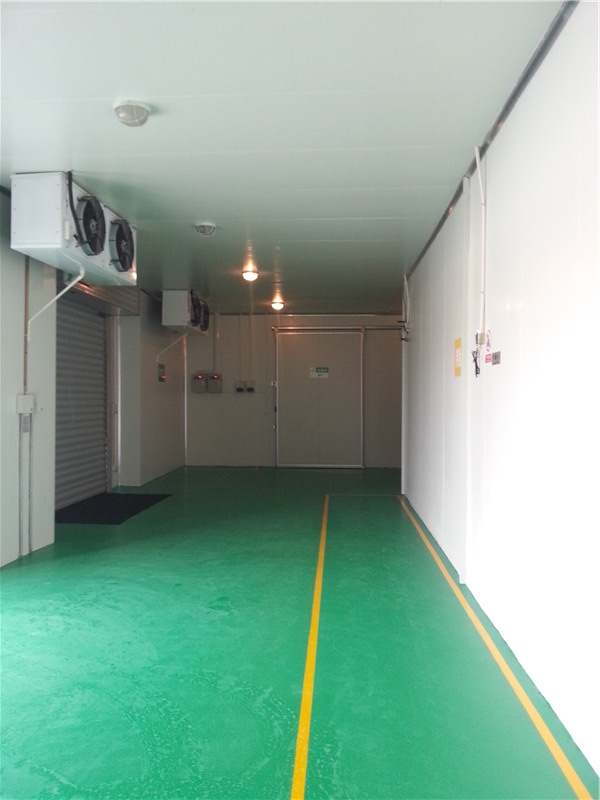
| Ceiling-Mounted Air Cooler | Gaoxiang DD-40/120 | Enforces forced air circulation and heat exchange inside warehouses for temperature reduction |
| PLC Automatic Control Cabinet | Siemens S7-200 SMART | Collects temperature and pressure data; controls compressor startup/shutdown and capacity regulation |
| Polyurethane Insulated Sandwich Panel | 150mm thick with Baosteel steel facing (density: 40kg/m³) | Warehouse enclosure structure to block heat conduction and reduce cold loss |
| Thermostatic Expansion Valve | Danfoss TEX5 | Throttles and depressurizes refrigerant; automatically adjusts liquid supply based on superheat |
The total construction cycle of this project is 28 days, strictly executed in accordance with the construction schedule.
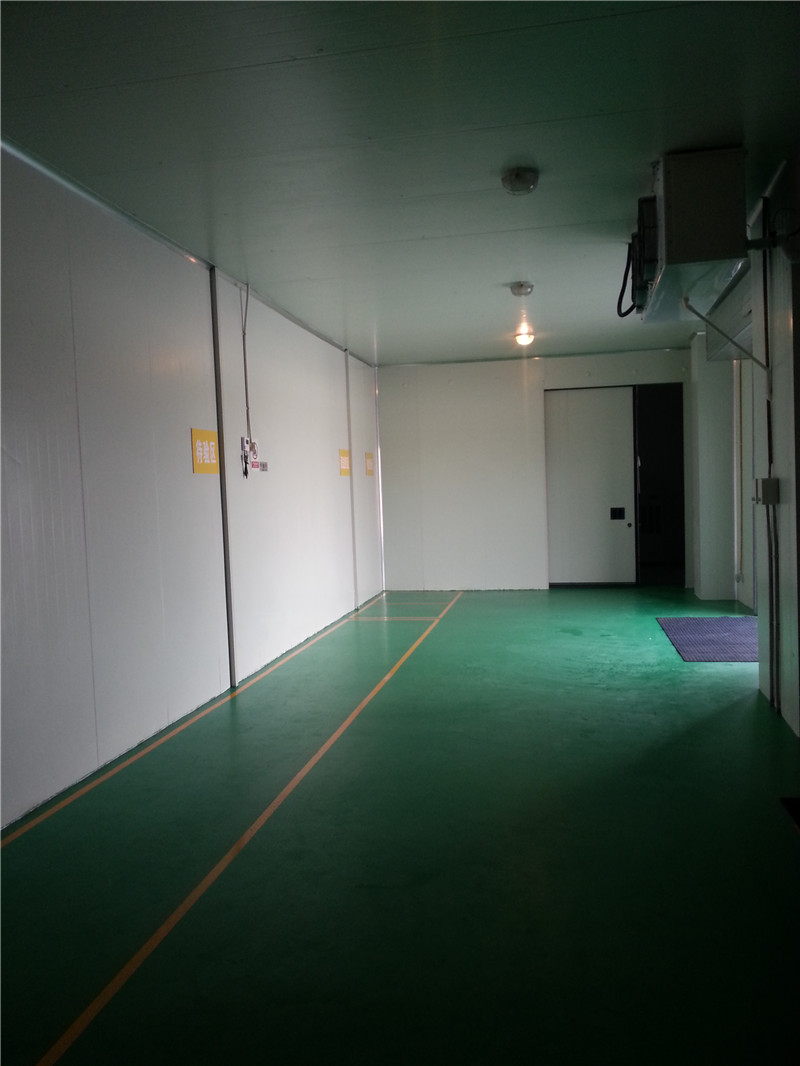
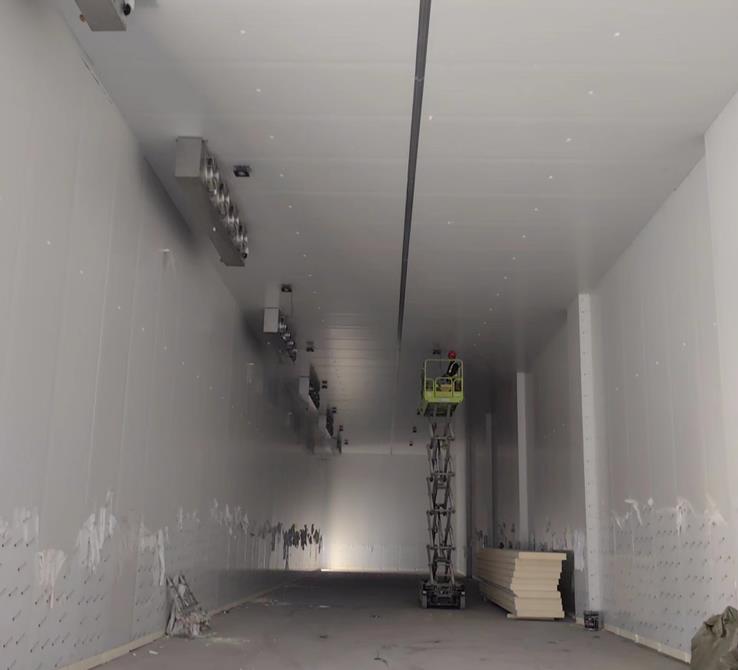
During insulation panel installation, 150mm-thick polyurethane sandwich panels with tongue-and-groove joints are used for wall and ceiling assembly. Polyurethane foam is injected to seal all panel seams. Aluminum trim strips and vapor barrier films are applied at the joints between panels and floors to prevent moisture infiltration into the insulation layer.
For refrigeration equipment installation, air-cooled condensing units are mounted on outdoor machinery room platforms with concrete vibration-damping bases; unit horizontal deviation is controlled within 0.1 mm/m. Indoor air coolers are ceiling-hung with a 200 mm ventilation gap reserved between coolers and ceilings. Air outlets are arranged along the warehouse length to ensure even air distribution.
Seamless steel pipes are used for piping construction with full GTAW argon arc welding; pipe ends are polished and cleaned prior to welding. After piping installation, a 2.4 MPa nitrogen pressure retention test is performed for 24 hours, with allowable pressure drop limited to ≤0.02 MPa. The system is then vacuumed down to below -0.1 MPa. All pipes are wrapped with 30 mm rubber & plastic thermal insulation cotton and covered with aluminum foil for outer protection.
In electrical installation, power cables and signal cables are laid separately with a minimum spacing of 200 mm to avoid signal interference. Control cabinets are reliably grounded with grounding resistance tested below 4 Ω. Temperature sensors are installed at warehouse return air zones and cargo storage areas to ensure readings accurately reflect actual storage temperatures.
Commissioning & Acceptance
Temperature Testing
A no-load cooling test is carried out first. Under an ambient temperature of 32°C, both warehouses cool down from an initial room temperature of 25°C to -20°C in an average of 2 hours and 47 minutes, meeting design standards.
After temperature stabilization, 9 temperature measuring points are set inside each warehouse (3 layers vertically, 3 points per layer). Continuous 24-hour monitoring data shows temperature deviation at all points is no more than ±0.6°C, satisfying uniformity requirements.
Operational Testing
A 72-hour continuous full-load test is conducted, simulating 8 daily door openings of 10 minutes each. Test results show the maximum temperature rise during door opening reaches 1.8°C, and temperatures drop back below -18°C within an average of 12 minutes after door closure.
In dual-system switchover testing, the total time for valve switching and unit startup is less than 30 seconds, with no obvious temperature fluctuation during the process.
Acceptance Workflow
The construction team first completes self-inspection and rectifies all installation defects. Project engineers then conduct separate acceptance checks for four modules: warehouse insulation, refrigeration system, electrical system and control system.
Finally, the client and a third-party testing institute are invited to verify temperature uniformity and issue an official test report. Once all parameters comply with design and code requirements, both parties sign the final acceptance certificate.
Verification Results
Third-party temperature verification data collected during the project’s final acceptance shows that over 48 consecutive hours of operation, the temperature range of the two cold storage rooms remained between -18.1°C and -19.8°C, with temperature uniformity deviation at all measuring points ≤0.7°C, fully meeting the design target of -18°C ~ -20°C.
The two independent refrigeration systems operate steadily with a failure switchover response time of ≤30 seconds. When only one system is running, warehouse temperatures can be maintained below -15°C for 2 hours, satisfying the system redundancy backup requirements.
Actual Operational Performance
In the six months since commissioning, under normal operating conditions with 7 daily loading and unloading cycles, warehouse temperature fluctuations have consistently stayed within ±1°C, with no instances of temperatures rising above the upper limit threshold.
The automatic control system adjusts compressor capacity dynamically based on real-time warehouse temperatures to deliver cooling on demand and cut unnecessary energy consumption.
Temperature data is uploaded in real time to the Shanghai Free Trade Zone customs supervision platform, stored for a minimum of three years, and supports on-demand export for traceability, fully complying with regulatory standards.
To date, the equipment has accumulated over 4,200 operating hours without any unplanned shutdown malfunctions.
Project Benefits
Warehousing Efficiency
With in-house cold storage, the waiting time for cargo loading and unloading scheduling has been shortened from 2 hours under outsourced warehousing to 20 minutes, lifting goods distribution turnover efficiency by more than 40% and enabling rapid cargo dispatch right after customs clearance within the free trade zone.
Management Optimization
The automated temperature control system enables automatic temperature logging and abnormal alarm notifications, reducing manual patrol workload and cutting the required number of daily operation and maintenance staff by one person.
Regulatory Compliance
The standardized temperature control and full data traceability system eliminates risks of cargo detention, fines and regulatory penalties stemming from substandard temperature management.
No matter your industry, no matter how complex your refrigeration needs, XNAIR Cold Storage can provide you with customized, energy-efficient solutions. Contact us now to start your successful project!
Contact XNAIR Cold Storage Now →Hedong Canteen Cold Storage Project at East China Normal University: Customized catering cold storage solution with German Bitzer system, -18℃ and 2-8℃ dual-temperature zones, energy-efficient design...
View Details →Shanghai XNAIR builds climate-resilient seed cold storage for Wuwangnong Seed in Lishui, maintaining 0-10℃ stability at 43℃ ambient with 48hr backup power, ensuring genetic resource security....
View Details →XiangNing Cold Storage provided EPC solutions for Hetian Eheng's agricultural cold chain logistics center in Pishan County, including thermal insulation materials, installation, and intelligent contro...
View Details →Shanghai XNAIR delivers 5-10℃ adjustable cold storage for Xihekang's semiconductor silicone raw materials in Xuhui, using Embraco compressors and modular design to ensure material stability for el...
View Details →Shanghai Haohai Biotech's 2024 pharmaceutical cold storage project, featuring German Bitzer refrigeration & Schneider control systems, meets GMP/ISO standards for high-precision medical storage....
View Details →Shanghai XNAIR delivers fire-resistant 0-5℃ tobacco leaf cold storage for Jiangxi Tobacco Research, using German GEA refrigeration and B1-grade insulation to meet agricultural research & food safe...
View Details →Phone
+86 180 1742 6215Tel
Shanghai XiangNing Electromechanical Equipment Co., LTD XML