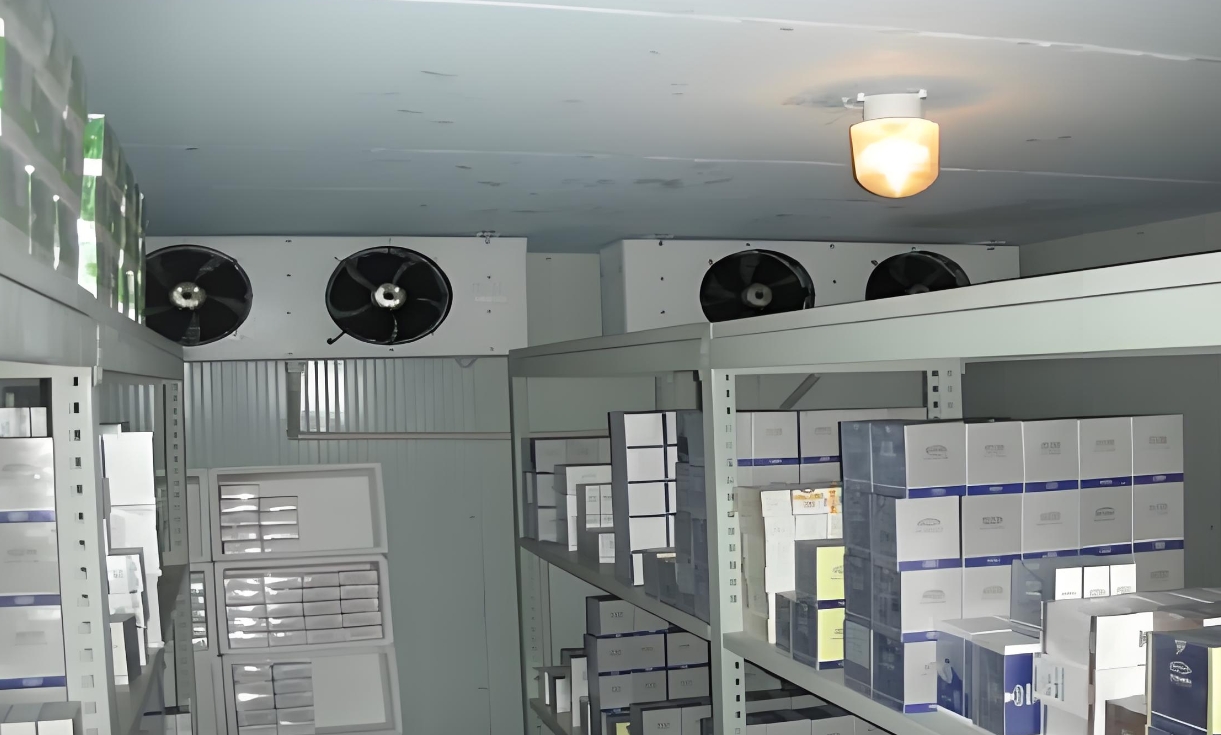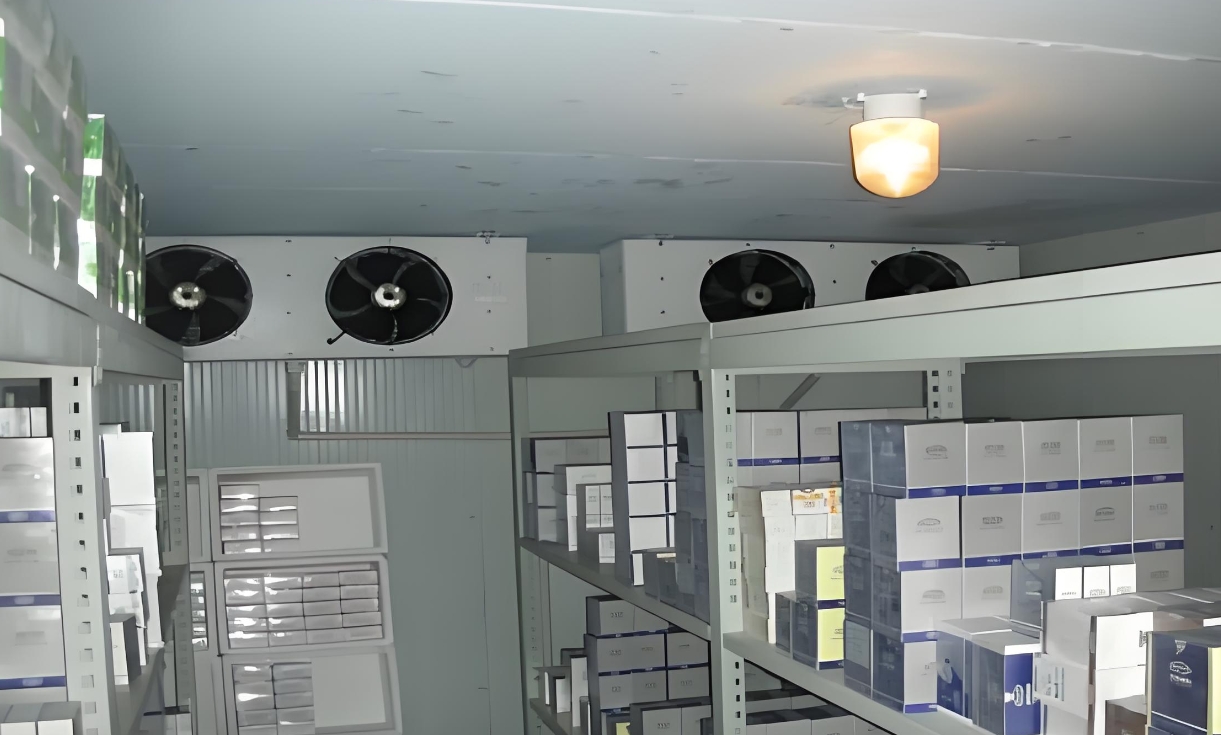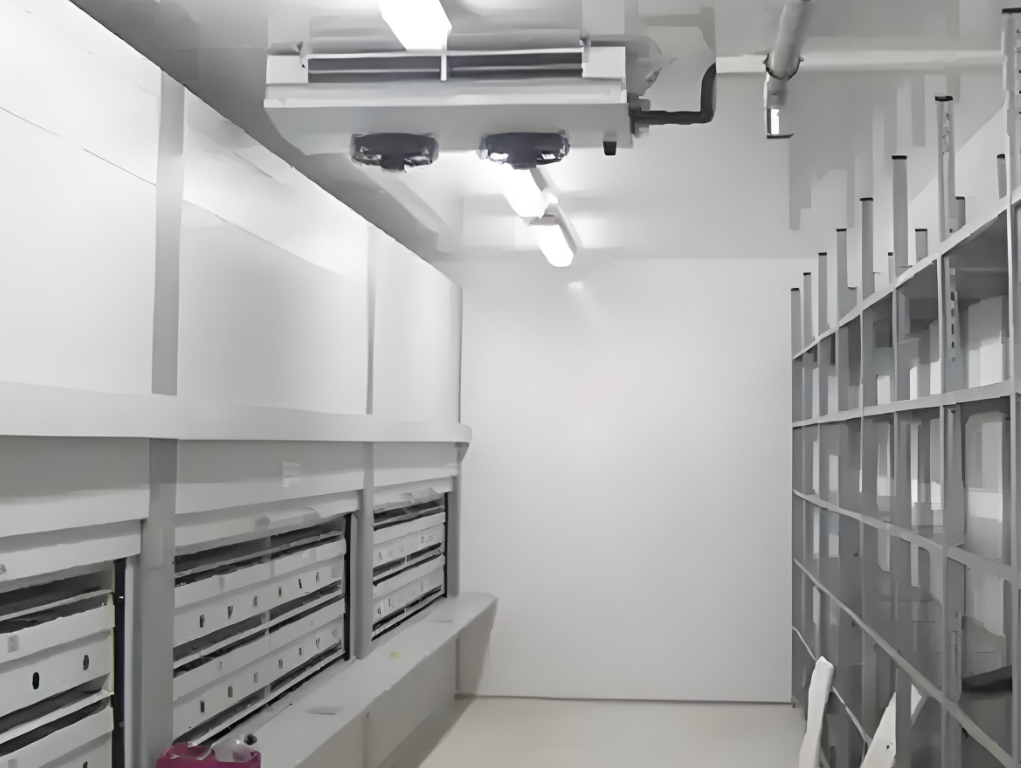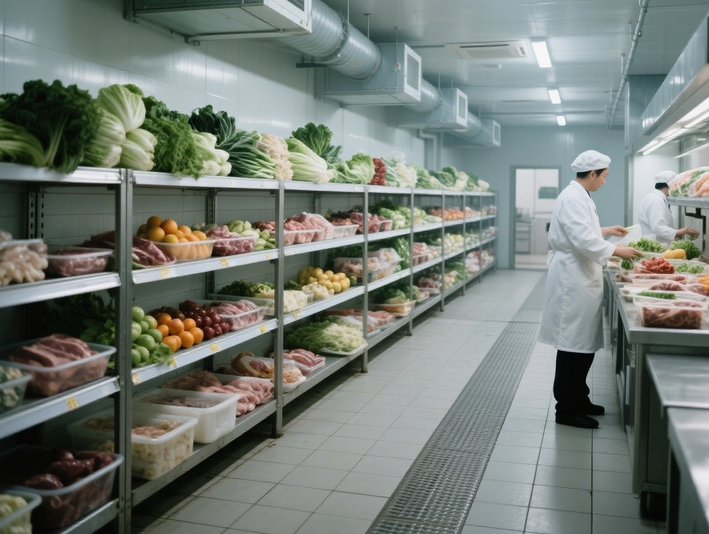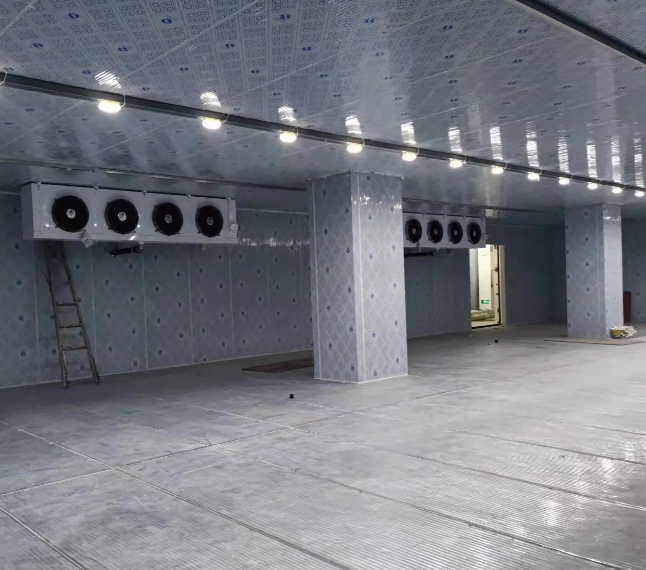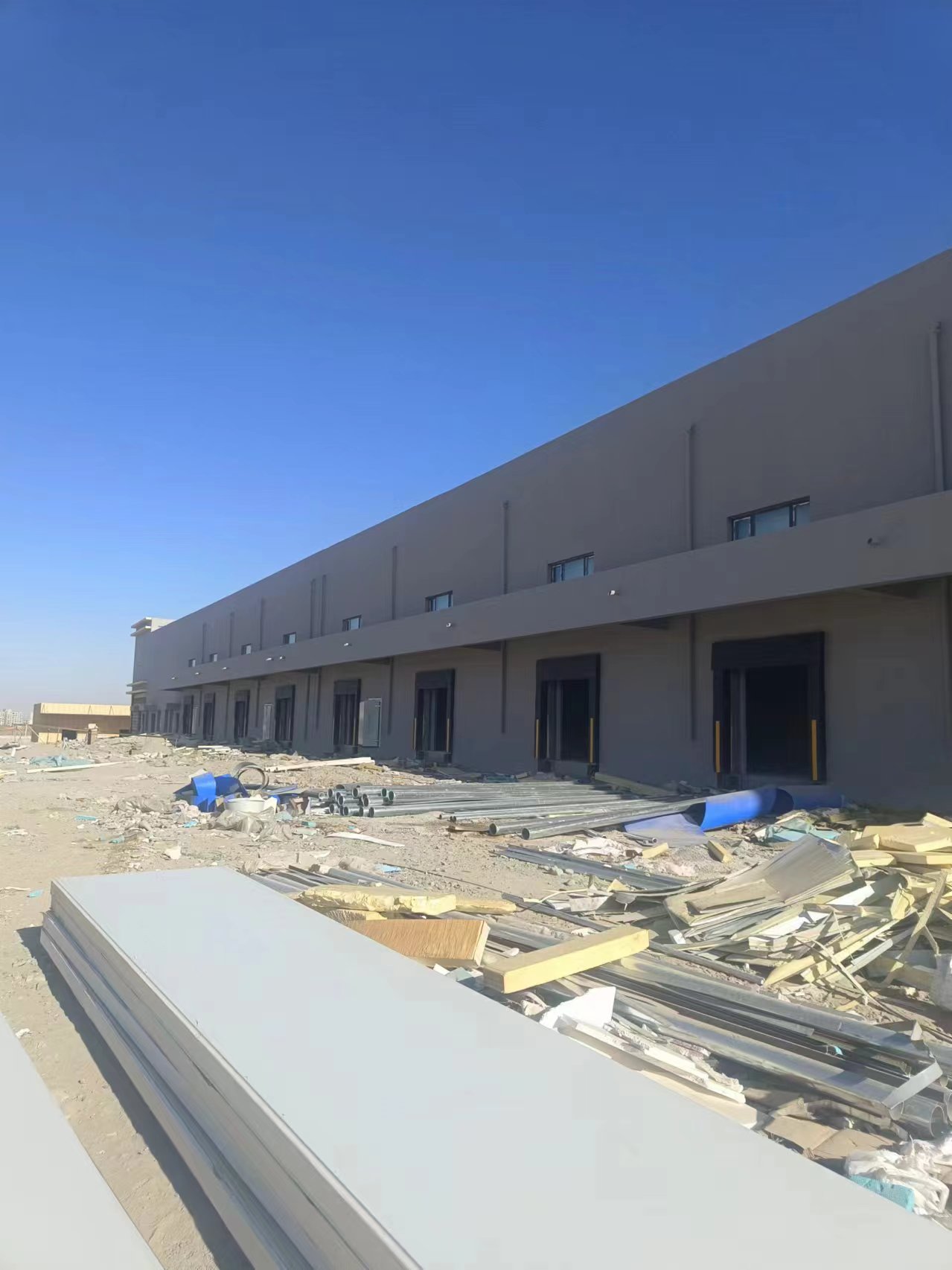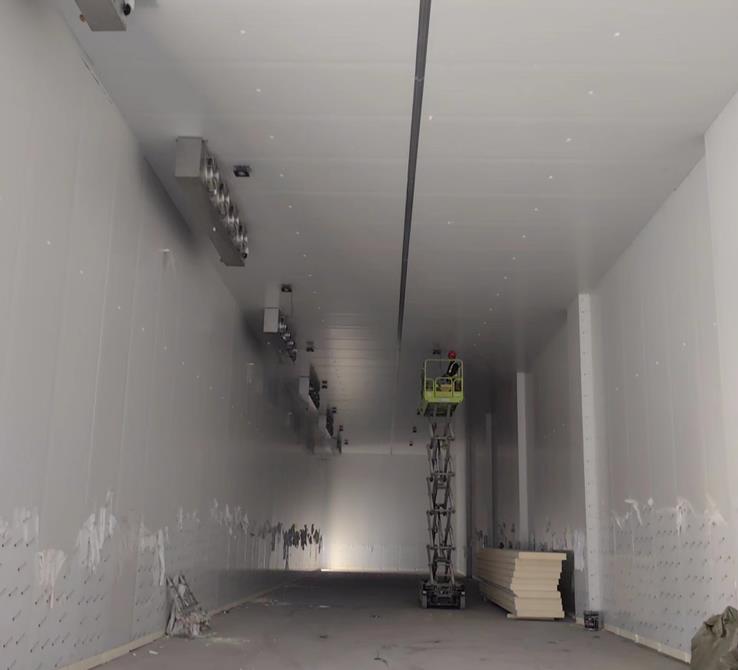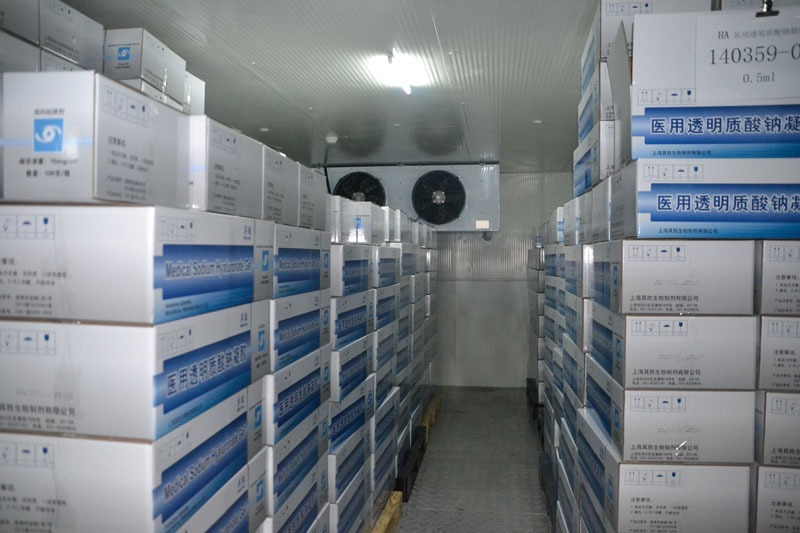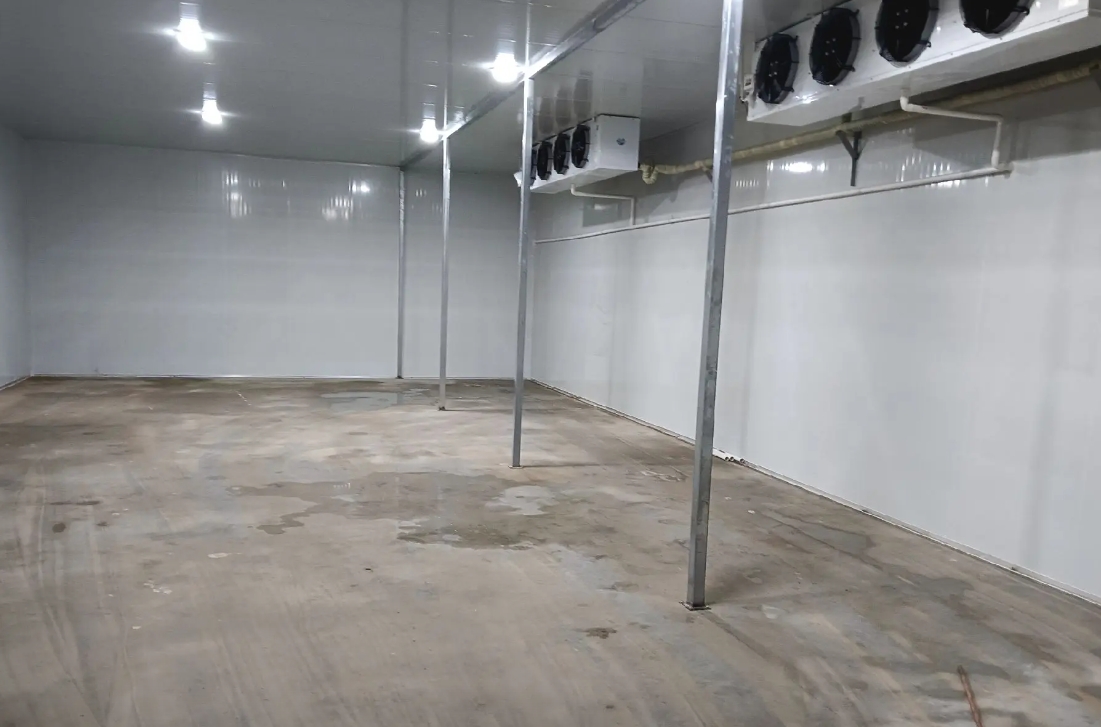
Zhejiang Xianju Pharmaceutical partnered with XNAIR Cold Storage to install a GSP-compliant pharmaceutical cold storage system in Taizhou, featuring dual redundant refrigeration units, -18°C freez
This high-compliance pharmaceutical cold storage serves the Hangzhou Logistics Center of Zhejiang Xianju Pharmaceutical Co., Ltd. It passed GSP validation at the first attempt and has operated fault-free for a full year to date.
| Project Parameters | Technical Specifications |
|---|---|
| Project Location | Hangzhou, Zhejiang |
| Total Cold Storage Area | 176 ㎡ |
| Temperature Zones | Refrigeration: 2~8°C (adjustable) / Freezing: ≤ -18°C |
| Total Storage Volume | Approx. 680 m³ |
| Refrigeration Redundancy | Two independent mutually standby systems with 0-second automatic switching |
| Panel Specification | 150mm double-sided color steel polyurethane panels, Class B1 flame retardant |
| Refrigerant | R404A |
| Power Supply Guarantee | Dual-circuit power supply + UPS for critical loads |
| Commissioning Date | June 2025 |
| Compliance Standards | Latest Good Supply Practice for Pharmaceuticals and its appendices |
Zhejiang Xianju Pharmaceutical decided to build a high-standard cold storage facility at its Hangzhou warehouse network to meet the storage and distribution demands for lyophilized powder injections, biological preparations and refrigerated API across central and eastern China. The outsourced third-party cold chain warehouse failed to satisfy the group’s internal control standards in terms of temperature control accuracy, batch traceability and audit requirements, making the self-construction of a GSP-compliant cold storage integrating 2~8°C refrigeration and -18°C freezing functions an urgent necessity.
Four major challenges were encountered during project implementation:
Precise coupling of dual temperature zones
The 176 m² space needs to maintain refrigerated and frozen environments simultaneously. Any temperature cross-contamination or short-term temperature fluctuations caused by defrosting may compromise product shelf life.
Extremely stringent availability requirements
GSP mandates redundant refrigeration units for cold storage, and any single-point failure must not trigger temperature out-of-specification conditions. The conventional "one operational unit plus one standby unit" setup is merely theoretical in most projects, while zero-interruption switching was required for this project.
Restrictions of the existing building
The cold storage is located on the ground floor of the logistics center with a floor height below 4.2 meters and compact column spacing. The design had to achieve uniform airflow distribution while reserving sufficient space for equipment maintenance and buffer airlocks.
Tight validation schedule
The delivery window, covering site mobilization and completion of no-load, full-load, power-off heat preservation and door opening tests, was less than 50 days.
Building Envelope and Air Distribution System
The cold storage adopts an assembled structure with all enclosure panels being 150 mm thick polyurethane sandwich panels featuring 0.6 mm steel sheets. Clean stainless steel sheets are used for interior surfaces, and polyurethane caulking agent plus special sealant are applied at joints to form a continuous airtight barrier. The floor adopts a composite thermal insulation structure consisting of extruded XPS boards, reinforced concrete and anti-slip epoxy finish to prevent frost heaving. One anti-condensation electrically heated horizontal sliding door with observation window is installed for the refrigerated room and frozen room respectively, interlocked with air curtains that activate upon door opening to block intrusion of hot and humid air.
Given the limited floor height, ceiling-mounted air coolers with low wind velocity and large heat exchange area are selected to deliver air to all areas of the storage chamber. Smoke testing is conducted to verify uniform airflow in working zones with top air supply and side return air, eliminating dead air zones. The evaporator of the frozen room is equipped with a stainless steel outer frame and electric heating defrost modules, and heat tracing is laid along the entire defrost drain pipeline to avoid ice blockage under -18°C operating conditions.
Dual Redundant Refrigeration System Design
This constitutes the core engineering highlight of the project. Separate sets of dual redundant compressor-condensing units are configured for the refrigerated and frozen rooms, forming a hard standby architecture with two independent systems backing each other up and fully eliminating risks arising from single-unit breakdowns.
Refrigeration Configuration for 2~8°C Refrigerated Zone
2 sets of Copeland scroll air-cooled compressor-condensing units (one operational, one standby)
Electronic expansion valves + 2 sets of high static pressure ceiling air coolers
Designed evaporation temperature: -5°C, maintaining relative humidity at 80%~85%
Unit rotation strategy: automatic switchover of main operating unit every 24 hours for even wear distribution
Refrigeration Configuration for -18°C Frozen Zone
2 sets of medium-low temperature scroll air-cooled compressor units (one operational, one standby)
High-efficiency low-temperature air coolers with 304 stainless steel electric heating defrost function
Designed evaporation temperature: -28°C; PLC dynamically adjusts defrost cycles based on actual frost accumulation
The dual redundant control logic is realized via Siemens PLC. If any shutdown signal including high pressure, low pressure, low oil level or compressor overload is triggered on the main unit, the standby unit will start automatically within 2 seconds to fully restore rated cooling capacity. Actual full-load testing shows temperature fluctuation is controlled within ≤0.8°C during switchover, complying with pharmaceutical storage guidelines.
Main Components of Refrigeration System
| Component | Brand/Model Series | Remarks |
|---|---|---|
| Refrigeration Compressor Unit | Copeland Scroll ZB Series | Equipped with standard crankcase heater |
| Freezing Compressor Unit | Copeland Scroll ZF Series | Matched with liquid injection cooling |
| Expansion Valve | Danfoss ETS Electronic Expansion Valve | Accuracy: ±0.1K |
| Controller | Siemens PLC + Touch Screen | Supports unit rotation, fault recording and historical curve display |
| Evaporator | Kuba / Geoclima High Static Pressure Ceiling Type | Dual air outlets, stainless steel housing |
| Liquid Supply Solenoid Valve | Castel | Automatically cuts off flow upon shutdown |
Automatic Temperature & Humidity Monitoring and GSP Compliance
8 temperature sensors and 2 humidity sensors are deployed across the storage area, mounted at cold and hot spots determined by thermal distribution validation. Additional monitoring points are arranged at the air return opening of each evaporator and the farthest potential goods stacking areas. The monitoring system operates independently of the refrigeration control system and is calibrated by a provincial metrology institute, satisfying GSP requirements of automatic and tamper-proof data recording. Local audible and visual alarms are integrated with a 4G module for SMS and phone notifications under a three-tier alarm system: warning alarm (1°C deviation), action alarm (1.5°C deviation), and over-limit alarm (out of 2~8°C or below -18°C thresholds). The system supports offline data caching and resume transmission after network recovery. All data is synchronized to the cloud, with audit reports available via regulatory inspection interfaces.
Validation tests are carried out in accordance with GSP appendices, including no-load thermal distribution, full-load thermal distribution, power failure insulation test (refrigerated zone maintains 2~8°C for over 2.5 hours; frozen zone stays above -10°C for over 1.5 hours), and 2-minute door opening test. All indicators pass the inspection on the first attempt.
Construction and Handover
Construction mobilization commenced in late April 2025. After casting and curing of floor thermal insulation layers, enclosure panel assembly, refrigeration pipeline welding, pressure testing, vacuum pumping and pipeline insulation works were conducted in early May. Armaflex closed-cell rubber insulation with thickness ≥30 mm is applied to freezing pipelines to strictly control condensation. Power-on commissioning was launched in mid-May. After 72 hours of stable operation, consecutive 120-hour no-load and full-load tests were performed. All validation reports were completed in mid-June 2025, signed off by the Quality Department of Xianju Pharmaceutical, marking official commissioning. The entire project took 51 days from construction start to handover.
Stable Temperature Control: Statistics based on one-year operation data show temperature fluctuation within ±0.5°C in the refrigerated zone, while the frozen zone maintains a constant temperature range of -18.3°C to -19.1°C, far exceeding basic GSP requirements.
Fault-Free Operation: The automatic switchover system has activated 11 times during grid voltage sags and routine unit rotation. All switches completed instantaneously without any out-of-spec temperature deviations.
High Space Utilization: Rational layout of aisles and buffer rooms delivers an effective storage area of 106 m² for refrigeration and 24 m² for freezing within the 176 m² total space, with rack aisles sized to accommodate forklift operations.
100% Audit Pass Rate: The facility has undergone 2 provincial unannounced inspections and 3 customer audits. Temperature records achieve 100% completeness with zero non-conformities identified.
Efficient Operation & Maintenance: The unit rotation mechanism extends equipment service life by approximately 30%. Optimized startup/shutdown cycles cut daily energy consumption by around 12% compared with cold storage facilities of equivalent size.
No matter your industry, no matter how complex your refrigeration needs, XNAIR Cold Storage can provide you with customized, energy-efficient solutions. Contact us now to start your successful project!
Contact XNAIR Cold Storage Now →Hedong Canteen Cold Storage Project at East China Normal University: Customized catering cold storage solution with German Bitzer system, -18℃ and 2-8℃ dual-temperature zones, energy-efficient design...
View Details →Shanghai XNAIR builds climate-resilient seed cold storage for Wuwangnong Seed in Lishui, maintaining 0-10℃ stability at 43℃ ambient with 48hr backup power, ensuring genetic resource security....
View Details →XiangNing Cold Storage provided EPC solutions for Hetian Eheng's agricultural cold chain logistics center in Pishan County, including thermal insulation materials, installation, and intelligent contro...
View Details →Shanghai XNAIR delivers 5-10℃ adjustable cold storage for Xihekang's semiconductor silicone raw materials in Xuhui, using Embraco compressors and modular design to ensure material stability for el...
View Details →Shanghai Haohai Biotech's 2024 pharmaceutical cold storage project, featuring German Bitzer refrigeration & Schneider control systems, meets GMP/ISO standards for high-precision medical storage....
View Details →Shanghai XNAIR delivers fire-resistant 0-5℃ tobacco leaf cold storage for Jiangxi Tobacco Research, using German GEA refrigeration and B1-grade insulation to meet agricultural research & food safe...
View Details →Phone
+86 180 1742 6215Tel
Shanghai XiangNing Electromechanical Equipment Co., LTD XML