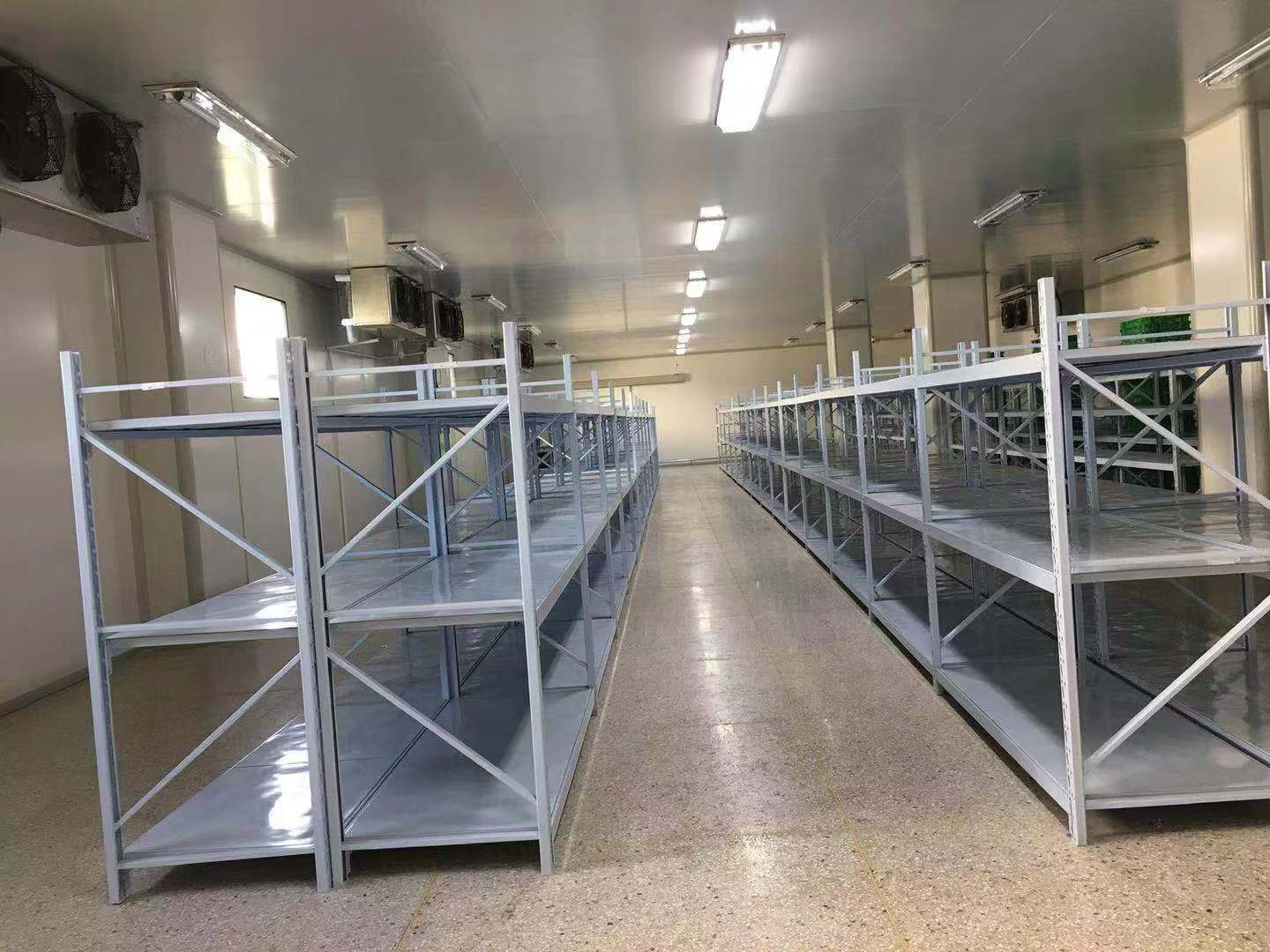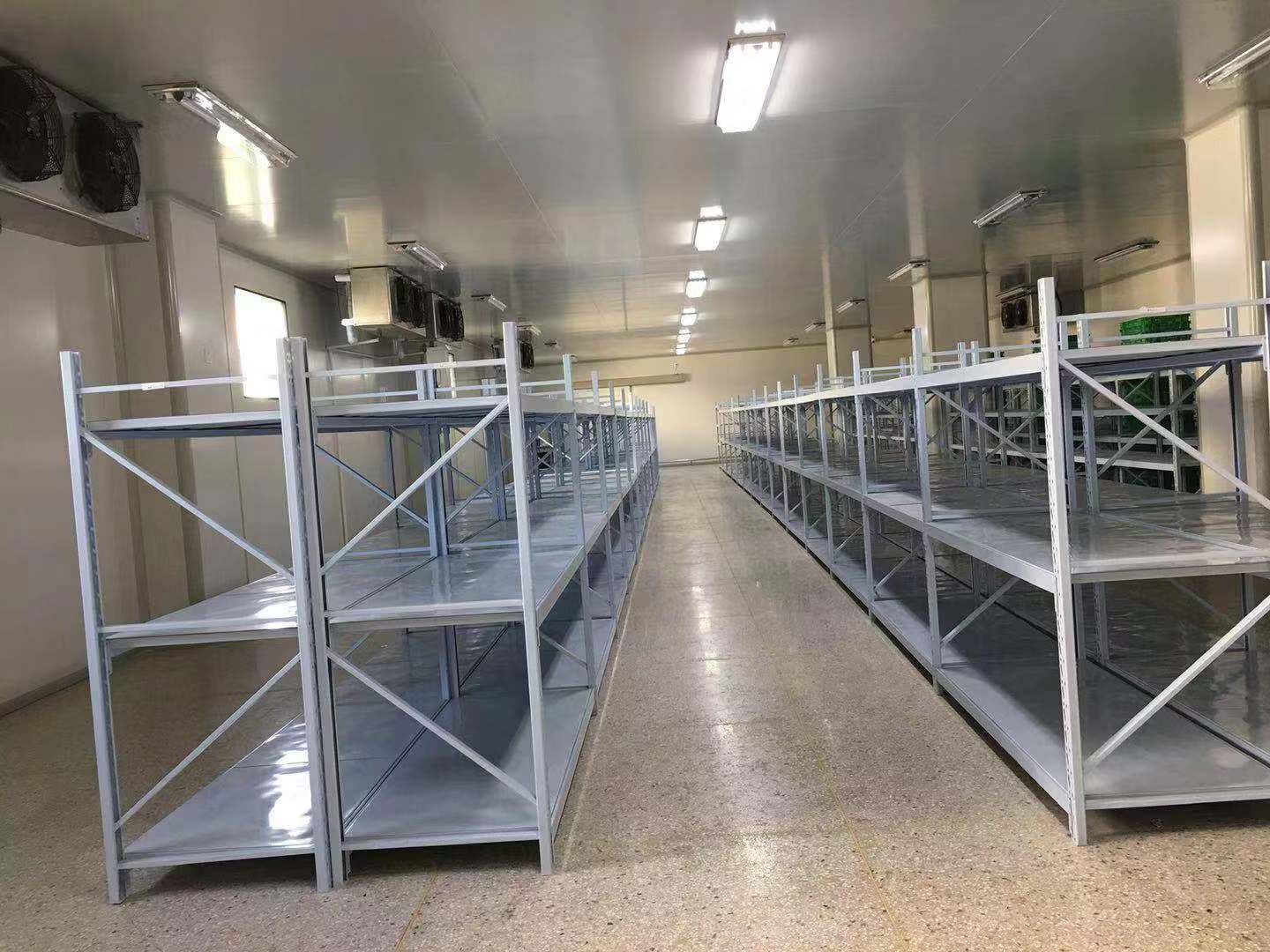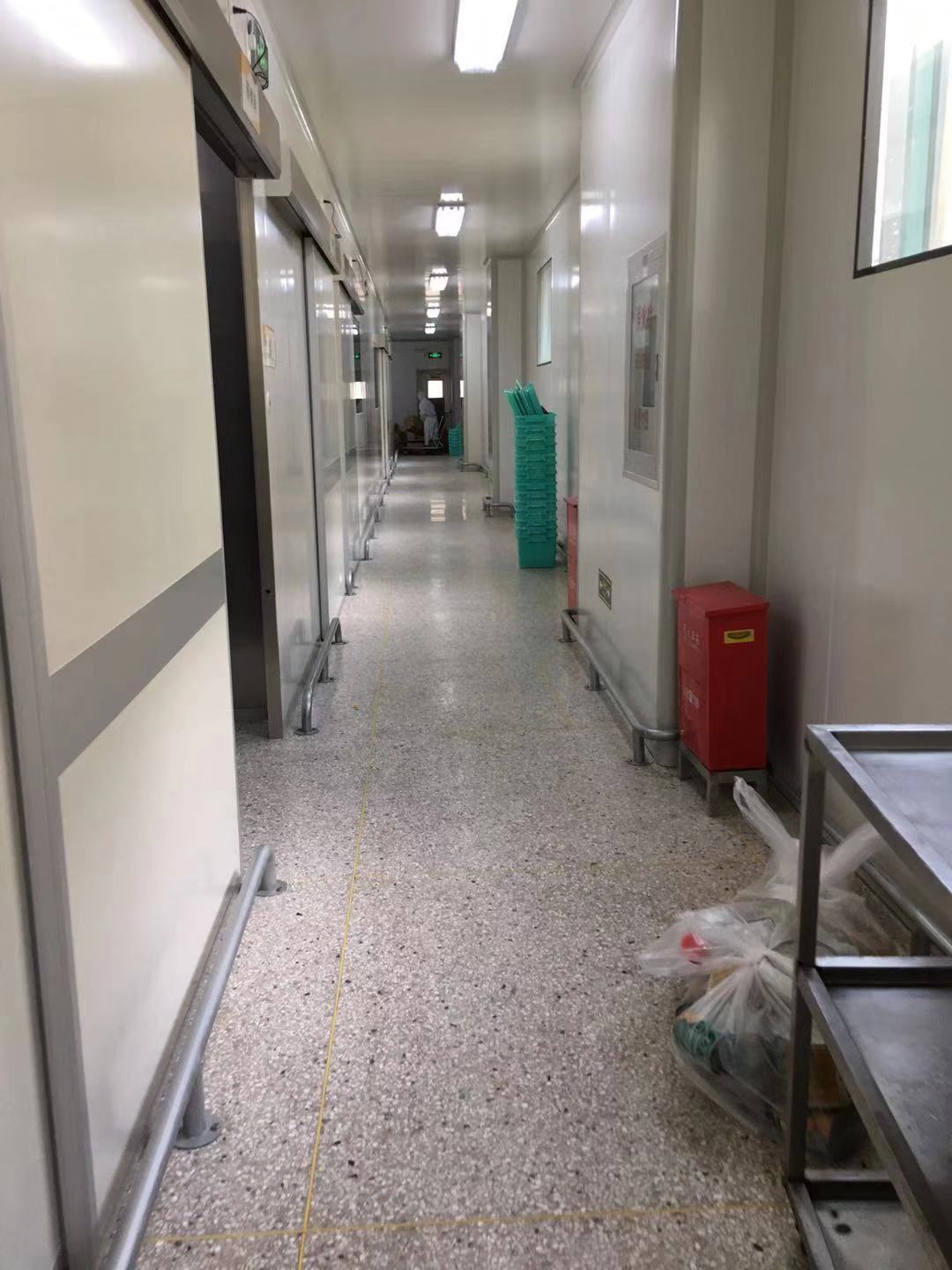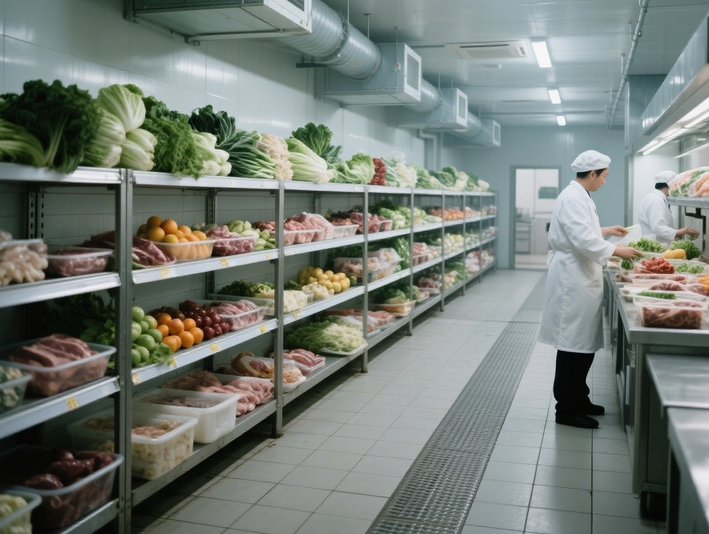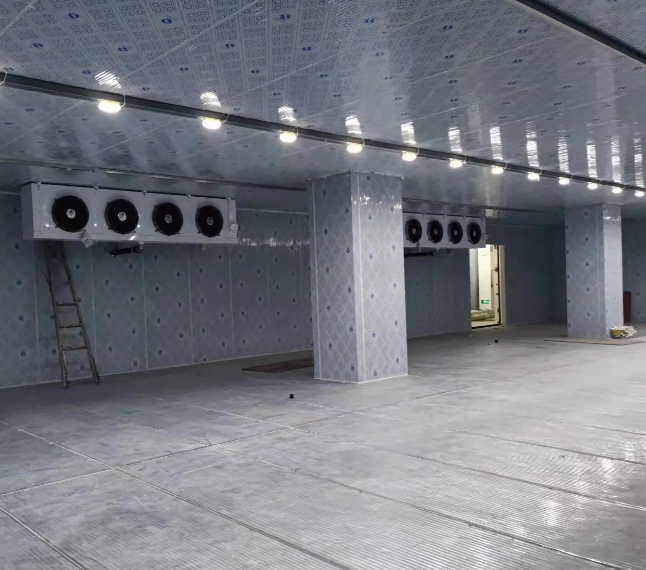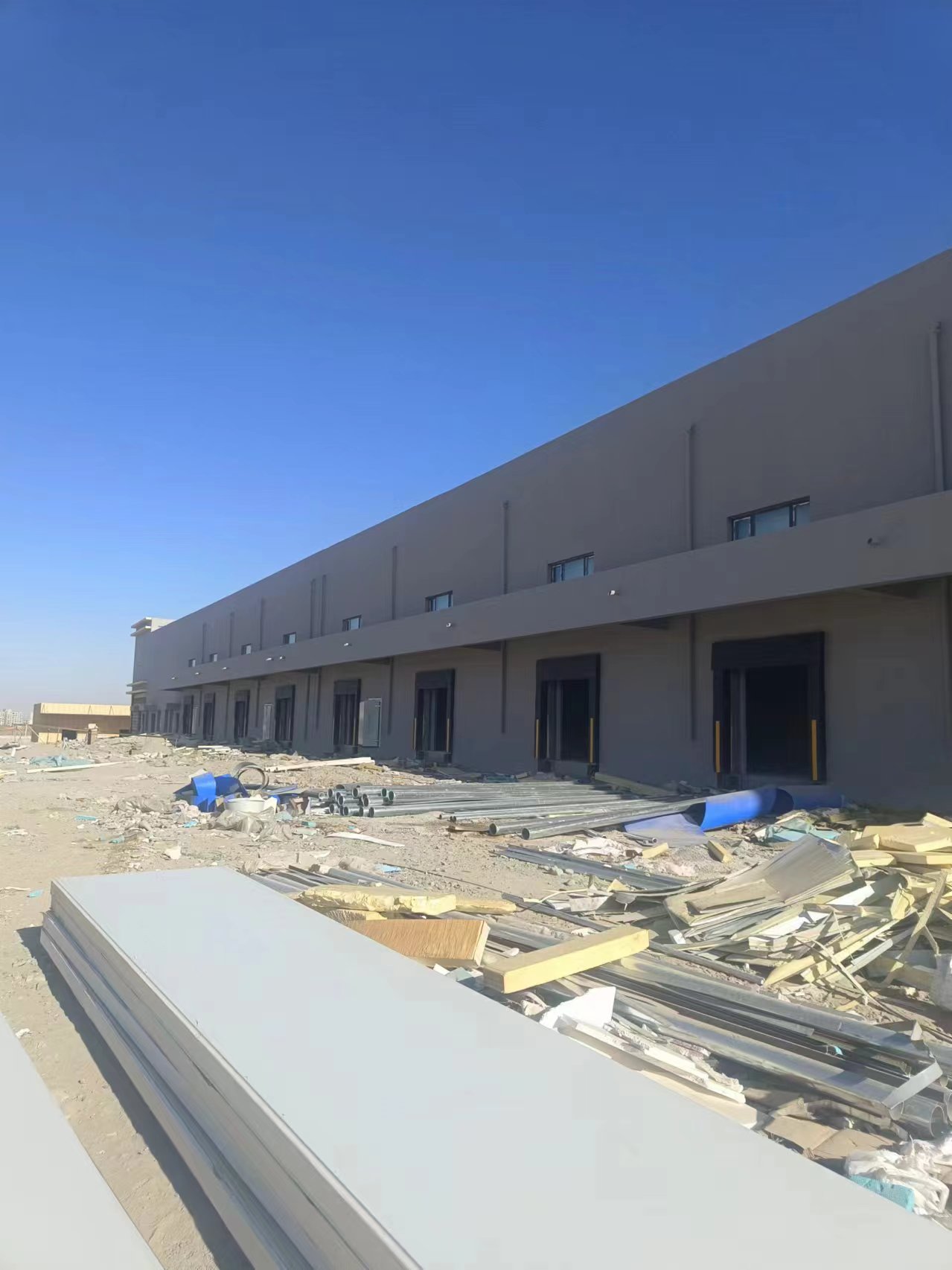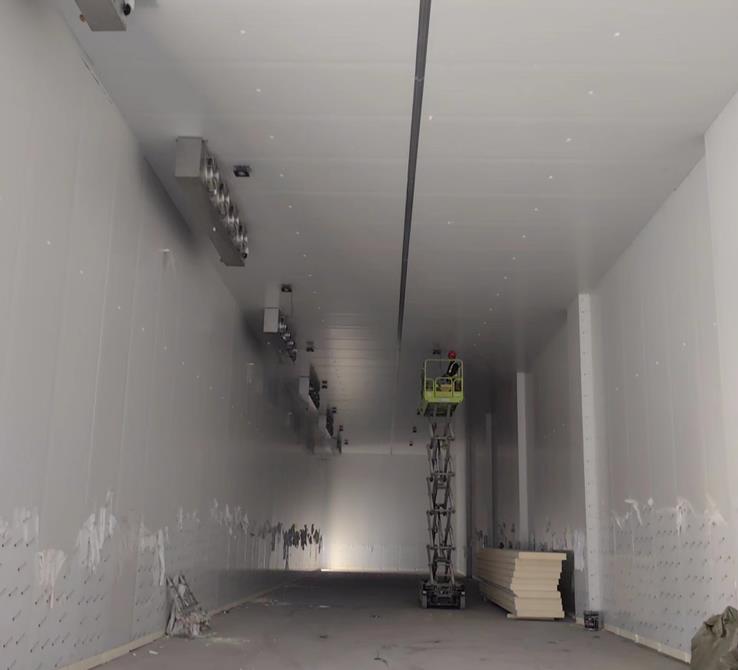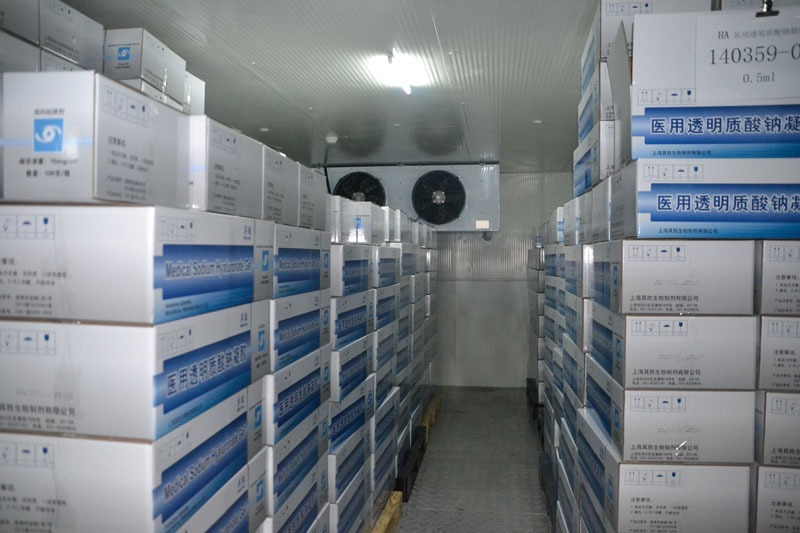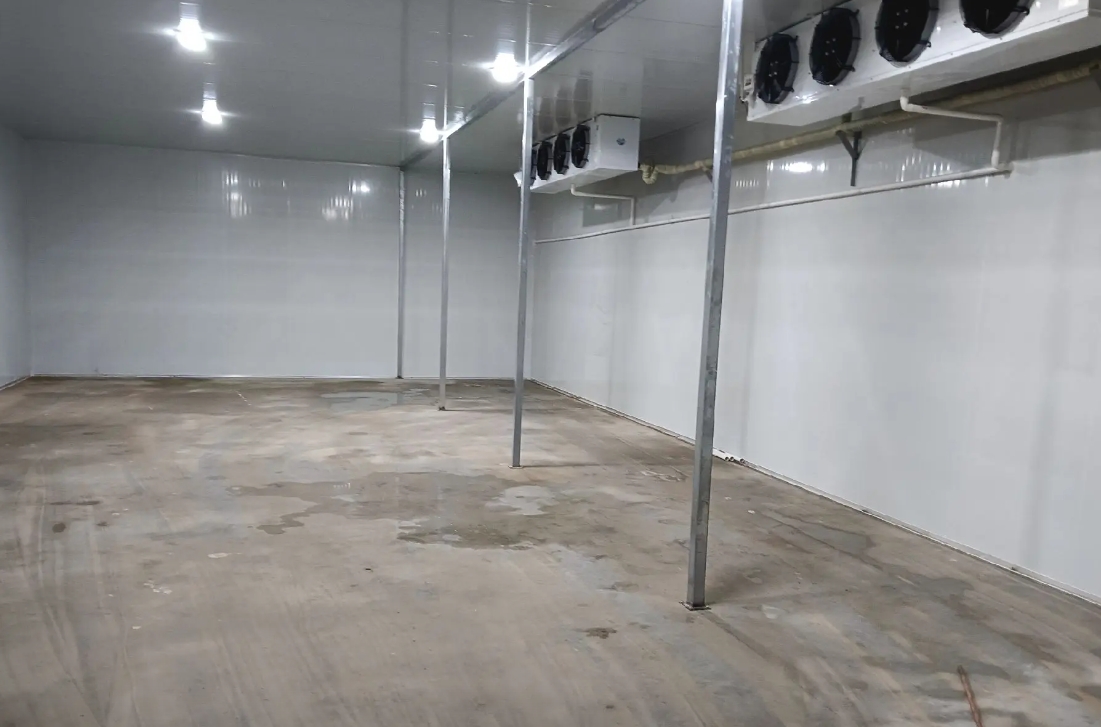
Shanghai Sentian Food partnered with XNAIR to construct 4 advanced cold storage units (-18℃ to 18℃) and retrofit 2 existing systems, ensuring compliant food & pharmaceutical storage. A 3-phase pro
This project serves a local food manufacturer in Shanghai, located in the Food Industrial Park of Songjiang District, Shanghai. The works cover construction of four new multi-temperature cold storage rooms and refrigeration system upgrading for two existing cold stores, with a total net volume of 500 m³ and adjustable temperatures ranging from -18°C to 18°C. Designed to meet the client’s dual demands of frozen food production & storage and pharmaceutical excipient transit warehousing, the facility complies with SC requirements for food production and GSP temperature control standards for medicines. It addresses the original cold storage’s insufficient capacity and poor temperature accuracy. The project broke ground in August 2025 and was fully accepted and delivered in November 2025.
Project Background
Shanghai Sentian Food Co., Ltd. is a regional manufacturer of quick-frozen prepared food based in Shanghai, specializing in the production and distribution of frozen pastry and pre-made dishes. It also provides transit warehousing services for pharmaceutical excipients and packaging materials for partner pharmaceutical companies.
The company’s two original cold storages, built in 2018, were equipped with first-generation piston refrigeration units. Equipment aging degraded temperature control accuracy: temperature fluctuations in the freezer exceeded ±2°C, and the refrigerated zone failed to maintain a stable 2–8°C constant temperature range, failing to meet GSP certification requirements for pharmaceutical excipient storage. Meanwhile, capacity expansion created a storage shortage of approximately 40%. Long-term reliance on rented third-party cold chain warehouses brought inconveniences in scheduling, high costs and unstable product quality control.
To address these demands, the company launched this cold storage project, involving four newly built dedicated cold rooms with separate temperature zones and simultaneous upgrades to the refrigeration and monitoring systems of the two existing cold storages. The total net volume is 500 m³. The facility must comply with both General Hygienic Specifications for Food Production and the Good Supply Practice for Pharmaceutical Products (GSP), enabling independent control of multiple temperature zones and full-process temperature traceability.
Key Challenges
Challenge 1: Dual-industry compliance adaptation with vastly different temperature accuracy requirements
The project serves both food and pharmaceutical storage with two separate sets of regulatory standards.
Food zones follow GB 50072 Cold Storage Design Standard and SC food production codes, permitting temperature fluctuations of ±1°C for freezers and ±1.5°C for chill rooms.
Pharmaceutical constant-temperature zones must satisfy GSP standards, limiting temperature fluctuations within ±0.5°C at 2–8°C. In addition, the temperature and humidity monitoring system must operate independently of the refrigeration control system with tamper-proof, traceable data.
The two sets of standards impose entirely different requirements on thermal insulation, refrigeration and monitoring configurations, ruling out universal designs. Separate customized layouts are required for each zone, raising complexity in system design and construction precision standards.
Challenge 2: Renovation of existing cold storages without full production shutdown
The client has no spare storage space to suspend production and warehousing. The two old cold rooms must be renovated in phases: while one undergoes retrofitting, the other must maintain normal refrigeration. During pipeline switching between old and new systems, warehouse temperature rise shall not exceed 3°C with an interruption duration under 2 hours.
All pipeline components need prefabrication in advance, and connection work must be completed within narrow low-traffic windows at night after goods delivery. Strict separation of old and new refrigerant circuits is required to avoid cross-contamination and impurity ingress that shortens new unit service life, posing high challenges to construction scheduling and organization.
Challenge 3: Operational stability under hot and humid summer conditions in Shanghai
Shanghai’s extreme summer temperature can hit 40.2°C with long-term relative humidity above 70%. Standard air-cooled condensing units lose over 20% cooling capacity under extreme heat, frequently triggering high-pressure alarms and warehouse temperature spikes.
Frequent door openings draw in large volumes of hot and humid air, causing condensation on warehouse walls and air coolers. This accelerates insulation aging and violates the 35%–75% RH humidity control requirement for pharmaceutical storage, calling for targeted load redundancy design and anti-condensation treatment.
Challenge 4: Cooling interference and cross-contamination prevention for compact multi-temperature zones
Six cold rooms are clustered within one warehouse area, with temperatures ranging from -18°C to 18°C and a maximum temperature difference of 36°C between adjacent zones. Poor insulation and sealing lead to cold penetration and mutual temperature interference, increasing energy consumption and impairing temperature accuracy.
Physical and airflow isolation must be implemented between food and pharmaceutical zones to block food odors and production dust that could contaminate pharmaceutical excipients. Higher standards are required for panel sealing, cold door configurations and airflow layout design.
Design Solution
Temperature Design Concept
The six cold rooms are divided into three temperature zones based on storage purposes:
One freezer at -18~-15°C for finished quick-frozen food;
Two chill rooms at 0~5°C for fresh raw materials and food accessories;
Two constant-temperature rooms locked at 2~8°C exclusively for pharmaceutical excipients (temperature range non-adjustable at will);
One adjustable turnover room at 10~18°C.
Each room is equipped with an independent temperature control system supporting stepless regulation within its designated range, covering the full temperature spectrum from -18°C to 18°C. The pharmaceutical zones are separately fitted with humidity control modules to maintain relative humidity at 45%–65% in compliance with GSP standards.
Refrigeration System Design
An independent direct-expansion refrigeration system is adopted with one unit per room. New freezers are equipped with Bitzer 4TES-9Y air-cooled piston condensing units, while chill and constant-temperature rooms use Bitzer 4TCS-8.2Y units with R404A refrigerant.
The two original cold rooms retain their existing insulated enclosures; only compressors and air coolers are replaced and connected to the new centralized electric control system.
Dual-evaporator redundant design is applied to pharmaceutical constant-temperature rooms: one primary and one standby evaporator automatically switch within 30 seconds upon failure to prevent temperature spikes.
Condensers are oversized by 15% to cope with Shanghai’s hot summers, ensuring stable unit operation at ambient temperatures up to 40°C with discharge pressure kept below 1.8 MPa.
Backup System Design
One spare 4TES-9Y compressor is installed, connectable to any cold room’s refrigerant circuit via manifold valves. Manual switching puts the spare unit into service within 10 minutes if the main unit malfunctions.
A Santak C1K online UPS supplies power to temperature monitoring systems, alarm modules and core control cabinet components, providing no less than 4 hours of backup runtime during power outages to guarantee uninterrupted temperature logging and fault alerts.
| Equipment Name | Brand & Model | Function |
|---|---|---|
| Semi-hermetic Piston Compressor (for freezers) | Bitzer 4TES-9Y | Provides cooling capacity for -18°C freezers; cooling capacity 9.2kW under R404A working conditions |
| Semi-hermetic Piston Compressor (for chill/constant-temp rooms) | Bitzer 4TCS-8.2Y | Supplies cooling for 0~8°C chill and pharmaceutical rooms; cooling capacity 12.8kW under R404A working conditions |
| Ceiling Air Cooler (freezer type) | Gaoxiang DD-40 | Enables air heat exchange in freezers; paired with electric defrost components for even cold air distribution |
| Special Ceiling Air Cooler (pharmaceutical constant-temp room) | Kaidi DL-15 | Low-airflow supply for pharmaceutical zones to minimize temperature & humidity fluctuations, matching high-precision temperature control requirements |
| Air-cooled Condenser | Danfoss MLZ026T5 | Condenses refrigerant heat for compressors, adapted to high-temperature summer conditions in Shanghai |
| Dedicated Cold Storage Temperature Control System | Elitech ECB-1000P | Independent zoning temperature regulation, operation data logging, fault alarms and remote monitoring support |
| GSP-compliant Temperature & Humidity Recorder | Zog U12-012 | Separate monitoring for pharmaceutical zones with ±0.2°C temperature accuracy, meeting GSP certification criteria |
| Polyurethane Insulated Panel (freezer grade) | Baorun 150mm thick, density 40kg/m³ | Thermal enclosure for freezers; thermal conductivity ≤0.024 W/(m·K), Class B1 flame retardant |
| Polyurethane Insulated Panel (chill/constant-temp grade) | Baorun 100mm thick, density 40kg/m³ | Insulation for zones above 0°C |
| Online UPS Power Supply | Santak C1K | Powers monitoring and core control systems with ≥4 hours backup runtime after power loss |
Insulated Panel Installation
Interlocking polyurethane insulated panels are used for enclosure construction. A PE moisture barrier is laid on the floor prior to floor panel installation. Wall and ceiling panels are locked with eccentric hooks, and all joints are filled on-site with polyurethane foam and sealed with food-grade mildew-resistant sealant.
Freezer floors are reinforced with an additional 50mm steel-reinforced concrete protective layer to withstand rack and forklift loads.
Double sealing is implemented at all panel joints in pharmaceutical zones, and partition walls between rooms adopt double-layer panel structures to block odor penetration. Cold storage doors are fitted with electric heating anti-condensation gaskets and automatic door closers to reduce cold loss and ingress of hot humid air during openings.
Refrigeration Equipment Installation
Outdoor condensing units are mounted on dedicated factory equipment platforms with concrete shock-absorbing foundations. Unit horizontal deviation is controlled within 2mm/m, with a minimum 1.5m clearance around each unit for maintenance and ventilation to avoid hot air recirculation short circuits.
Indoor air coolers are suspended via hangers with shock-absorbing springs, with air outlets aligned along the room’s length to prevent direct cold blast onto stored goods.
Before renovating original cold rooms, old pipelines are purged with 0.8MPa nitrogen to remove debris and residual compressor oil. New units are connected only after passing pressure testing, with all connection work scheduled for low-traffic night shifts when room temperatures remain stable.
Piping Construction
TP2 seamless copper tubes are used for refrigerant piping, with all welding performed under nitrogen shielding to avoid oxide scale inside pipes. Suction lines slope 3‰ toward compressors, and oil traps are installed along long pipe runs to ensure smooth oil return.
After piping installation, a 2.4MPa nitrogen pressure holding test is conducted for 24 hours; a pressure drop ≤0.02MPa is deemed qualified. The system is then vacuumed below -0.1MPa. Once vacuum pressure holds steady for 2 hours without rebound, R404A refrigerant is charged to rated specifications.
Electrical System Installation
Power cables and signal cables are laid separately with a minimum horizontal separation of 200mm to eliminate electromagnetic interference that distorts temperature readings. Each compressor unit is protected by an independent circuit breaker, thermal overload relay and phase sequence protector; control cabinets are equipped with surge protection to withstand thunderstorm weather common in Shanghai.
Temperature and humidity recorders for pharmaceutical zones feature independent power supply and data transmission circuits, isolated from refrigeration control systems. This satisfies GSP rules prohibiting monitoring equipment linkage with refrigeration machinery and guarantees authentic, independent monitoring data.
Commissioning & Acceptance
Temperature Testing
Stepwise gradient cooling commissioning is adopted: the set temperature is lowered gradually at 5°C per hour. After stable 24-hour operation, temperature uniformity testing is carried out.
5 measuring points are arranged inside the freezer, while 9 points are deployed in pharmaceutical constant-temperature rooms per GSP requirements, covering corners, doorways, air outlets and upper/lower rack levels. Data is collected every 10 minutes.
Test results:
-18°C freezer: temperature fluctuation ≤±0.7°C, maximum indoor temperature difference 0.9°C;
2~8°C pharmaceutical room: temperature fluctuation ≤±0.3°C, maximum indoor temperature difference 0.5°C.
All indicators meet design and compliance standards.
Operational Testing
A 72-hour continuous full-load test is completed. Condenser air intake is partially blocked to simulate 38°C high ambient temperature; compressor discharge temperature, operating pressure and current all stay within rated ranges.
Door opening heat load test results:
After 5 minutes of full door opening, freezer temperature rises 1.8°C and recovers to setpoint within 12 minutes after door closure;
Pharmaceutical room temperature rises 1.2°C and returns to normal within 8 minutes.
Spare unit switching test: the standby unit starts fully within 120 seconds after the main unit shuts down, with no excessive temperature deviation inside the room.
Acceptance Procedure
The construction contractor first completes full-system self-inspection and issues a self-check report, pipeline pressure test records and raw temperature validation data.
The client then collaborates with a third-party cold chain testing institute to conduct itemized acceptance in accordance with GB 50072 Cold Storage Design Standard, food SC hygiene specifications and pharmaceutical GSP requirements, covering enclosure insulation performance, refrigeration operating parameters, electrical safety and compliance of temperature control systems. A dedicated GSP temperature validation report is issued separately for pharmaceutical zones.
All test items passed inspection on November 18, 2025. Both parties signed the final acceptance document, marking official project handover and commissioning.
Validation Results
Third-party inspection confirms that the temperature uniformity and fluctuation of all six cold storage rooms meet design specifications. The two pharmaceutical constant-temperature zones have successfully passed GSP temperature control verification for warehousing. The sensor accuracy, data retention cycle and alarm functions all comply with regulatory standards, allowing compliant storage of pharmaceutical excipients.
The refrigeration systems run stably at an ambient temperature of 38°C without high-pressure alarms or unplanned shutdowns. No condensation appears on the outer surface of insulated panels, and the overall performance fully adapts to extreme summer operating conditions in Shanghai.
Actual Operation Performance
During the one-month trial operation after project delivery, the temperature of each zone is kept stable automatically after daily setpoint configuration, eliminating frequent manual parameter adjustments. The remote monitoring system enables real-time viewing of zone temperatures and equipment operating status. Alarms for over-temperature, power failure and equipment malfunctions are sent simultaneously via SMS and the cloud platform, raising maintenance staff response efficiency by 60%.
Compressors start and stop no more than 5 times a day, operating within an efficient load range of 65% to 75%. Compared with the original outdated systems, daily energy consumption per unit volume is reduced by about 18%.
Project Benefits
Storage Capacity
An extra 320 m³ of effective storage volume boosts overall warehousing capacity by 64%, completely resolving the storage shortage caused by production expansion. The company no longer needs to rent third-party cold storage, saving around 220,000 RMB per year on warehouse rental and logistics coordination fees.
Management
A unified centralized monitoring system replaces the previous fragmented manual recording method. Temperature and humidity reports that meet regulatory requirements are generated automatically, cutting manual work on statistics and ledgers and lowering labor costs.
Compliance
The enterprise now holds compliant warehousing qualifications for both food and pharmaceutical products, expanding its business scope and avoiding operational risks resulting from non-compliant storage facilities.
No matter your industry, no matter how complex your refrigeration needs, XNAIR Cold Storage can provide you with customized, energy-efficient solutions. Contact us now to start your successful project!
Contact XNAIR Cold Storage Now →Hedong Canteen Cold Storage Project at East China Normal University: Customized catering cold storage solution with German Bitzer system, -18℃ and 2-8℃ dual-temperature zones, energy-efficient design...
View Details →Shanghai XNAIR builds climate-resilient seed cold storage for Wuwangnong Seed in Lishui, maintaining 0-10℃ stability at 43℃ ambient with 48hr backup power, ensuring genetic resource security....
View Details →XiangNing Cold Storage provided EPC solutions for Hetian Eheng's agricultural cold chain logistics center in Pishan County, including thermal insulation materials, installation, and intelligent contro...
View Details →Shanghai XNAIR delivers 5-10℃ adjustable cold storage for Xihekang's semiconductor silicone raw materials in Xuhui, using Embraco compressors and modular design to ensure material stability for el...
View Details →Shanghai Haohai Biotech's 2024 pharmaceutical cold storage project, featuring German Bitzer refrigeration & Schneider control systems, meets GMP/ISO standards for high-precision medical storage....
View Details →Shanghai XNAIR delivers fire-resistant 0-5℃ tobacco leaf cold storage for Jiangxi Tobacco Research, using German GEA refrigeration and B1-grade insulation to meet agricultural research & food safe...
View Details →Phone
+86 180 1742 6215Tel
Shanghai XiangNing Electromechanical Equipment Co., LTD XML