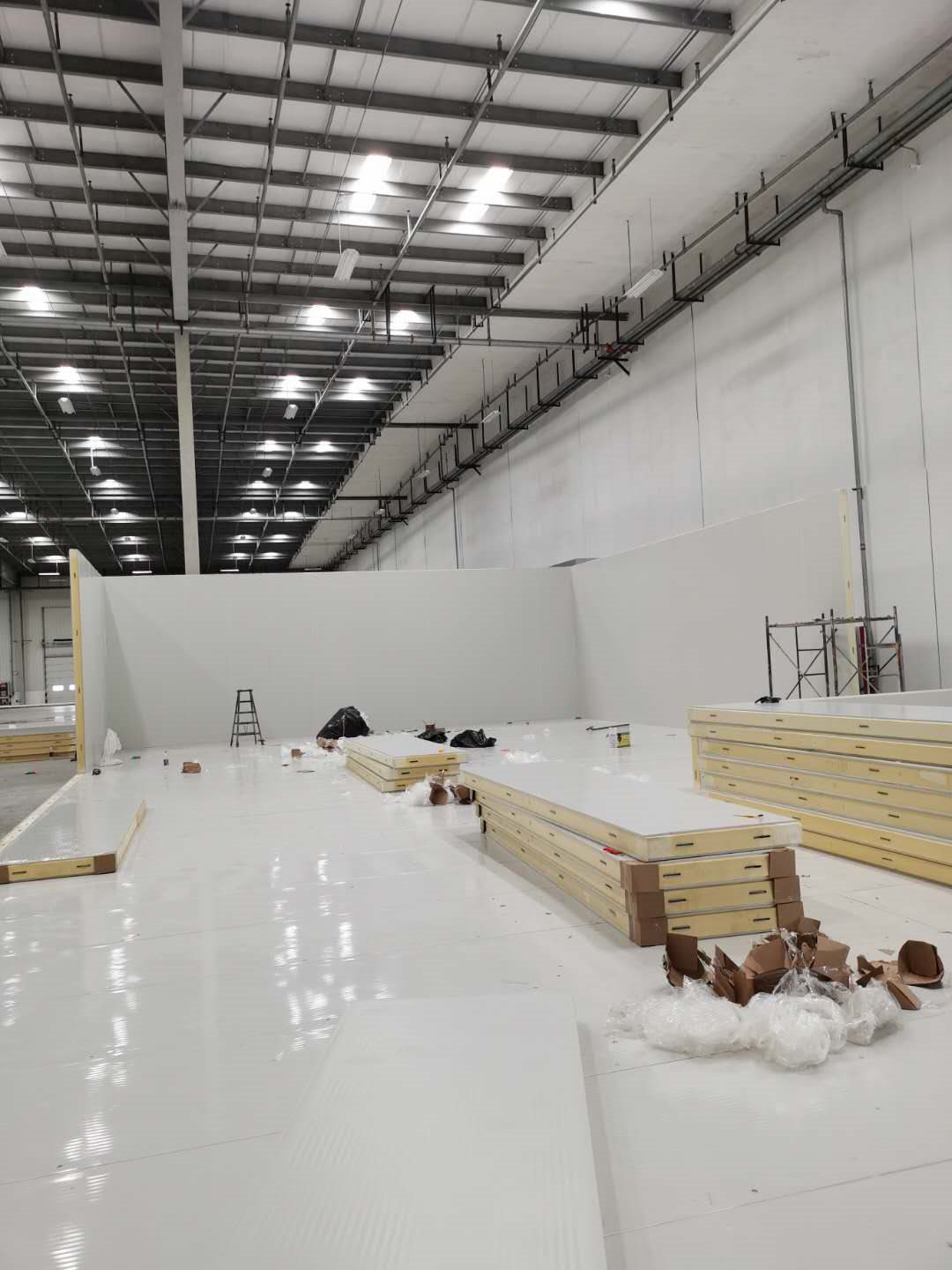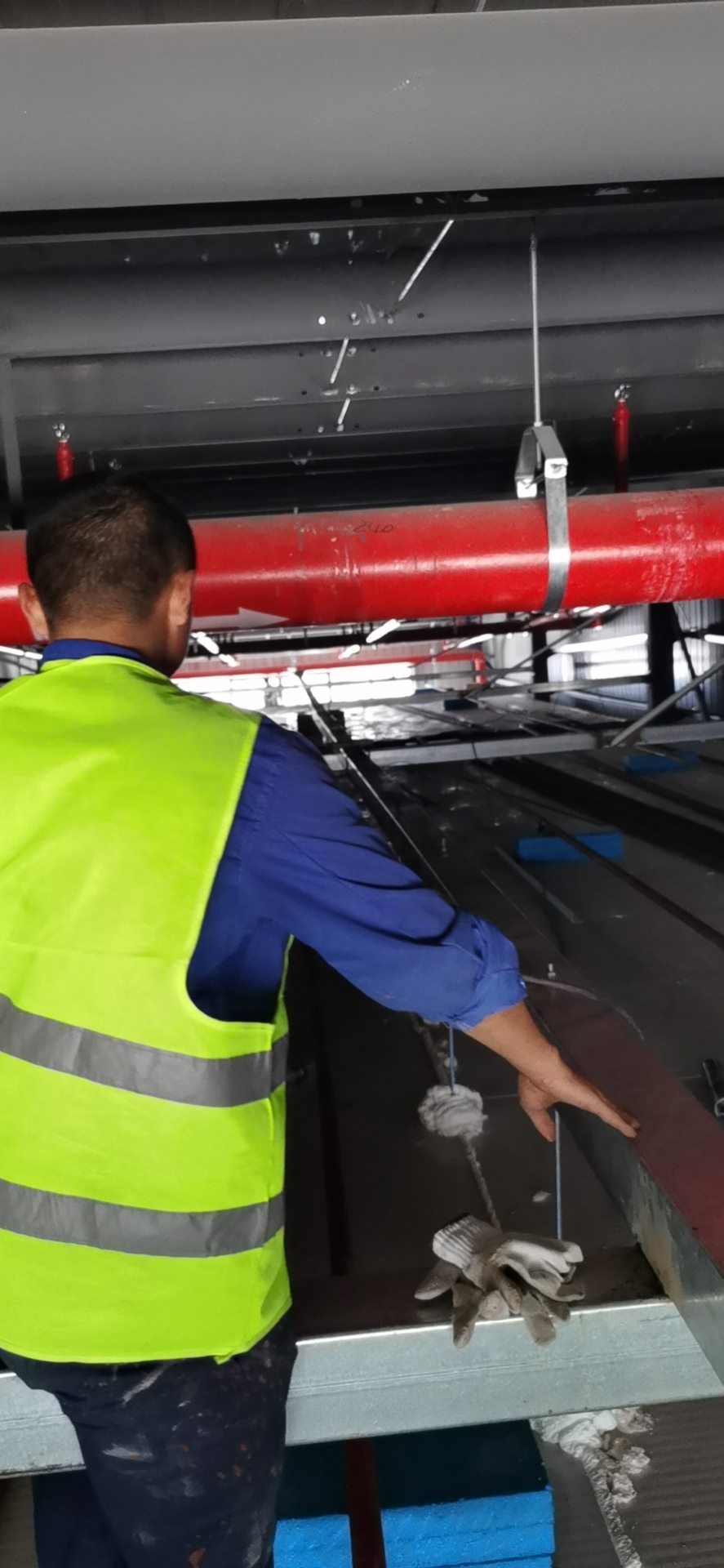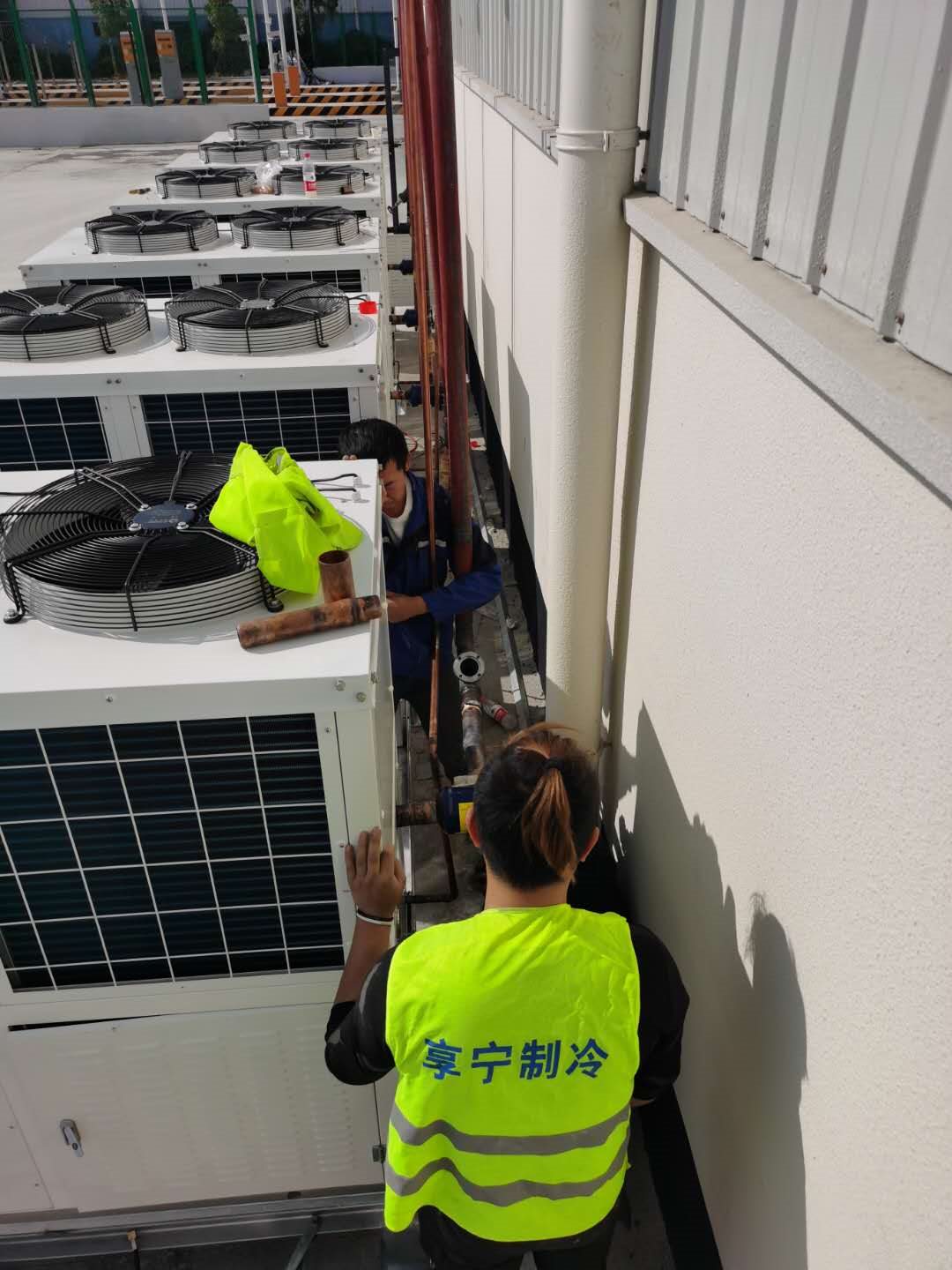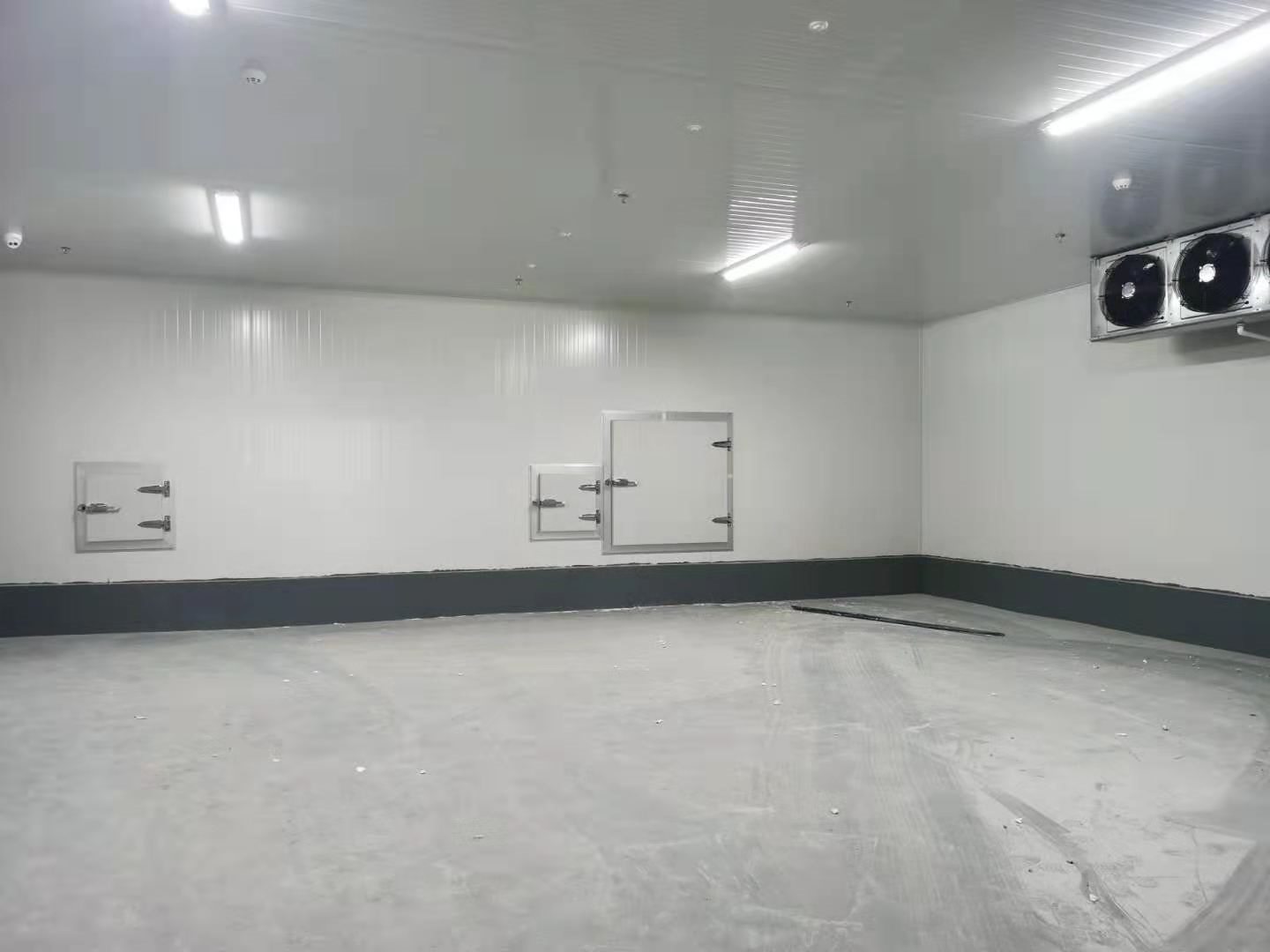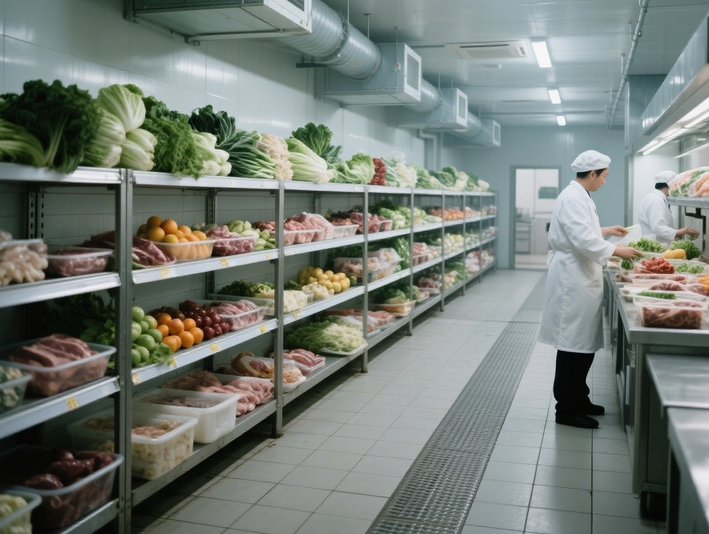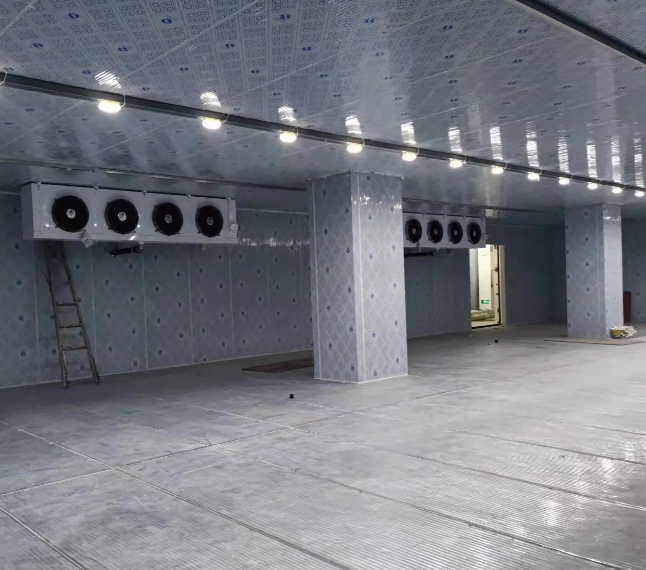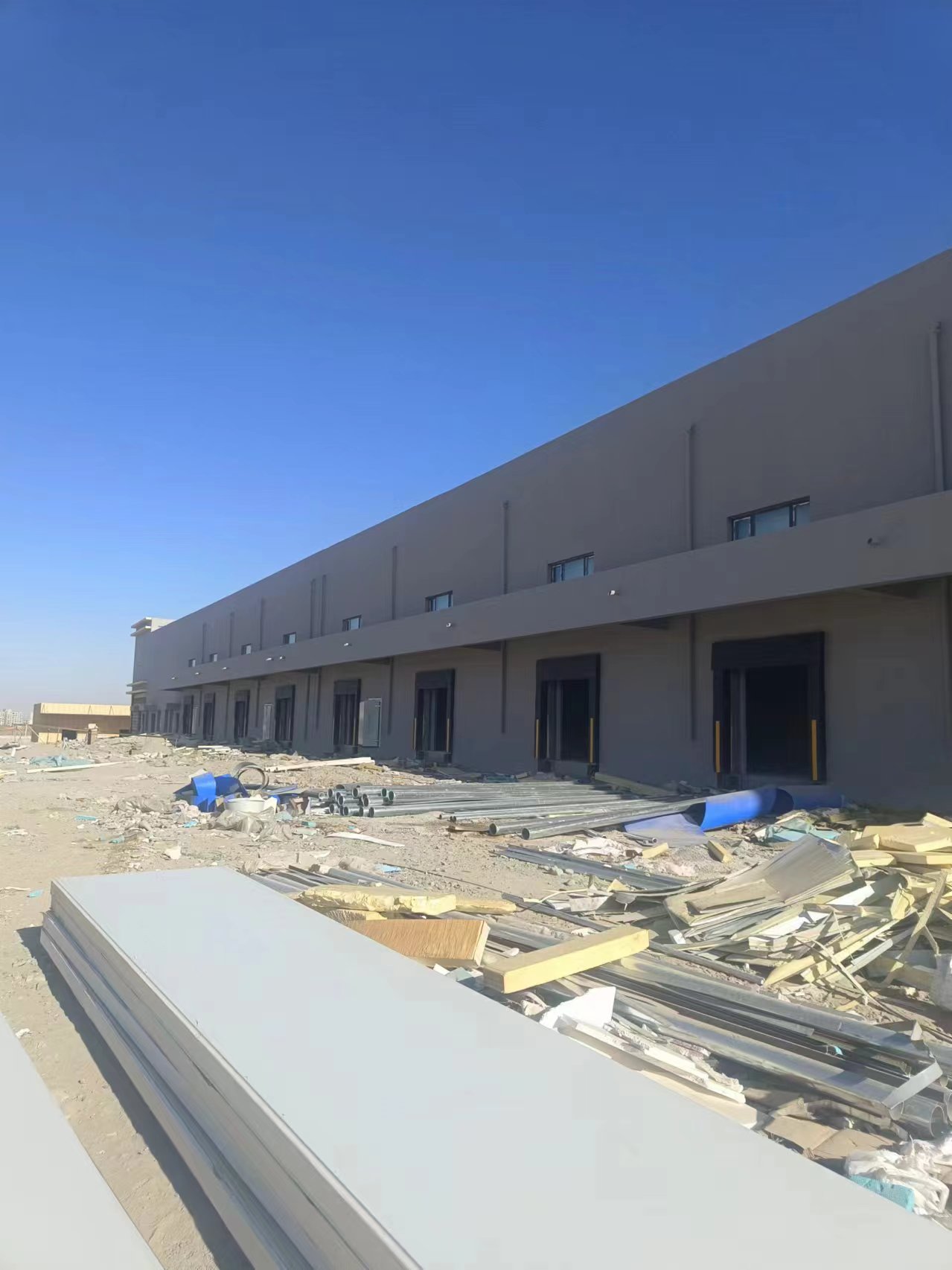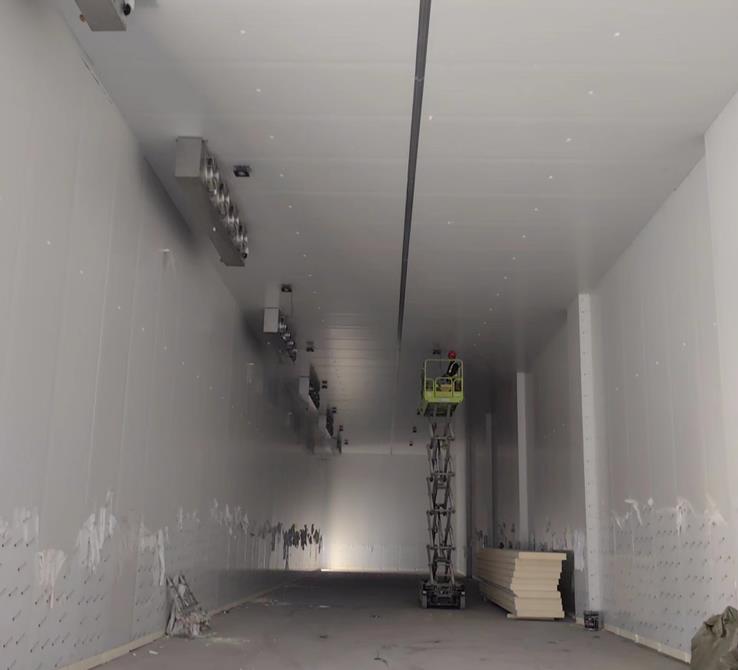
Shanghai Hanhui Industrial's Suzhou Cold Storage Project: A logistics cold storage solution for vegetables, fruits, and meat, optimized with multi-temperature zones, energy-efficient lighting, and ope
Hanhui Industrial is a food supply chain enterprise rooted in the Yangtze River Delta, serving multiple community group-buying platforms and fresh food e-commerce front warehouses across East China. With business expansion in 2025, its rented old cold storage failed to cope with peak daily order volumes of tens of thousands in terms of temperature zone layout, loading & unloading efficiency and energy consumption control. In particular, three core product categories including vegetables, fruits and frozen meat impose vastly different demands on temperature sensitivity and operational flexibility. After multiple rounds of technical communication, Hanhui Industrial decided to build a dedicated logistics cold storage in Wuzhong District, Suzhou. The facility was required to support the intensive operation rhythm of community group-buying: goods collection at night, sorting before dawn and delivery in early morning, while keeping long-term power consumption under tight control. XNAIR was awarded the full contract covering overall engineering design, refrigeration system integration, commissioning and acceptance.
Store three categories of goods with distinct temperature requirements simultaneously: cold-resistant vegetables (chilling injury prevention), constant-humidity fruits, and deep-frozen meat (-18°C).
Realize independent operation of multiple temperature zones within the 300 ㎡ warehouse without cross-temperature interference between zones.
Design operation routes adaptable to the high-turnover, fast-in-and-out sorting mode for community group-buying business.
Equip lighting and refrigeration systems with prominent energy-saving performance to cut the long-term electricity cost of the operator.
Site Conditions & Technical Challenges
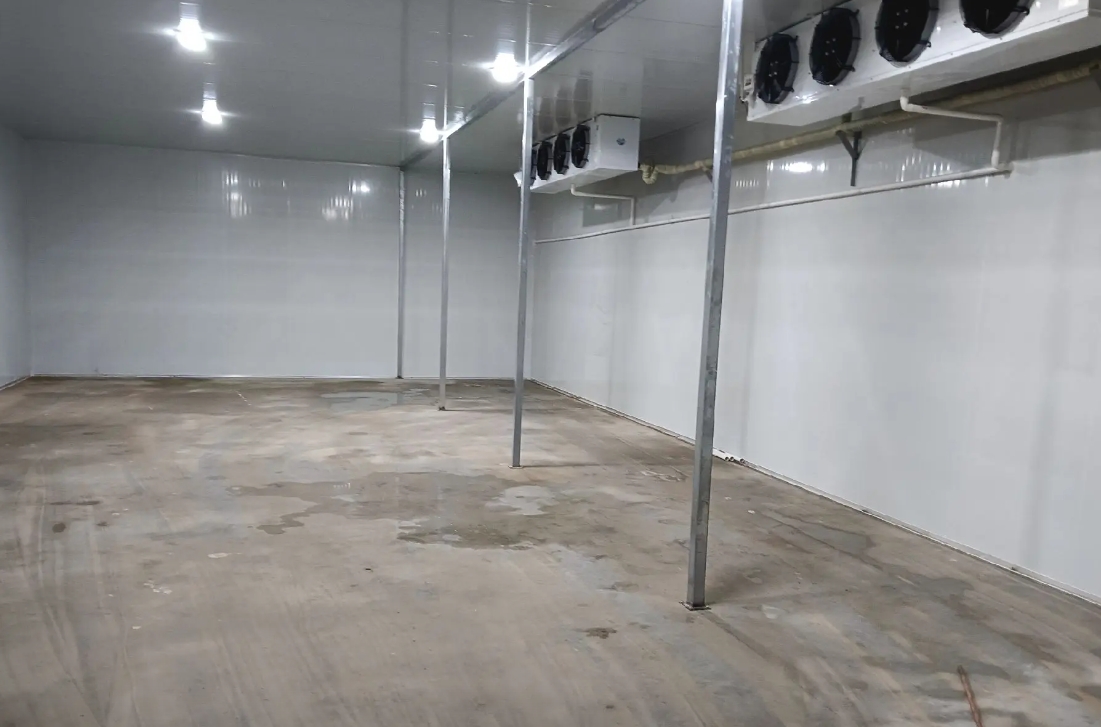
The project covers an available area of 300 ㎡ with a clear warehouse height of 5.2m. Built as an indoor cold storage inside a single-layer steel structure factory building, the site lacks original floor thermal insulation, with no spare space for an independent refrigeration machine room. This "cold storage inside factory building" mode brings the following design difficulties:
| Challenge Dimension | Specific Problems |
|---|---|
| Coupling Risks of Coexisting Multi-temperature Zones | A temperature gap of over 20°C exists between the refrigerated zone (2-8°C) and frozen zone (-18°C) separated by a single partition wall, leading to extreme risks of partition condensation and cold bridge frosting. |
| Heat Load Impact From High-turnover Operations | High-frequency inbound and outbound operations bring cumulative door-opening time exceeding 5 hours per day. Conventional cold storage doors and air curtains fail to control temperature rise effectively. |
| Stability of Lighting System in Low-temperature & High-humidity Environment | Ordinary LED lamps suffer severe luminous attenuation at -18°C, and condensation may cause short circuits. Meanwhile, the illuminance is required to reach ≥200lx to guarantee sorting accuracy. |
| Absence of Civil Floor Insulation | The original factory floor is plain concrete without XPS insulation, which may cause frost heave and floor cracking during long-term operation. |
| Air Distribution Requirements for Open Operation | The sorting area adopts an open layout for simultaneous forklift handling and manual sorting without solid partitions, while stable temperature zone boundaries must be maintained. |
Layout Design & System Scheme for 300 ㎡ Warehouse
XNAIR adopts a layout strategy of dry-wet separation and gradual temperature gradient transition for this 300-square-meter warehouse. The space is divided into three functional zones arranged from high to low temperature as below:
Receiving & Delivery Buffer Corridor: 5–10°C, acting as a transition buffer between outdoor ambient and cold storage to absorb heat and moisture load from frequent door openings.
Fresh Produce Refrigerated Zone: 2–8°C for vegetables and fruits, with combined rack storage and floor stacking layout.
Frozen Storage Zone: Independent enclosed area maintained at -18°C for frozen meat products.
A 150 mm thick double-sided color steel polyurethane partition wall separates the refrigerated and frozen zones, pre-embedded with anti-condensation heating circuits to eliminate structural icing induced by huge temperature difference. Flexible separation between buffer corridor and refrigerated zone is achieved via high-speed roller shutters paired with double air curtains. During peak sorting hours, roller doors stay open, and high-velocity air curtains stabilize temperature boundaries between zones.
Design Capacity Parameters
| Parameter | Refrigerated Zone | Frozen Zone | Buffer Corridor |
|---|---|---|---|
| Design Temperature | +2~+8°C | -18~-22°C | +5~+10°C |
| Area Ratio | Approx. 55% (165 ㎡) | Approx. 30% (90 ㎡) | Approx. 15% (45 ㎡) |
| Clear Internal Height | 4.8 m | 4.8 m | 4.8 m |
| Stored Goods | Leafy greens, solanaceous fruits, stone fruits, berries | Cut pork, poultry, beef and other frozen goods | Sorting turnover bins & mobile cage trolleys |
| Daily Maximum Throughput | 10 tons | 6 tons | — |
| Designed Storage Cycle | ≤48 hours | ≤15 days | ≤4 hours |
Core Refrigeration System Configuration
Based on thermal load calculation, the cooling load is 28 kW for the refrigerated zone, 22 kW for the frozen zone and 8 kW for the buffer corridor. Given dramatic load fluctuations of logistics cold storage and prominent demand for centralized night cooling, the system is configured as follows:
The refrigerated zone and buffer corridor share one set of 10 HP low-temperature parallel scroll compressor units with evaporation temperature of -8°C. Equipped with electronic expansion valves and ceiling-mounted air coolers featuring 4.5 mm fin spacing, the system adapts to high-humidity conditions for fruits and vegetables.
The frozen zone is equipped with an independent set of 15 HP low-temperature parallel scroll compressor units with evaporation temperature of -28°C. Its air coolers are fitted with stainless steel electric heating defrosting modules; defrost cycles are automatically adjusted via frost thickness sensors to cut unnecessary power waste from fixed-timed defrosting.
R449A refrigerant is adopted throughout the project. Its GWP value is around 65% lower than R404A, complying with global trends of eco-friendly refrigerant replacement.
An intelligent controller supports remote cloud monitoring, enabling real-time viewing of zone temperatures, compressor EER, defrost status and push notifications for equipment alarms.
Anti-Frost Heave Floor Construction
An 80 mm thick XPS extruded polystyrene board (compressive strength ≥ 300 kPa) is laid as thermal insulation on the original bare concrete factory floor, topped with a 100 mm thick reinforced concrete slab embedded with anti-freeze ventilation ducts. The frozen zone floor is additionally fitted with electric heat tracing to keep subsoil temperature above 0°C all year round, fundamentally preventing floor frost heave and cracking.
Energy-Saving Lighting & Open Sorting Optimization
To meet high illumination requirements for community group-buying sorting and withstand harsh low-temperature environments, special IP65-rated linear LED cold storage lights are installed across the whole facility, with operating temperature ranging from -40°C to +40°C. Lights are arranged along rack aisles to deliver an average illuminance of 220 lx on sorting platforms with uniformity above 0.7. Shadow-free working surfaces reduce misjudgment of vegetable freshness and barcode scanning failures.
Lighting control integrates microwave induction and door magnetic interlock:
Lights in the buffer corridor switch to 100% brightness when personnel or forklifts enter, and dim to 20% standby brightness 3 minutes after evacuation.
Lights in refrigerated and frozen zones interlock with door status and automatically power off during off-peak idle hours.
Actual testing shows the lighting system saves approximately 42% electricity compared with conventional all-day lighting schemes.
Open Sorting Circulation Route
Solid partition doors between the refrigerated zone and buffer corridor are removed. High-volume air curtains form stable temperature barriers during daytime continuous sorting. Movable sorting trolleys are placed inside the buffer corridor. Fruits and vegetables are weighed, labeled and packed into bins under 2–8°C refrigeration. Forklifts then retrieve frozen goods directly from the frozen zone for consolidated loading. The unidirectional circulation layout avoids heat load buildup caused by repeated cross-traffic and reverse personnel movement.
Full-Load Commissioning & Acceptance Test Results
After full-load joint commissioning conducted from November to December 2025 and a 72-hour non-stop temperature field test, all project indicators meet or exceed the design standards. Key acceptance data are listed below:
| Acceptance Indicator | Design Standard | Measured Value | Outcome |
|---|---|---|---|
| Temperature fluctuation of refrigerated zone | ≤±1.5°C | ±0.8°C | Compliant |
| Temperature uniformity of frozen zone | ≤±2°C | ±1.2°C | Compliant |
| Temperature recovery time after door opening | ≤15 mins | 9 mins | Excellent |
| Average daily power consumption of lighting system | ≤28 kWh | 18.7 kWh | Excellent |
| Overall COP of refrigeration system | ≥2.8 | 3.1 (annual average converted value) | Compliant |
| Floor frost heave displacement | 0 mm | 0 mm | Safe |
Operational Performance in the First Quarter
Operating data from the first quarter show the cold storage can stably fulfill order demands of 18 community group-buying grids every day. The sorting efficiency is increased by around 35% compared with the previous rented cold storage, while the goods damage rate (especially leafy vegetable yellowing and berry mildew) drops by 2.1 percentage points.
With the same goods throughput, electricity expenditure is cut by approximately 27%. This significant energy saving mainly benefits from the open buffer corridor design that minimizes cooling loss, as well as optimized lighting control and defrosting strategies.
No matter your industry, no matter how complex your refrigeration needs, XNAIR Cold Storage can provide you with customized, energy-efficient solutions. Contact us now to start your successful project!
Contact XNAIR Cold Storage Now →Hedong Canteen Cold Storage Project at East China Normal University: Customized catering cold storage solution with German Bitzer system, -18℃ and 2-8℃ dual-temperature zones, energy-efficient design...
View Details →Shanghai XNAIR builds climate-resilient seed cold storage for Wuwangnong Seed in Lishui, maintaining 0-10℃ stability at 43℃ ambient with 48hr backup power, ensuring genetic resource security....
View Details →XiangNing Cold Storage provided EPC solutions for Hetian Eheng's agricultural cold chain logistics center in Pishan County, including thermal insulation materials, installation, and intelligent contro...
View Details →Shanghai XNAIR delivers 5-10℃ adjustable cold storage for Xihekang's semiconductor silicone raw materials in Xuhui, using Embraco compressors and modular design to ensure material stability for el...
View Details →Shanghai Haohai Biotech's 2024 pharmaceutical cold storage project, featuring German Bitzer refrigeration & Schneider control systems, meets GMP/ISO standards for high-precision medical storage....
View Details →Shanghai XNAIR delivers fire-resistant 0-5℃ tobacco leaf cold storage for Jiangxi Tobacco Research, using German GEA refrigeration and B1-grade insulation to meet agricultural research & food safe...
View Details →Phone
+86 180 1742 6215Tel
Shanghai XiangNing Electromechanical Equipment Co., LTD XML