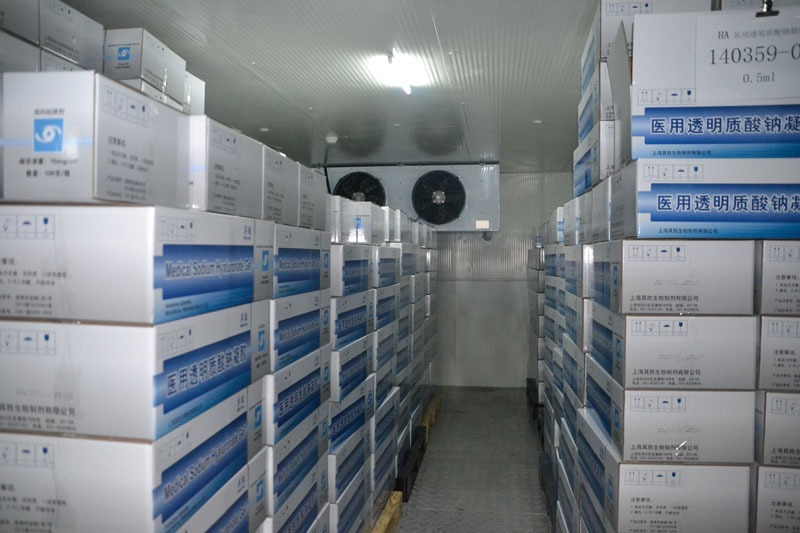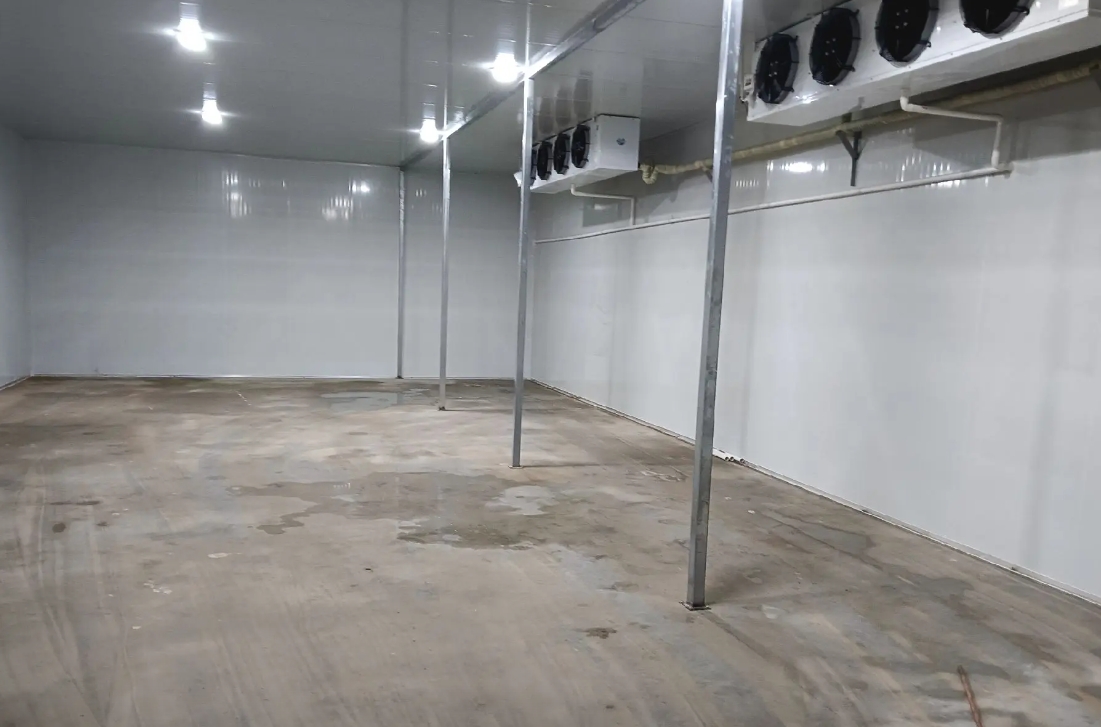
Shanxi Zhongtongji Supply Chain builds Asia's largest cargo airport cold storage hub in Ezhou, integrating smart refrigeration systems for pharmaceutical/food logistics, enhancing national cold chain
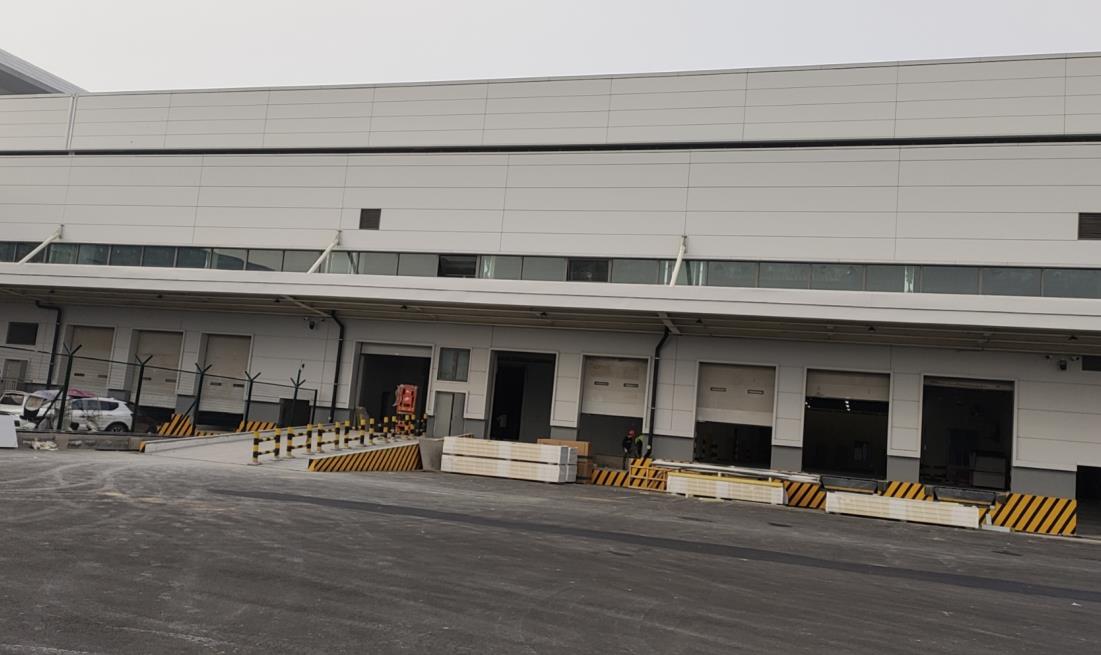
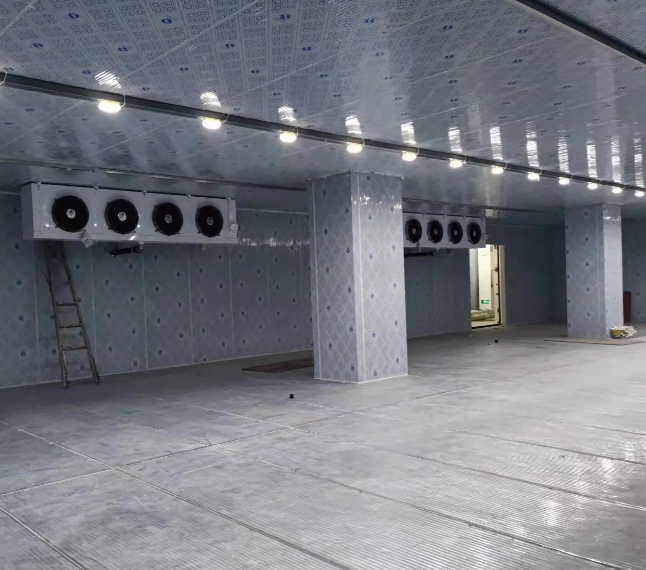
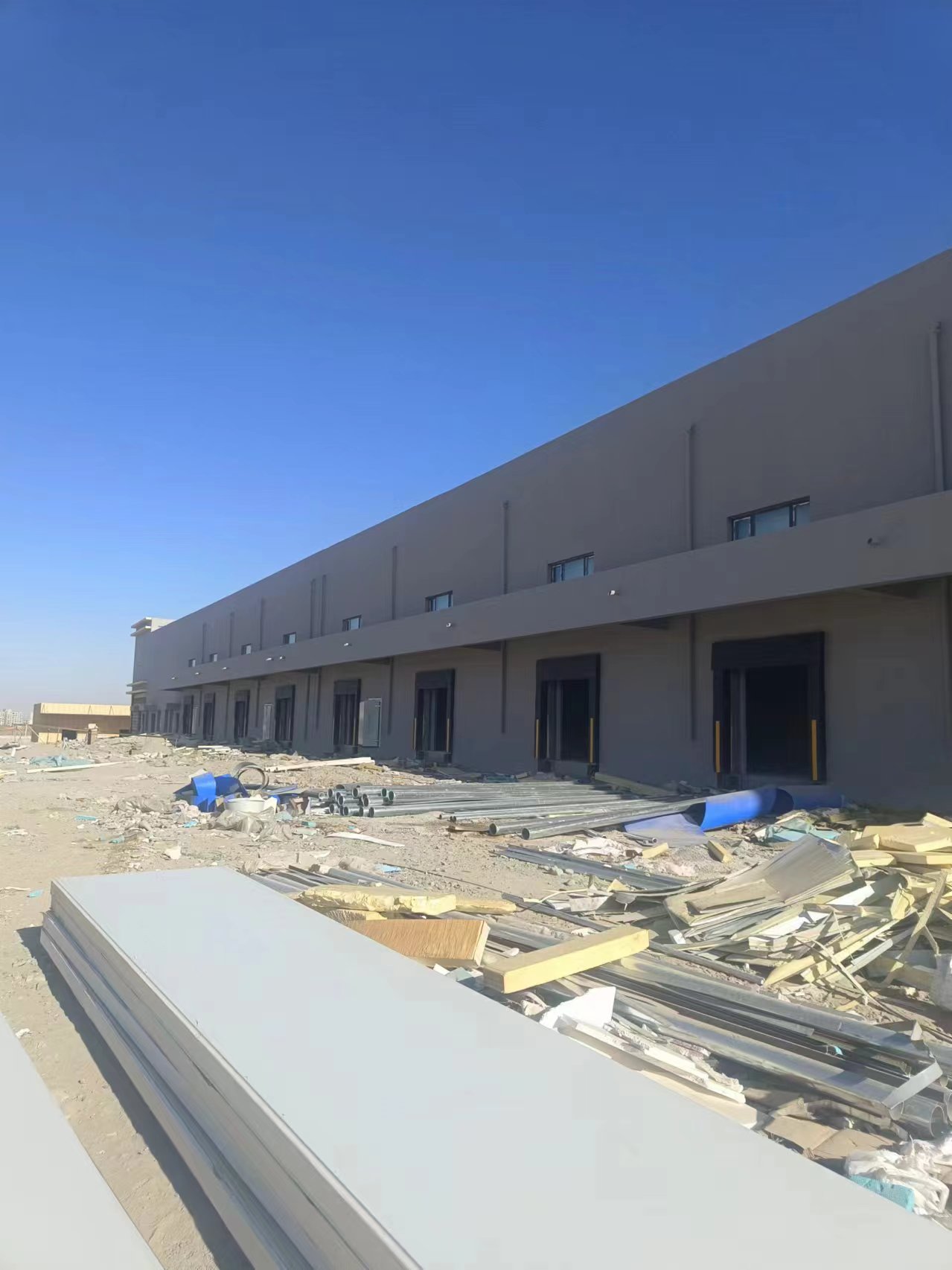
The project is situated in the air-land connection zone of the cargo terminal at Ezhou Huahu Airport, Hubei Province. It is invested and operated by Shanxi Zhongtongji Supply Chain Management Co., Ltd., while XNAIR undertakes the detailed design of refrigeration systems, equipment integration and commissioning. The cold storage adopts a modular prefabricated structure, divided into three independent supervised temperature-controlled units: domestic zone, international zone and transit zone, with a total storage volume of approximately 16,000 m³. Its temperature zones range from -25°C to +15°C, and certain warehouses allow flexible temperature adjustment within preset limits based on cargo types. As supporting cold chain infrastructure for this 4E-class cargo hub, the project is designed to support time-sensitive air cargo distribution of pharmaceuticals, biological preparations, fresh food and other products, and ensure efficient circulation of cold chain goods within a 2–5 hour flight radius.
Project Background
Shanxi Zhongtongji Supply Chain is an operator specializing in ground aviation cold chain services and multimodal transport. Ezhou Huahu Airport, China’s first dedicated cargo hub airport, had no centralized cold chain handling facilities reserved in the initial cargo terminal planning. After the launch of regular international cargo air routes, the transfer demand for vaccines, pharmaceutical intermediates, chilled aquatic products and temperature-controlled food surged. The original scattered mobile cold storage units failed to meet customs supervision and inspection standards and could not support the daily turnover of hundreds of tons of goods.
After obtaining the operation right of the public cold chain warehouse inside the airport cargo terminal, Zhongtongji decided to invest in a modular circulating cold storage adjacent to the apron on the airside, serving domestic, international and transit cargo simultaneously. The design is required to accommodate multiple temperature tiers: 2–8°C for pharmaceuticals, -1–1°C for chilled fresh goods, -18~-25°C for frozen products, plus a reserved 15°C constant-temperature processing zone for temporary storage of precision pharmaceutical raw materials and electronic components. This project also serves as a key supporting facility to upgrade the aviation node capacity of the national backbone cold chain network.
Key Challenges
Challenge 1: Construction restrictions at near stand positions within the flight zone
The construction site is less than 80 meters from the taxiway centerline and falls under airport controlled airside territory. All construction materials must pass security screening. Large hoisting equipment and welding operations require prior approval and can only be carried out within a narrow 4-hour window every night after flight operations. Strict Foreign Object Debris (FOD) prevention rules apply to all welding sparks and dust. Conventional on-site large-scale pipeline welding and assembly are therefore unfeasible, mandating prefabricated and modular refrigeration pipeline connections.
Challenge 2: Condensation and heat transfer prevention under integrated multi-temperature zone structure
The three functional zones (domestic, international and transit) are separated by physical partitions for independent customs supervision, with a maximum temperature difference of 40 Kelvin between adjacent areas (a mere partition wall separates -25°C frozen storage and 15°C constant-temperature zone). The dew point temperature in Ezhou often exceeds 28°C in summer. Infiltration of hot and humid air or heat conduction via thermal bridges on partitions will trigger condensation on partition panels, water pooling and even floor icing, which poses safety hazards to airside forklift operations. Partition structures must feature low thermal conductivity plus continuous vapor barrier sealing.
Challenge 3: System implementation and energy efficiency balance for widely adjustable temperature zones
The pharmaceutical constant-temperature zone needs quarterly or even flight-by-flight temperature switching between 2–8°C (for vaccines) and 15–20°C (for certain diagnostic reagents and electronic parts). If a single refrigeration system covers such a broad temperature range only by switching air coolers on and off, temperature fluctuation can reach ±3~4°C, failing GSP validation standards. Deploying multiple independent systems alone would drastically exceed budget and total power distribution capacity. The core design difficulty lies in achieving precise temperature adjustment via valve manifolds, frequency conversion and optimized airflow layout with a limited number of refrigeration units, while maintaining acceptable energy efficiency at the low -25°C temperature end.
Challenge 4: Temperature stabilization under high cargo throughput rhythm
Aviation cold chain cargo stays in storage for an average of less than six hours. During peak hours, large batches of international incoming pallets are moved into the warehouse, with cumulative door opening time exceeding 40 minutes per hour. Massive inflows of hot humid air require the refrigeration system to restore temperature within the specified fluctuation band in 15 minutes. Stringent standards are imposed on evaporator layout, air curtain jet velocity and unit load response speed. Especially in the -25°C transit frozen zone, delayed temperature recovery after prolonged door opening risks surface softening of subsequent frozen goods.
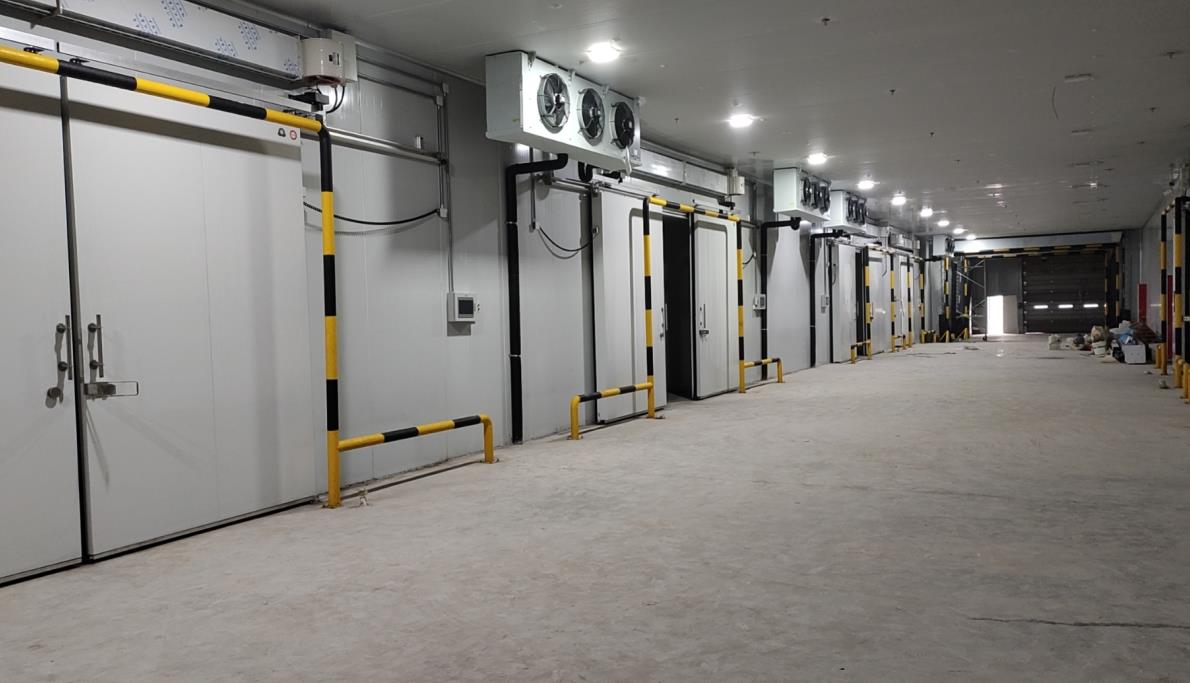
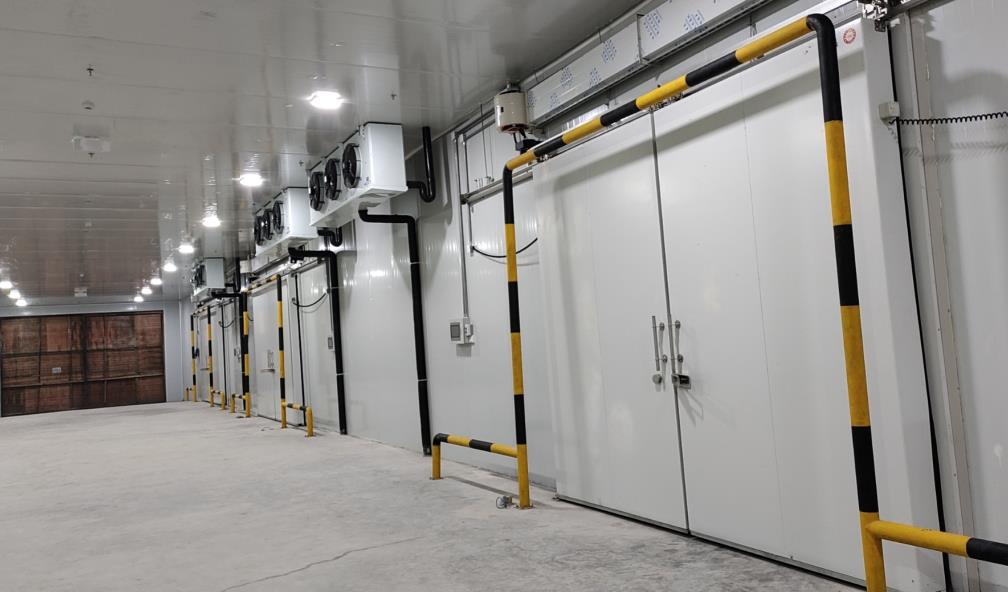
Three independent refrigeration substations are configured based on customs supervision categories and temperature tier requirements.
The low-temperature system serves the domestic frozen zone and transit ultra-low temperature zone. The base warehouse temperature is -18°C, adjustable down to -25°C for frozen meat, aquatic products, and ice cream FMCGs requiring storage below -20°C. Designed evaporation temperature is -32°C, supported by parallel screw units paired with air-cooled condensers.
Medium-temperature System I covers chilled and refrigerated zones with a design temperature of -1~4°C, mainly for chilled salmon, cold-chain fruits and dairy products. Parallel piston compressors are adopted with an evaporation temperature of -8°C. A hot gas bypass is installed for auxiliary regulation to prevent excessive evaporator cooling under low loads, which would form ice crystals and damage goods.
Medium-temperature System II serves pharmaceutical and constant-temperature zones with two adjustable setpoints: 2~8°C and 15°C. Semi-hermetic variable-frequency piston compressors work in precise coordination with electronic expansion valves and two-speed air coolers, enabling evaporation temperature to shift synchronously with warehouse temperature setpoints and achieving temperature control accuracy of ±1°C.
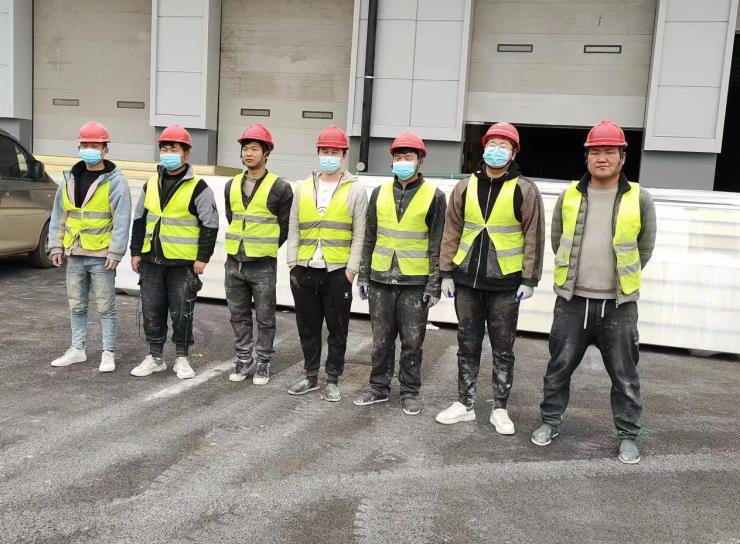
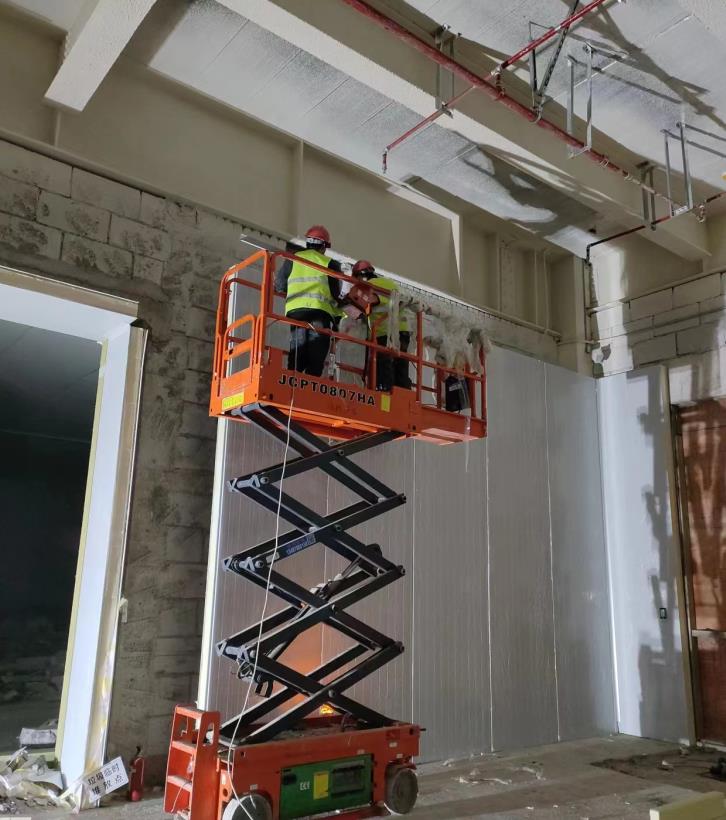
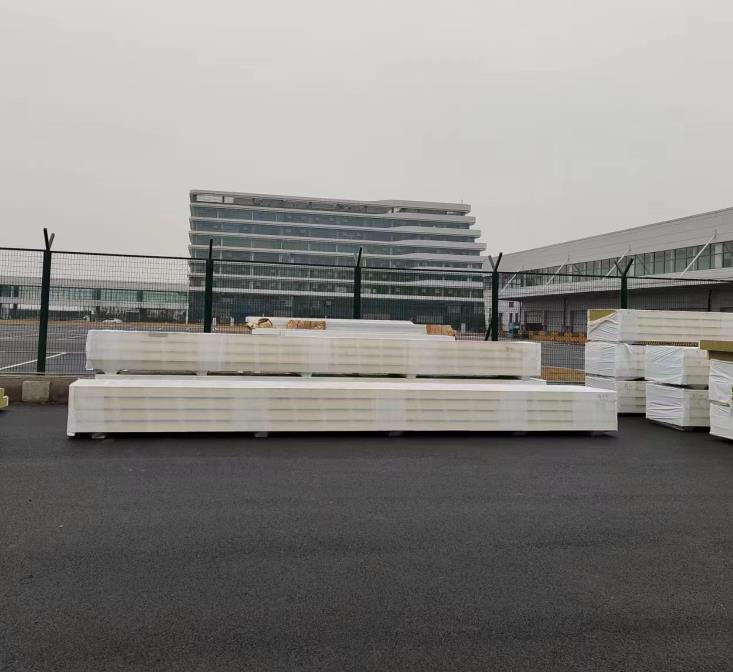
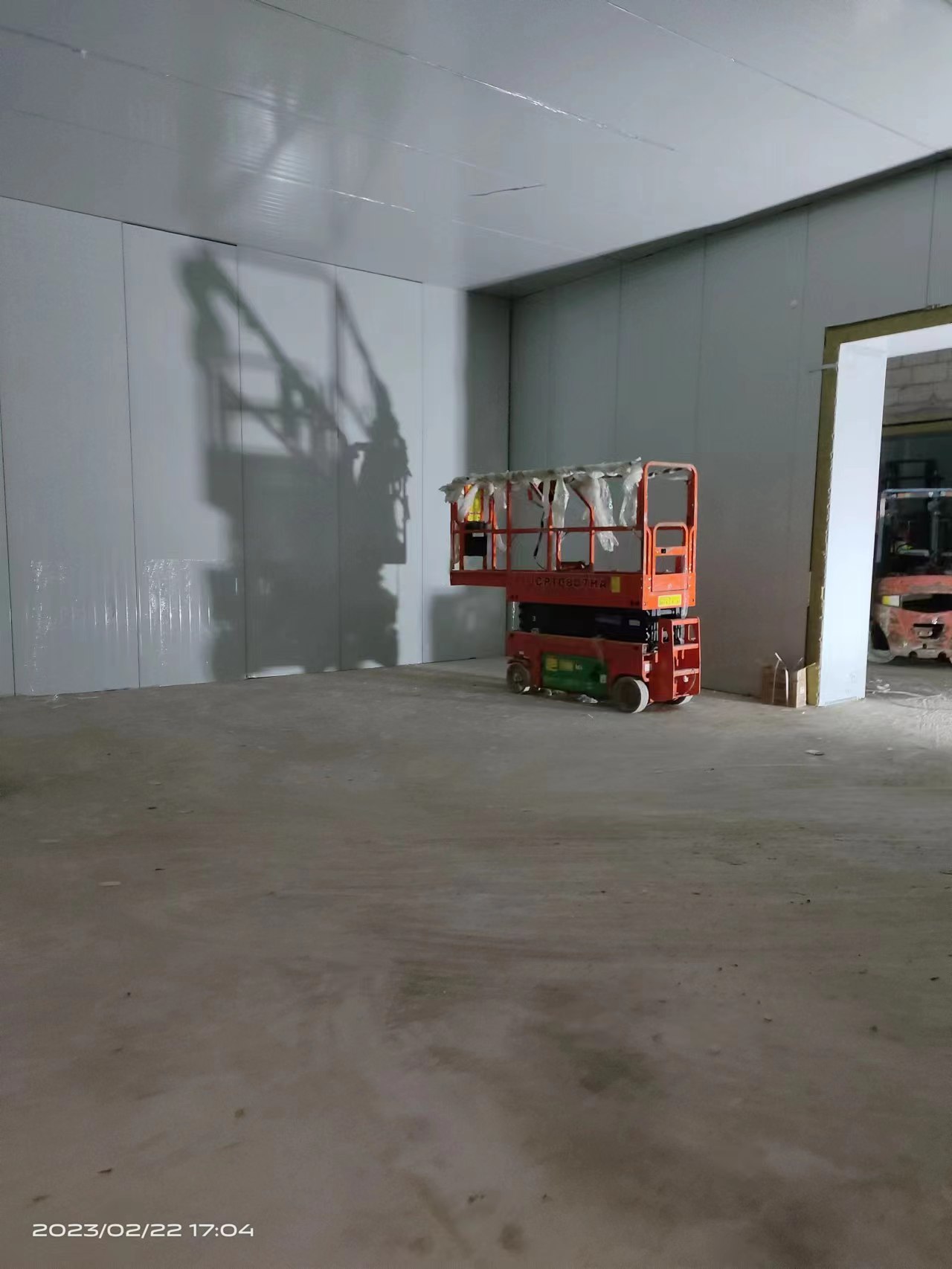
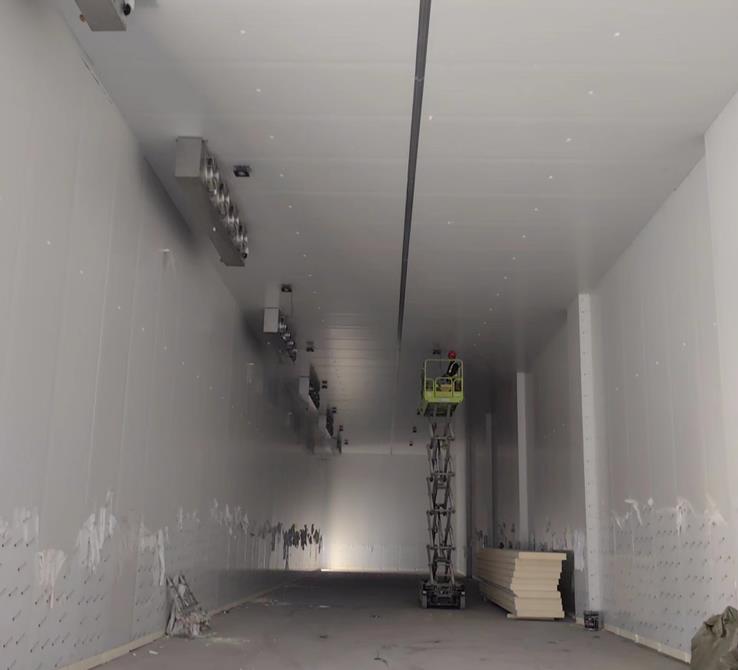
The entire cold storage enclosure uses 150 mm thick PIR sandwich panels, while partition walls adopt 200 mm PIR panels. Independently poured insulated floor slabs with built-in electric trace heating prevent freezing. Rapid insulated roller shutters and non-heated air curtains separate the transfer lobby from cold rooms, and inflatable door seals are installed at international and transit passageways.
| Equipment Name | Brand & Model | Function |
|---|---|---|
| Parallel Low-temperature Screw Compressor Unit | 2 × Bitzer CSH6553-100Y-40P in parallel | Supplies cooling capacity for -18°C / -25°C cold rooms |
| Parallel Medium-temperature Piston Compressor Unit | 3 × Bitzer 4NCS-12.2Y in parallel | Delivers cooling for chilled & refrigerated rooms |
| Variable-frequency Medium-temperature Piston Compressor | Single Bitzer 4VCS-6.2Y variable-frequency unit | Powers adjustable pharmaceutical constant-temperature zones |
| Air-cooled Condenser | 4 × Güntner GVH 092B/4 | Independent heat rejection for the three refrigeration systems |
| Low-temperature Air Cooler | Güntner S-GNH 050B/27 | Forced circulation cooling in -25°C warehouses |
| Dual-outlet Medium-temperature Air Cooler | Güntner Cubic CUBE 064C/46 | Low airflow & high static pressure for chilled and pharmaceutical zones |
| Control System | Siemens S7-1200 PLC + Danfoss AK-SM 850A | System coordination, warehouse temperature monitoring, alarm management |
| Electronic Expansion Valve | Danfoss ETS 6 / ETS 12C | Precise independent liquid supply regulation for each air cooler |
| Cold Storage Insulated Panel | 150mm / 200mm PIR panels, double-sided 0.6mm color steel sheet, Class B1 flame retardant | Warehouse enclosure and partition walls |
| Rapid Roller Shutter | Efaflex EFA-SST | Minimizes cold air loss at high-frequency access points |
All insulated panels are formed via high-pressure polyurethane injection at the factory with pre-drilled pipe openings. On-site assembly uses cam lock hooks; panel joints are filled with two-component polyurethane foam and sealed with aluminum foil butyl tape to form a continuous vapor barrier.Complying with airport FOD control rules, all open-flame welding is prohibited on site. Refrigeration copper tubes are fully prefabricated off-airport: cutting, tube expansion and nitrogen-shielded brazing are completed in external workshops, then delivered to the site for cold connections (flareless fittings or flanges).Compressor bases are cast-in-situ floating reinforced concrete foundations fitted with vibration pads to avoid low-frequency interference with the airport’s precision communication and navigation equipment.The electrical system adopts TN-S earthing. All instrument cables run through galvanized steel conduits along maintenance walkways and connect to the cargo terminal SCADA system for archiving and inspection.
Phase 1: No-load cooling test. Each cold room is cooled from ambient temperature down to the minimum design temperature; cooling-down duration and unit load rates are recorded.Phase 2: Simulated load test. Standard pallets filled with ethylene glycol aqueous solution simulate the thermal mass of actual cargo. Temperature recovery curves are tested under continuous door opening conditions.For pharmaceutical constant-temperature zones, additional switching validation between the 2~8°C and 15°C setpoints is carried out to verify smooth system transition within 6 hours.
A third-party validation institute deploys 16 temperature loggers per GB/T 34399-2017 Validation of Temperature-controlled Facilities and Equipment for Pharmaceutical Cold Chain Logistics, continuously recording temperature fluctuations and extreme values over 72 hours before issuing a thermal distribution validation report.Test results:
All measuring points in low-temperature zones range from -25.3°C to -24.1°C;
Pharmaceutical zones maintain 4.2±0.7°C;
Temperature fluctuation in chilled zones is controlled within ±0.8°C.
All indicators meet design requirements, and the facility is handed over for official operation.
Validation Results
Under extreme high-temperature summer conditions, the -25°C frozen zone cools back down below -23°C within 15 minutes after door opening, and stabilizes near the target setpoint in another 10 minutes. When switching the pharmaceutical constant-temperature zone’s setting from 2°C to 15°C, the maximum internal temperature difference is only 1.2°C, with no temperature overshoot or condensation observed. The system ran continuously for three months without refrigerant leakage alarms, and compressors maintained smooth oil return.
Actual Operational Performance
Since commissioning, the cold storage has handled turnover of diverse cargo including chilled beef from South America, Chilean cherries and European pharmaceutical intermediates, with a peak daily throughput of over 120 international cold chain ULD pallets.
The Siemens PLC is integrated with the airport cargo terminal’s WMS system, enabling automatic temperature zone assignment upon goods entry; shipments exceeding acceptable temperature thresholds are automatically diverted to the quarantine holding area.
Danfoss controllers dynamically adjust the number of active compressors and electronic expansion valve opening based on real-time load. During low-load periods with only 30% storage occupancy, the Medium-temperature II system automatically reduces frequency to 35 Hz, cutting power consumption substantially.
Project Benefits
The average dwell time of each shipment inside the warehouse is reduced by 40% compared with the previous outdoor mobile freezer solution, alongside a sharp drop in operational error rates.
Pharmaceutical shipments maintain an uninterrupted 2–8°C cold chain throughout transit, complying with WHO and Chinese GSP aviation transfer standards. This qualification allowed Zhongtongji to secure two vaccine transit projects commissioned by international organizations.
Annual actual power consumption of the refrigeration system is roughly 18% lower than the design budget. Combined with discounted electricity rates available during off-hours after daily flight operations, overall operating costs remain well within target limits.
This facility also greatly boosts cold chain processing capacity at Ezhou Airport port, eliminating the need for fresh produce and pharmaceuticals in Central China to take detours via cold storage hubs in Shanghai and Zhengzhou.
No matter your industry, no matter how complex your refrigeration needs, XNAIR Cold Storage can provide you with customized, energy-efficient solutions. Contact us now to start your successful project!
Contact XNAIR Cold Storage Now →Hedong Canteen Cold Storage Project at East China Normal University: Customized catering cold storage solution with German Bitzer system, -18℃ and 2-8℃ dual-temperature zones, energy-efficient design...
View Details →Shanghai XNAIR builds climate-resilient seed cold storage for Wuwangnong Seed in Lishui, maintaining 0-10℃ stability at 43℃ ambient with 48hr backup power, ensuring genetic resource security....
View Details →XiangNing Cold Storage provided EPC solutions for Hetian Eheng's agricultural cold chain logistics center in Pishan County, including thermal insulation materials, installation, and intelligent contro...
View Details →Shanghai XNAIR delivers 5-10℃ adjustable cold storage for Xihekang's semiconductor silicone raw materials in Xuhui, using Embraco compressors and modular design to ensure material stability for el...
View Details →Shanghai Haohai Biotech's 2024 pharmaceutical cold storage project, featuring German Bitzer refrigeration & Schneider control systems, meets GMP/ISO standards for high-precision medical storage....
View Details →Shanghai XNAIR delivers fire-resistant 0-5℃ tobacco leaf cold storage for Jiangxi Tobacco Research, using German GEA refrigeration and B1-grade insulation to meet agricultural research & food safe...
View Details →Phone
+86 180 1742 6215Tel
Shanghai XiangNing Electromechanical Equipment Co., LTD XML