Shanghai Likangrui Pharmaceutical Cold Storage Project by XNAIR Refrigeration: 2-8°C medical-grade cold storage solution with 1,590m³ capacity, using Bilbox units & SICK air coolers. Completed in
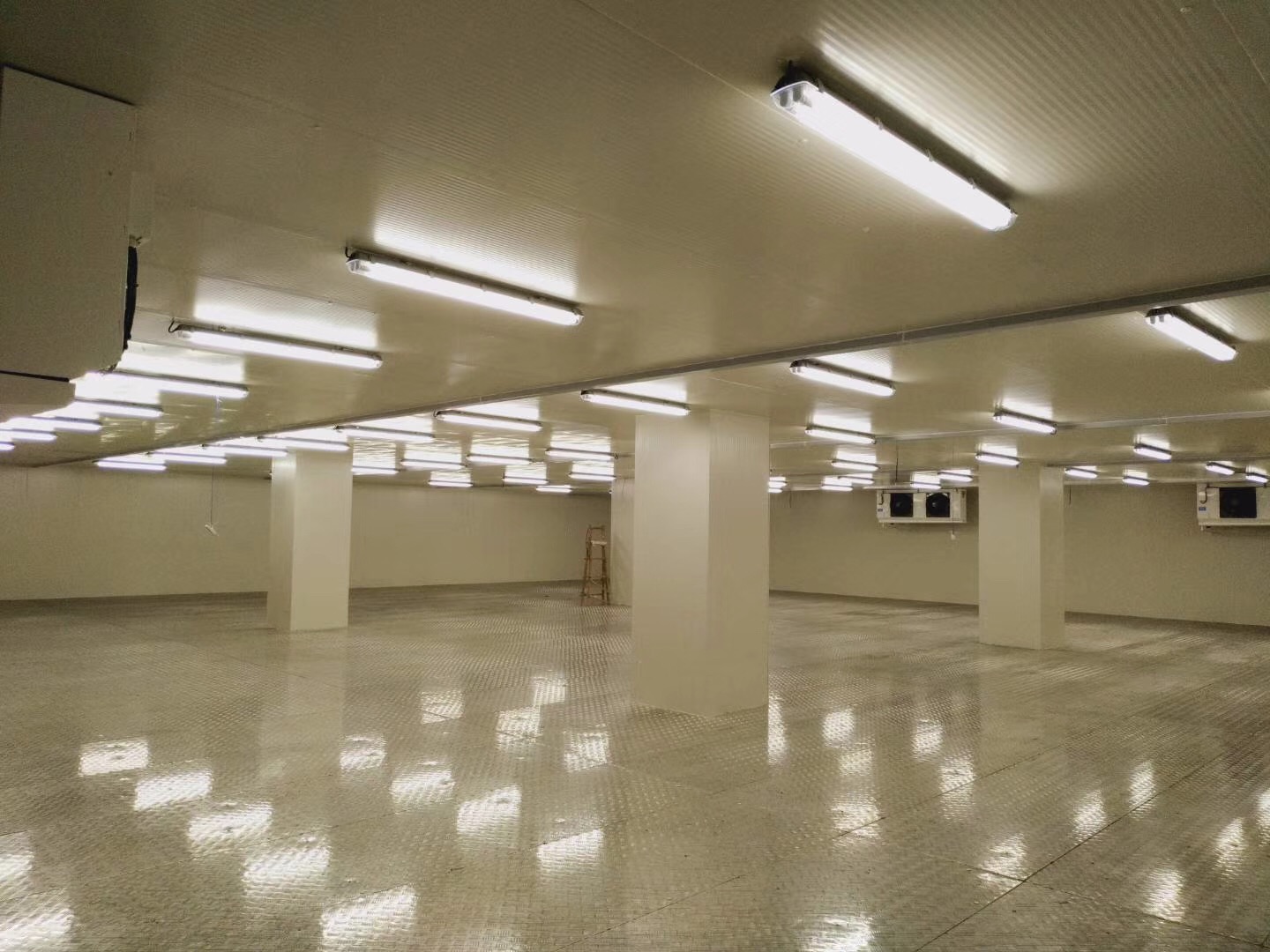
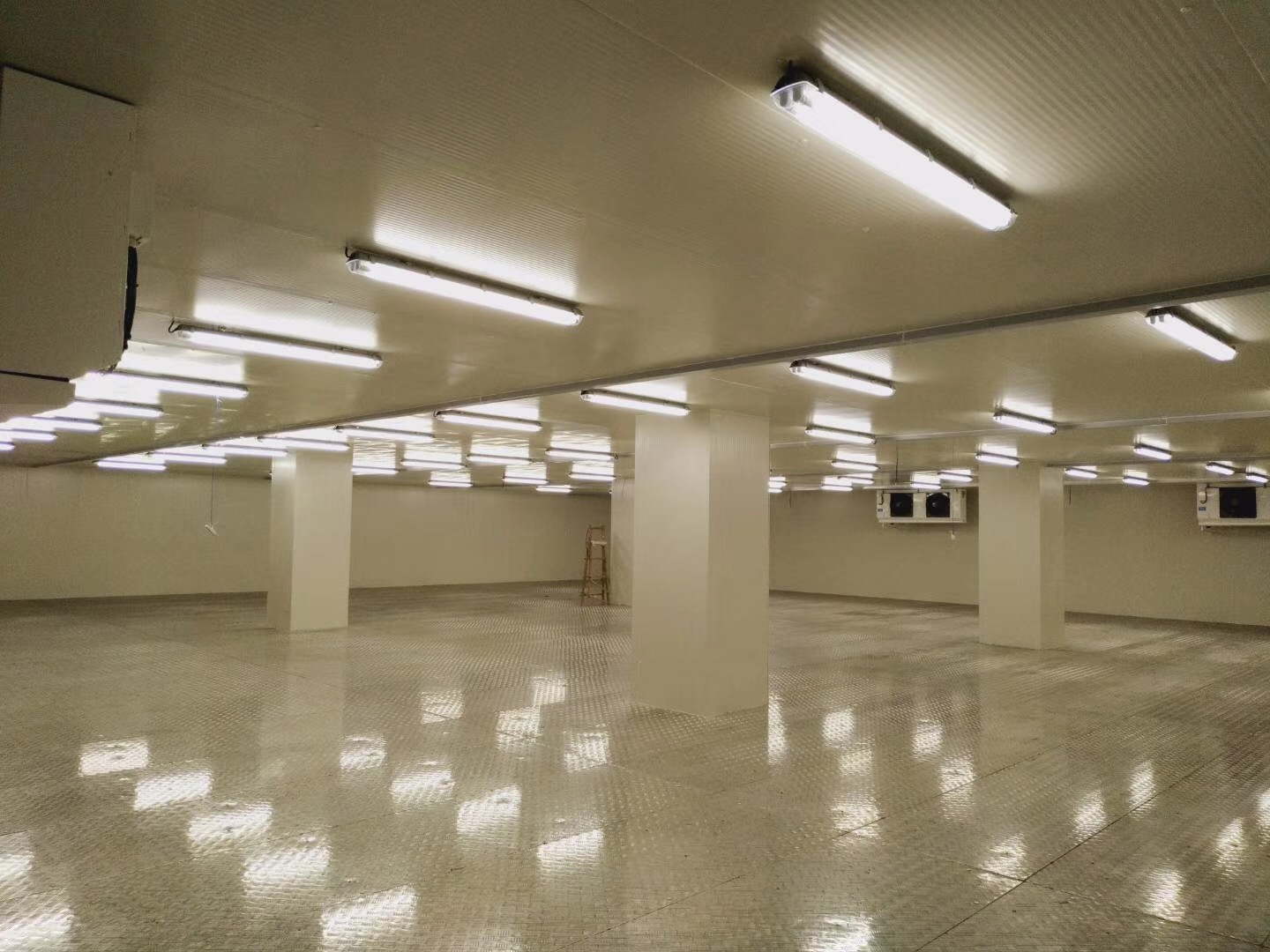
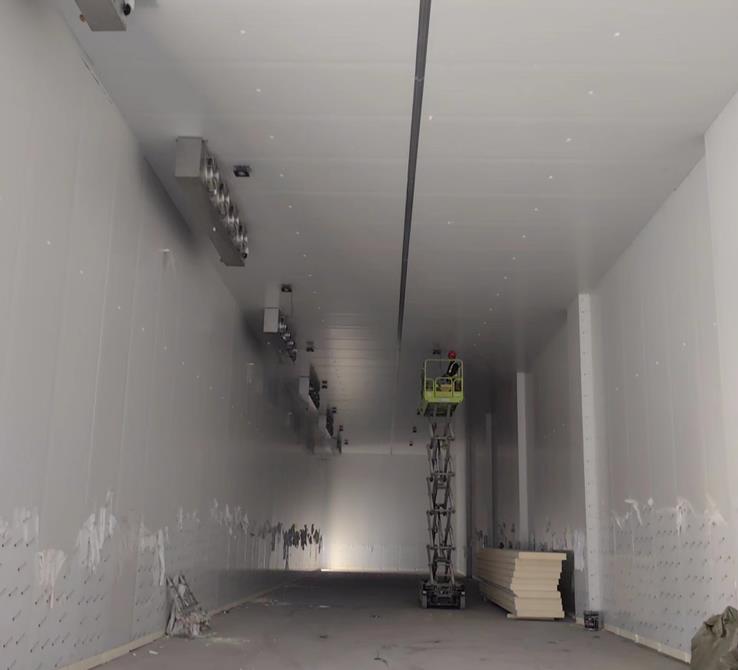
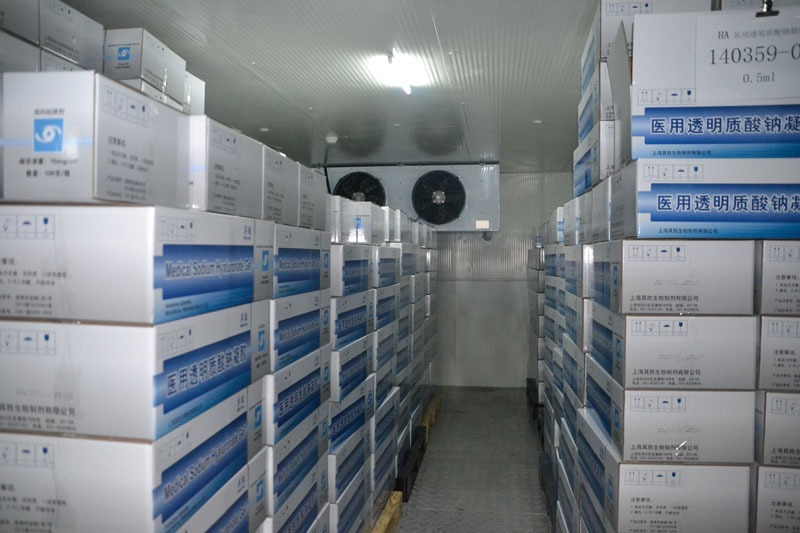
This new pharmaceutical cold storage project for Shanghai Likangrui Pharma, fully designed and installed by XNAIR, is located in Qingpu District, Shanghai. Designed for 2℃–8℃ storage, the warehouse covers a construction area of 530 ㎡ with a clear internal height of 3.0 m and a total volume of 1590 m³, mainly for refrigerated pharmaceutical preparations and diagnostic reagents. Completed and passed acceptance in December 2025, it fully meets the GSP requirements for refrigerated drug warehousing.
Project Background
Shanghai Likangrui Pharmaceutical is a pharmaceutical distribution enterprise engaged in drug wholesale, warehousing and delivery. Its core businesses include regional distribution and terminal supply of chemical pharmaceutical preparations, antibiotics and medical diagnostic reagents, serving medical institutions and retail pharmacies in Shanghai and surrounding areas.
The company’s original cold storage, built in 2012, had a total volume of only 600 m³ equipped with outdated piston refrigeration units. After years of operation, its cooling efficiency kept declining, with maximum temperature fluctuation reaching ±2.3°C. Lacking a standardized continuous temperature & humidity monitoring system, it failed to comply with the 2016 GSP Appendix: Storage and Transportation Management of Refrigerated and Frozen Drugs.
In addition, the expanding range of distributed medicines pushed up refrigerated stock year by year, creating a storage shortage of over 60%. The company long relied on rented third-party cold storage, which brought high warehousing costs and complicated quality control during drug transfers.
To resolve insufficient capacity and compliance risks, the enterprise launched a new pharmaceutical cold storage project in 2025. The goal was to build a standardized 2–8°C cold warehouse to cover refrigerated drug storage demand for the next 3–5 years and pass GSP compliance validation in one go to guarantee pharmaceutical storage quality.
Key Challenges
Challenge 1: Limited ceiling height in existing factory complicates storage utilization and airflow layout
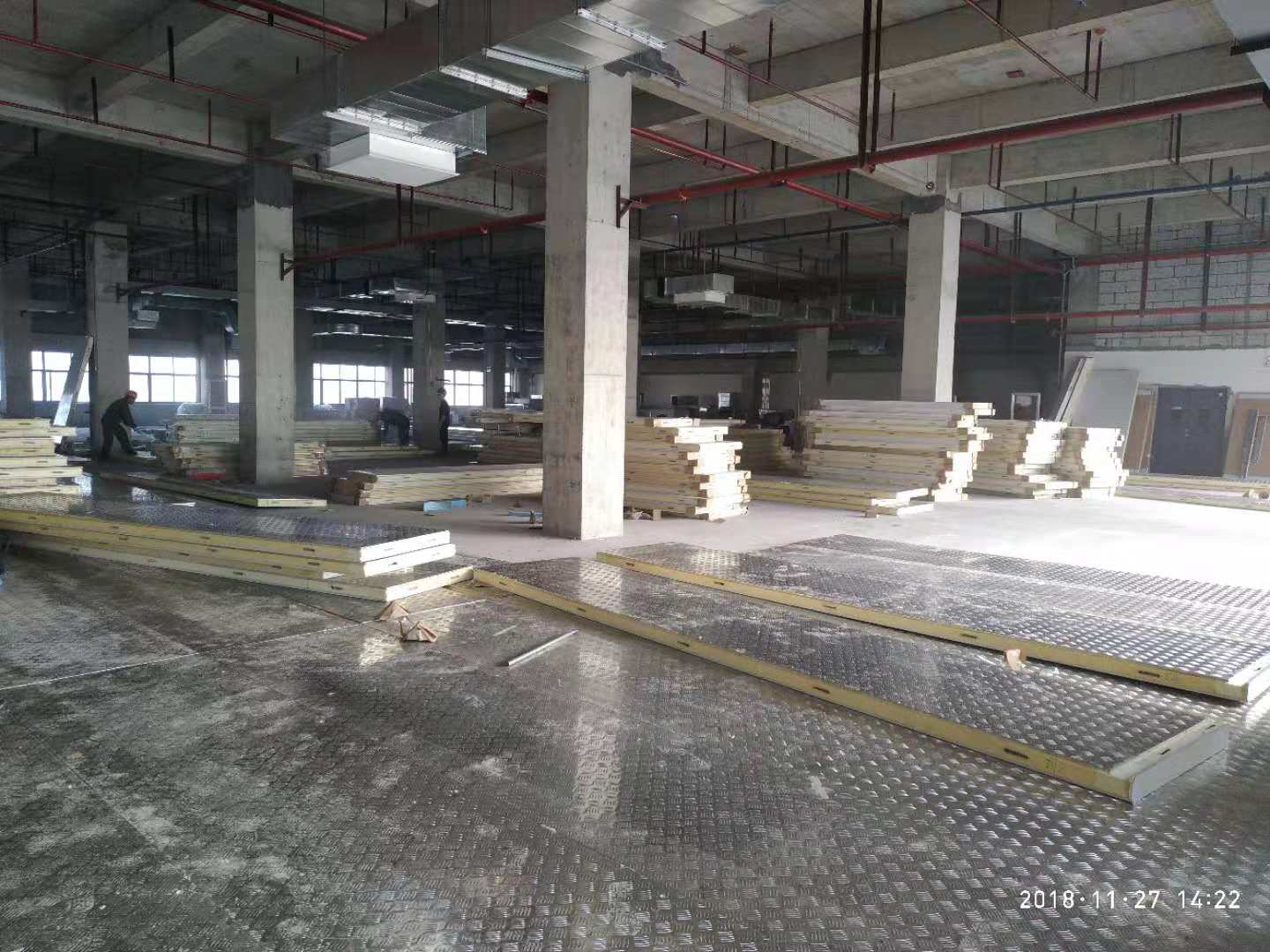
The project is built inside the company’s original single-story brick-concrete factory with a clear height of merely 3.2 m under beams. After deducting the thickness of top and bottom insulation panels and installation gaps, the usable internal height is only 3.0 m.
Conventional ceiling air coolers require an installation clearance of over 300 mm, which further reduces effective storage space and easily causes short-circuited air circulation, leading to excessive vertical temperature differences and local out-of-spec temperatures. The design had to balance high space utilization and uniform airflow within restricted vertical space.
Challenge 2: Hot and humid summers in Shanghai raise strict standards for anti-condensation and humidity control
Located in Qingpu District, Shanghai, the site sees extreme summer temperatures up to 38°C and relative humidity above 85% for extended periods during the plum rain season.
Frequent door openings create large temperature and humidity gaps between inside and outside the warehouse, easily triggering condensation around door frames and panel joints. Long-term condensation penetrates and damages insulation layers. Meanwhile, indoor humidity may deviate from the GSP-specified 45%–75% RH range and impair drug quality.
Challenge 3: Tight construction schedule to finish acceptance before GSP license renewal
Only two months remained until the inspection for the company’s Drug Business License renewal when the project kicked off. The cold storage had to complete construction, commissioning and third-party temperature validation by late December 2025 and pass compliance inspection at the first attempt.
The project involved multiple overlapping works including old warehouse demolition, floor treatment, panel assembly, refrigeration piping and electrical wiring, bringing heavy schedule management pressure.
Challenge 4: Rigorous temperature accuracy requirements and high system reliability for drug safety
Per GSP rules, refrigerated medicines must be stored steadily at 2–8°C with temperature fluctuation limited to ±1°C, alongside continuous temperature & humidity data logging, storage and over-limit alarms.
A refrigeration system fault may push warehouse temperature up rapidly and result in full batches of scrapped medicines. Thus redundant backup capacity was mandatory to prevent single-point failures from endangering temperature safety.
Design Solution
Temperature Design Logic
The design strictly complies with GSP specifications for refrigerated drug storage. The rated warehouse temperature is set at 5°C, with early warning thresholds of 3°C and 7°C; audible, visual and SMS alarms trigger immediately once readings go out of bounds. The design requires temperature uniformity ≤1°C across all measuring points with no cold spots, meeting storage standards for pharmaceuticals stacked at varying heights.
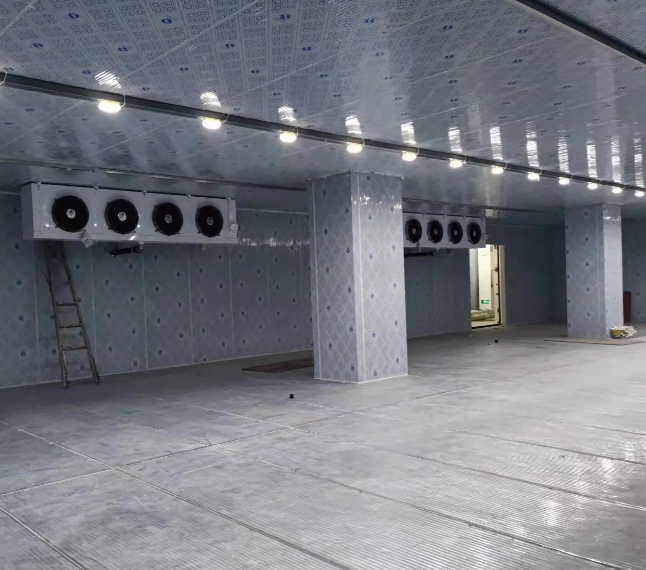
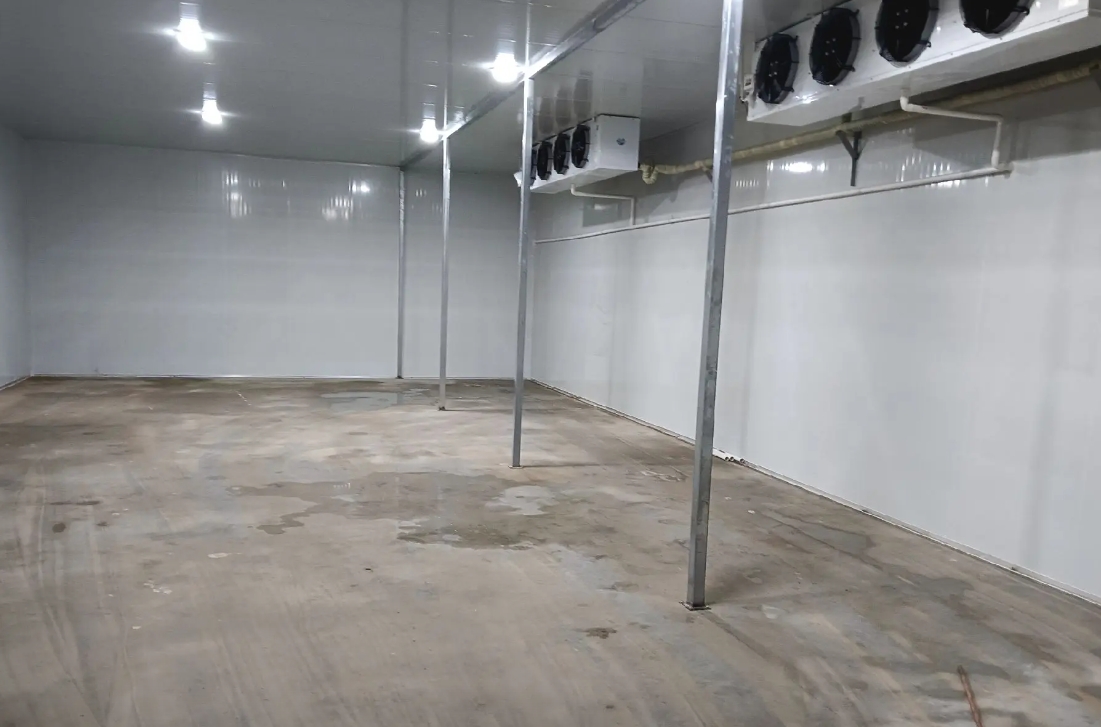
To adapt to the limited 3.0 m clear height, the airflow layout is optimized. Ultra-thin air coolers deliver air sideways and downward, with natural air return at the floor. Cold air flows down both side walls toward the center floor, avoiding direct cold blast on goods that causes localized overcooling, while minimizing vertical space occupied by equipment.
Refrigeration System Design
A direct-expansion air-cooled refrigeration system is adopted, with outdoor units mounted on the factory roof to save indoor storage space.
Cooling load calculation takes full account of Shanghai’s extreme summer outdoor conditions, heat transfer through building envelopes, cooling load from incoming goods, air exchange load from frequent door openings and equipment heat dissipation. The total designed cooling load is 31.8 kW.
A primary-standby dual-unit setup is deployed; a single unit’s 35 kW cooling capacity suffices for full-load warehouse operation. The two units alternate startup and shutdown during daily operation to balance wear. If one unit fails, the control system switches to the standby unit automatically within 60 seconds to avoid drastic temperature swings.
Backup System Design
Beyond redundant refrigeration units, the electrical system is equipped with a UPS. After mains power failure, the UPS sustains operation of the temperature & humidity monitoring system, alarm devices and controllers for over 4 hours to secure complete data recording and functional alarms.
Independent on-site audible-visual alarms are installed inside the warehouse, linked to the duty room monitoring terminal and SMS alerts to management staff for multi-layered notification.
| Equipment Name | Brand & Model | Function |
|---|---|---|
| Air-cooled Piston Refrigeration Unit | Bilbox BX-35PZ | Drives refrigeration cycle to remove heat from the warehouse; primary-standby configuration, single unit cooling capacity: 35 kW |
| Ultra-thin Ceiling Air Cooler | SICK SK-D120 | Facilitates air heat exchange and cooling inside the warehouse; low-speed centrifugal fan reduces air dehydration; unit thickness only 200 mm |
| Dedicated Control System for Pharmaceutical Cold Storage | Elitech ECB-500 | Collects temperature & humidity data, implements unit logic control, automatic switchover, alarm output, data storage and export |
| Polyurethane Insulated Panel | Baorun 100 mm PU panel | Thermal enclosure for warehouse; double-sided 0.5 mm color steel sheet, thermal conductivity ≤0.022 W/(m·K), connected with eccentric hooks |
| Electric Sliding Insulated Door | Jinxue JXM-1521 | Access for personnel and goods; fitted with door frame electric heating to prevent condensation |
| High-precision Temperature & Humidity Sensor | Rotronic HygroClip2 | Indoor temperature & humidity collection; accuracy ±0.1°C / ±1.5% RH, meets GSP validation standards |
| UPS Uninterruptible Power Supply | Santak C1K | Maintains monitoring and alarm systems during power outages, backup duration ≥4 hours |
Insulated Panel Installation
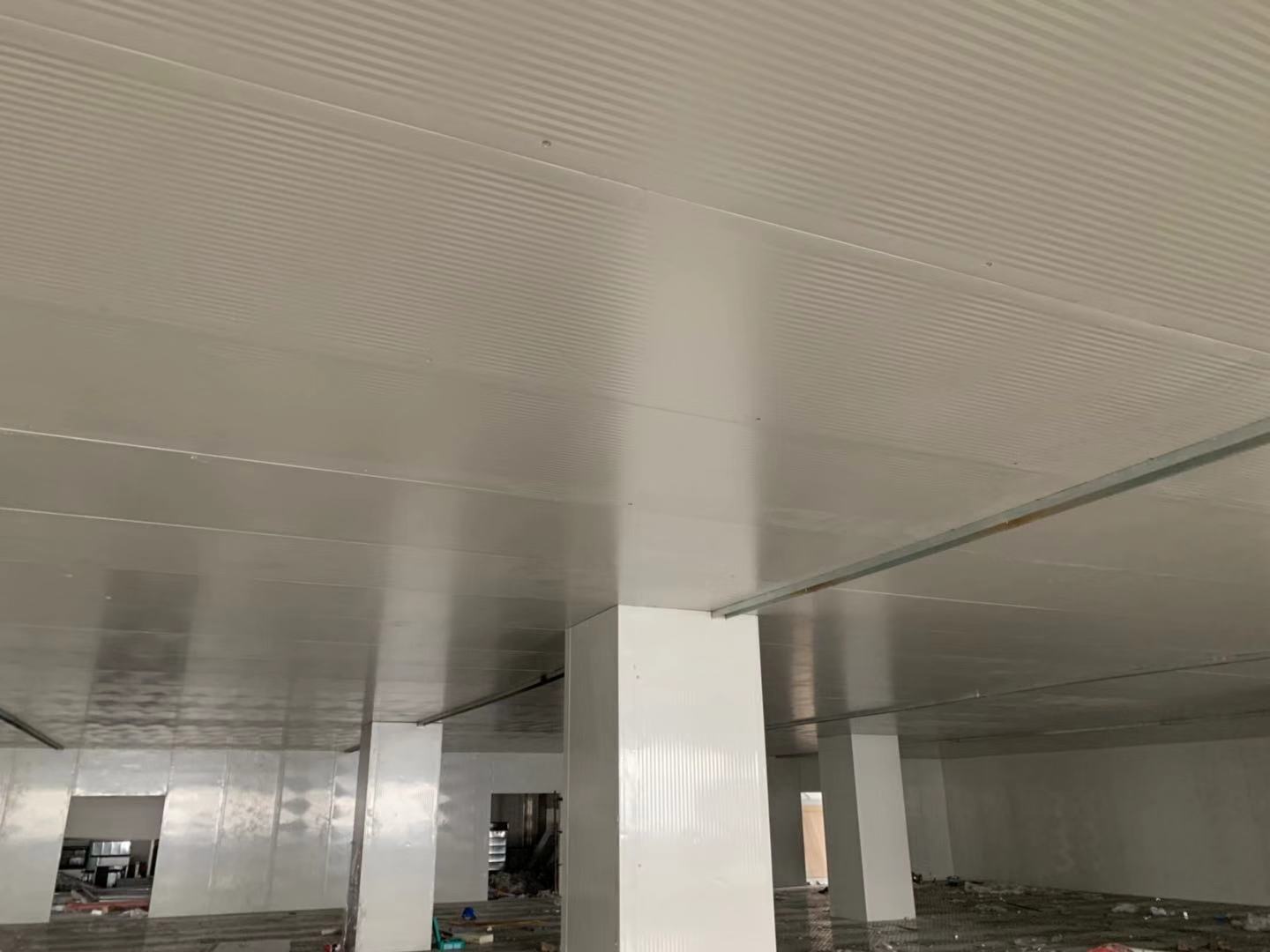
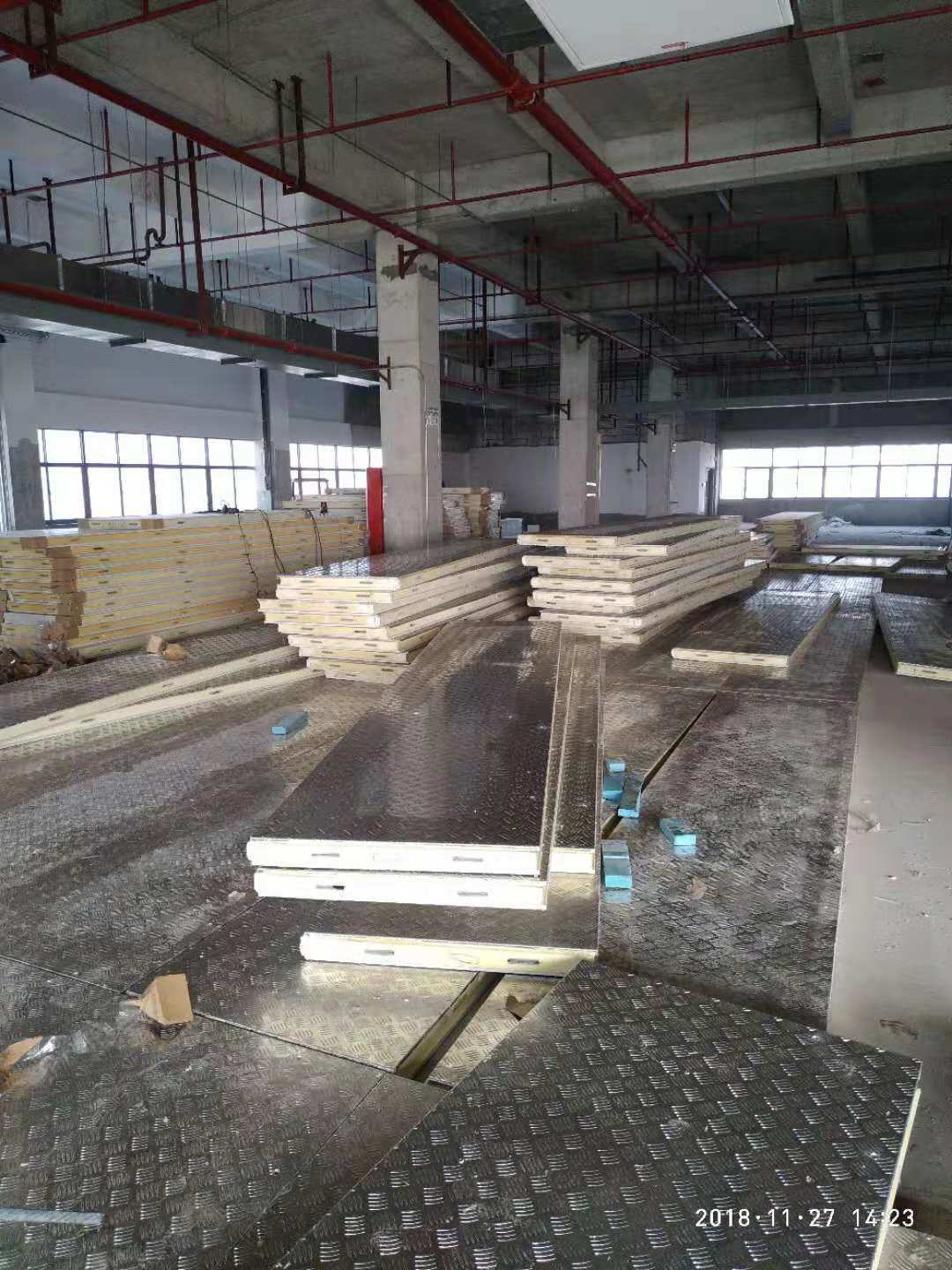
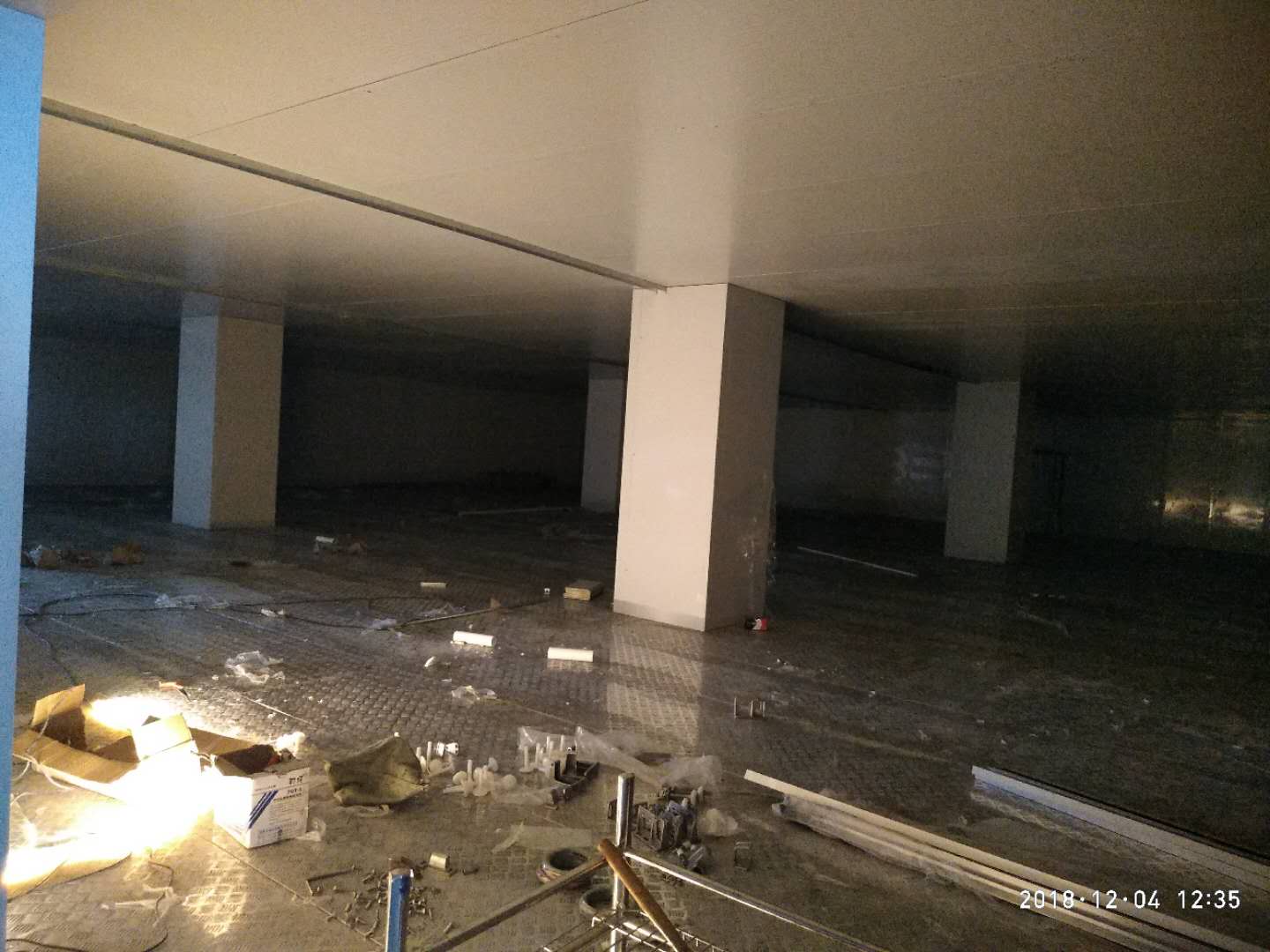
The original floor was levelled first, covered with a 0.5 mm PE moisture-proof film, then laid with 100 mm floor insulation panels, topped by a 2 mm epoxy wear-resistant floor coating to resist abrasion from cargo handling.
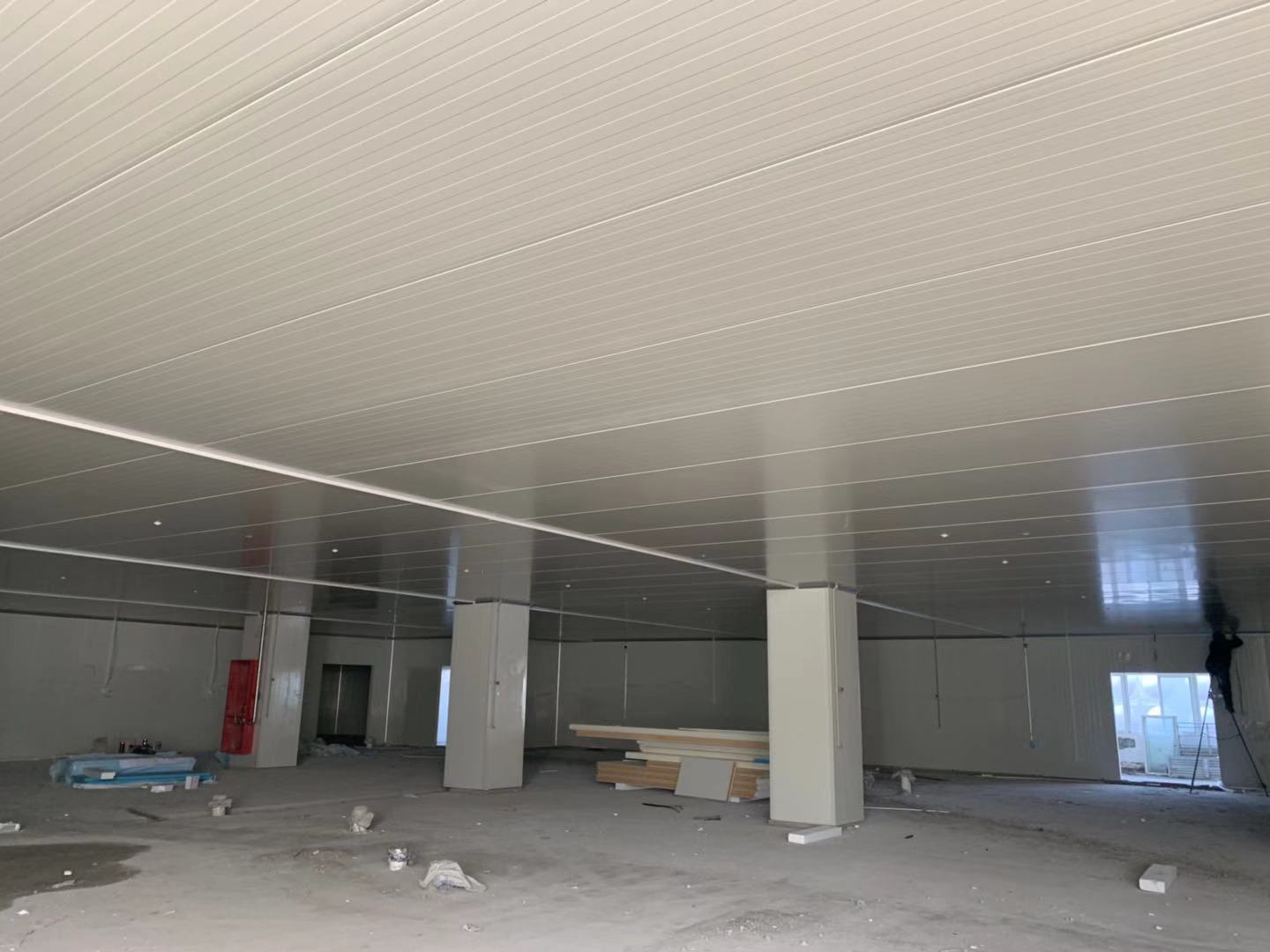
Wall and ceiling panels are joined via eccentric hooks, with polyurethane foam injected into all seams for airtightness. Ceiling panels are mounted flush against the bottom of factory beams to maximize vertical space, delivering a finished clear height of exactly 3.0 m as designed.
All internal corners are finished with aluminum alloy profiles, and neutral silicone sealant is applied externally on panel joints to block moisture penetration.
Refrigeration Equipment Installation
Outdoor units sit on 200 mm high concrete bases fitted with rubber vibration pads, with 1.2 m ventilation clearance reserved between units for effective heat dissipation.
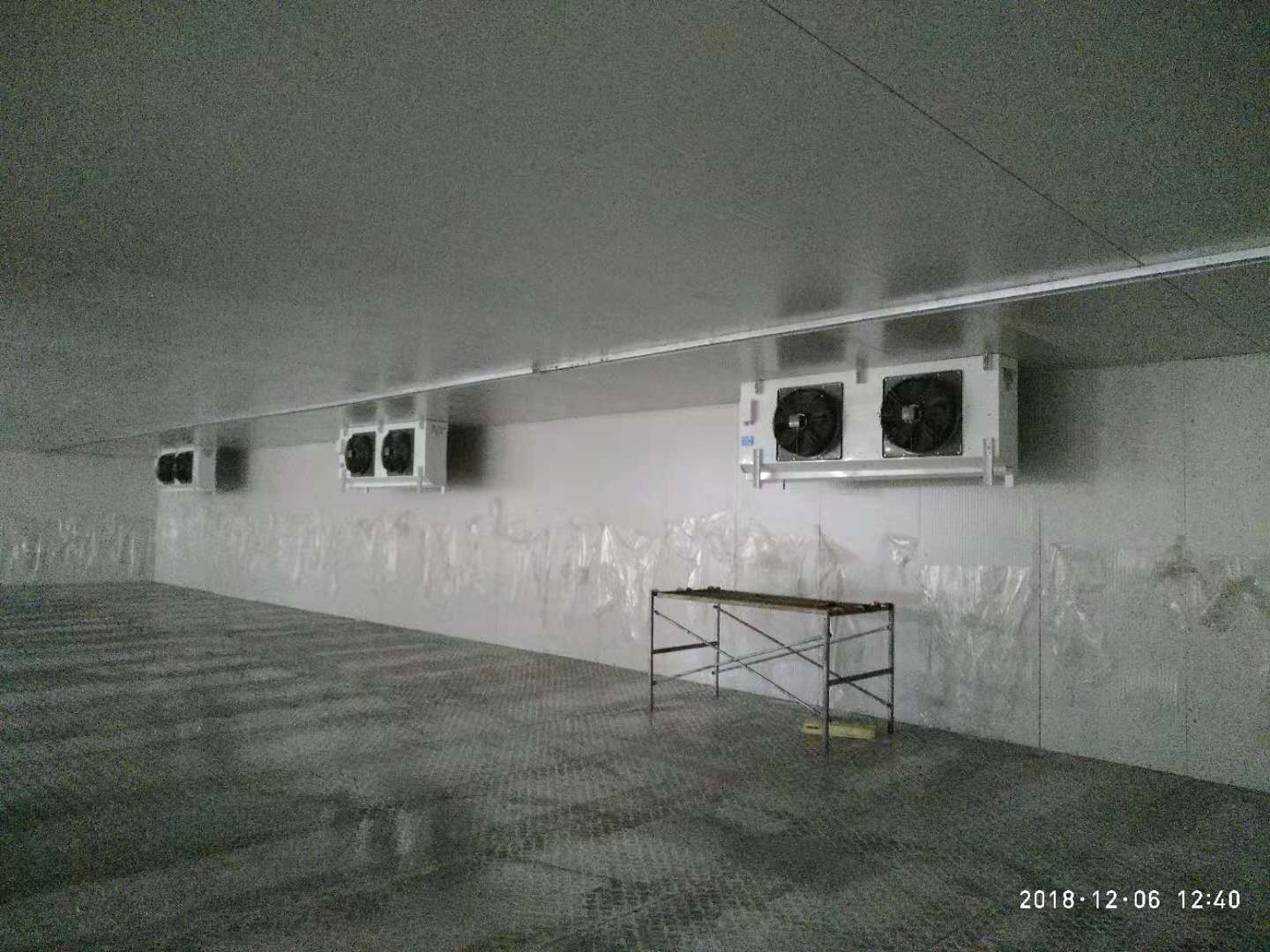
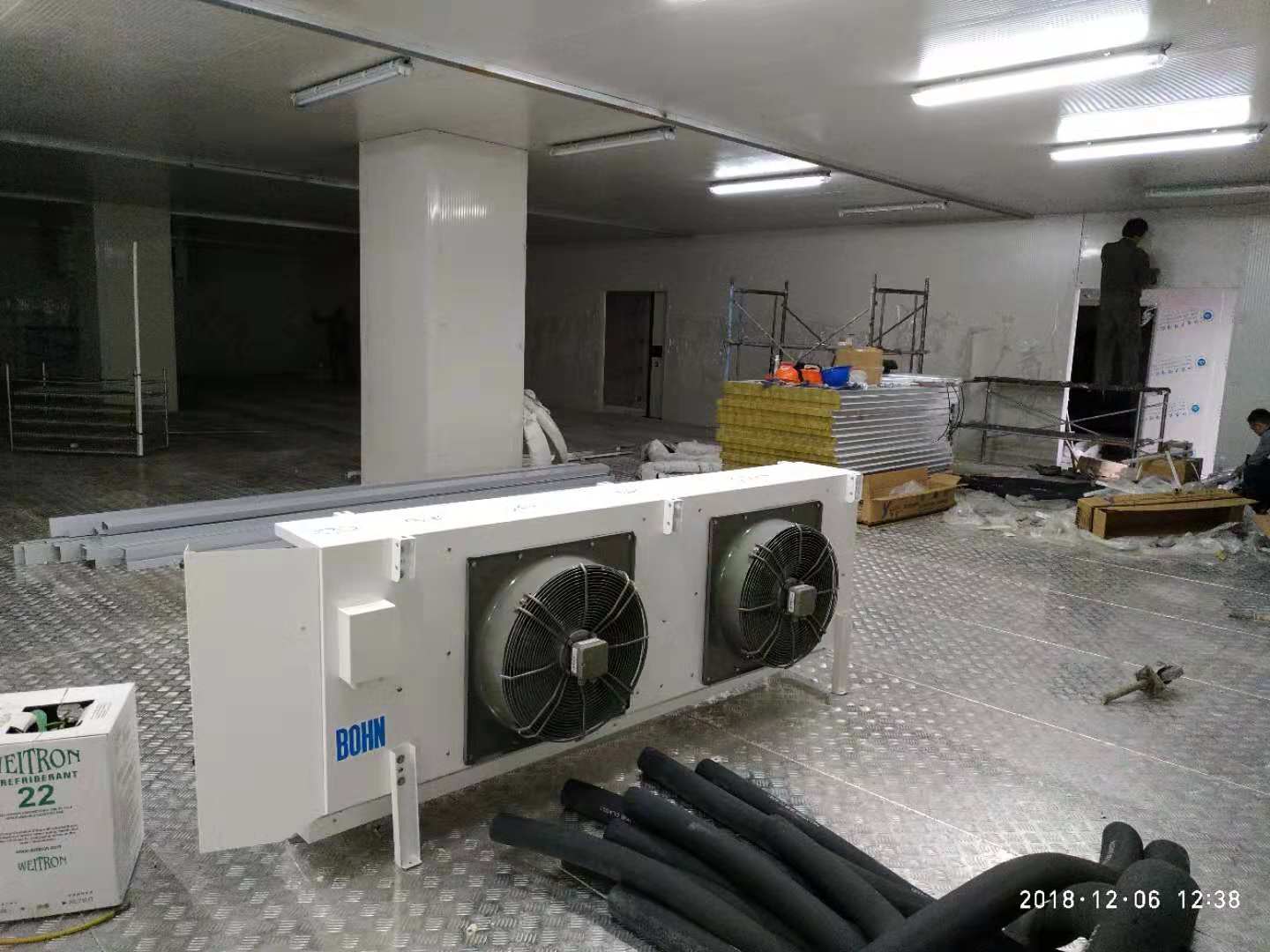
Indoor air coolers are suspended by short 120 mm hangers, mounted as close to the ceiling as possible to save storage space. Two coolers are symmetrically installed above the two long side walls to ensure full air coverage without dead zones.
Piping Construction
TP2 copper tubes are used for refrigerant piping with brazed joints. After welding, the system undergoes a 2.5 MPa dry nitrogen pressure hold test; a pressure drop ≤0.02 MPa over 24 hours is deemed acceptable.
All pipes are wrapped with 20 mm rubber-plastic thermal insulation and covered with aluminum foil to stop condensation. Condensate drain pipes feature U-shaped water seals and slope outward to prevent cold air leakage.
Electrical System Installation
Power cables are concealed inside galvanized steel conduits, separated from control wiring to avoid electromagnetic interference.
Temperature & humidity sensors are positioned strictly per GSP codes. Six sensors are deployed across the 530 ㎡ warehouse: four at corners, one at the center and one at the air cooler return air outlet. All sensors come with official calibration certificates.
Commissioning & Acceptance
After full installation, sequential tests are carried out: no-load cooling test, full-load stability test, unit switchover test, power failure test and frequent door opening simulation test.
No-load test: Starting at an ambient temperature of 25°C, the warehouse cools down to 5°C within 8 hours. After 24-hour stable operation, all measuring points range from 4.2°C to 5.0°C with a maximum temperature difference of 0.8°C, satisfying uniformity requirements.
Full-load test: Simulated goods are stacked to 80% of total capacity and run continuously for 72 hours with data logged every 30 seconds. Temperature fluctuation is limited within ±0.7°C with no out-of-limit records.
Unit switchover test: After manually shutting down the primary unit, the standby unit starts automatically within 52 seconds; peak temperature rise during switchover is only 0.4°C, staying below warning thresholds.
Power failure test: The UPS takes over seamlessly after mains cut-off, supporting 4.5 hours of uninterrupted monitoring with intact data and fully functional alarms.
Door opening test: After the door stays fully open for 10 minutes then closes, temperature rises by 1.2°C and recovers to setpoint within 14 minutes of unit operation.
Acceptance Procedure
The contractor completes self-inspection and issues a self-check report first. A metrology-certified third-party institute is then commissioned to conduct official GSP temperature mapping validation and release a formal report.
Finally, the client organizes a joint acceptance team from engineering, warehousing and quality departments to verify equipment documents, construction records and validation reports, and test all functions on site. Confirming full compliance with design and regulatory standards, the project passed final acceptance officially on December 26, 2025.
Validation Results
The GSP temperature validation report issued by a third-party institute confirms that all test items including no-load operation, full-load operation, door-opening simulation and power-off heat preservation meet regulatory standards. The warehouse temperature is stably maintained between 2°C and 8°C with temperature uniformity ≤1°C. The data sampling frequency, data retention period and alarm functions of the temperature & humidity monitoring system all comply with requirements specified in the GSP appendix. The project passed validation on the first attempt with no rectification items required.
Actual Operational Performance
By June 2019, six months after commissioning, the refrigeration and monitoring systems had run continuously without malfunctions. Warehouse temperature fluctuations were consistently controlled within ±0.8°C with no over-limit incidents. The temperature and humidity monitoring system achieved a 100% complete data record rate, and the alarm system operated normally with no false or missed alerts.
The two refrigeration units ran in alternating mode, with each unit operating approximately 8 hours per day on average. The measured daily power consumption per cubic meter stood at 0.12 kWh/m³, representing a 22% energy reduction compared with the client’s original aging cold storage, matching the designed energy efficiency target.
Project Benefits
Storage Capacity
The total storage volume expanded from the original 600 m³ to 1590 m³, fully satisfying the company’s current refrigerated pharmaceutical storage demand. Third-party cold storage rental is no longer needed, cutting annual outsourcing warehousing costs by around 380,000 RMB and eliminating quality control risks arising from repeated drug transfers.
Warehouse Management
The automated temperature and humidity monitoring system replaced the previous manual scheduled inspection routine, lowering daily workload for warehouse staff. The system automatically generates GSP-compliant temperature and humidity reports that can be exported directly for regulatory audits, lifting warehouse management efficiency by roughly 40%.
Regulatory Compliance
The cold storage fully satisfies GSP standards for refrigerated drug warehousing and enabled the company to pass the Drug Business License renewal inspection at one time. It avoids operational penalties caused by non-compliant storage conditions. Meanwhile, the stable temperature-controlled environment guarantees pharmaceutical storage quality and cuts drug scrappage losses.
No matter your industry, no matter how complex your refrigeration needs, XNAIR Cold Storage can provide you with customized, energy-efficient solutions. Contact us now to start your successful project!
Contact XNAIR Cold Storage Now →Hedong Canteen Cold Storage Project at East China Normal University: Customized catering cold storage solution with German Bitzer system, -18℃ and 2-8℃ dual-temperature zones, energy-efficient design...
View Details →Shanghai XNAIR builds climate-resilient seed cold storage for Wuwangnong Seed in Lishui, maintaining 0-10℃ stability at 43℃ ambient with 48hr backup power, ensuring genetic resource security....
View Details →XiangNing Cold Storage provided EPC solutions for Hetian Eheng's agricultural cold chain logistics center in Pishan County, including thermal insulation materials, installation, and intelligent contro...
View Details →Shanghai XNAIR delivers 5-10℃ adjustable cold storage for Xihekang's semiconductor silicone raw materials in Xuhui, using Embraco compressors and modular design to ensure material stability for el...
View Details →Shanghai Haohai Biotech's 2024 pharmaceutical cold storage project, featuring German Bitzer refrigeration & Schneider control systems, meets GMP/ISO standards for high-precision medical storage....
View Details →Shanghai XNAIR delivers fire-resistant 0-5℃ tobacco leaf cold storage for Jiangxi Tobacco Research, using German GEA refrigeration and B1-grade insulation to meet agricultural research & food safe...
View Details →Phone
+86 180 1742 6215Tel
Shanghai XiangNing Electromechanical Equipment Co., LTD XML