Shanghai XNAIR Refrigeration designed a GSP/GMP-compliant pharmaceutical cold storage (2~8°C) for Zhejiang Lanyi Pharmaceutical, featuring dual-power switching, 24/7 temp/humidity control, and SMS
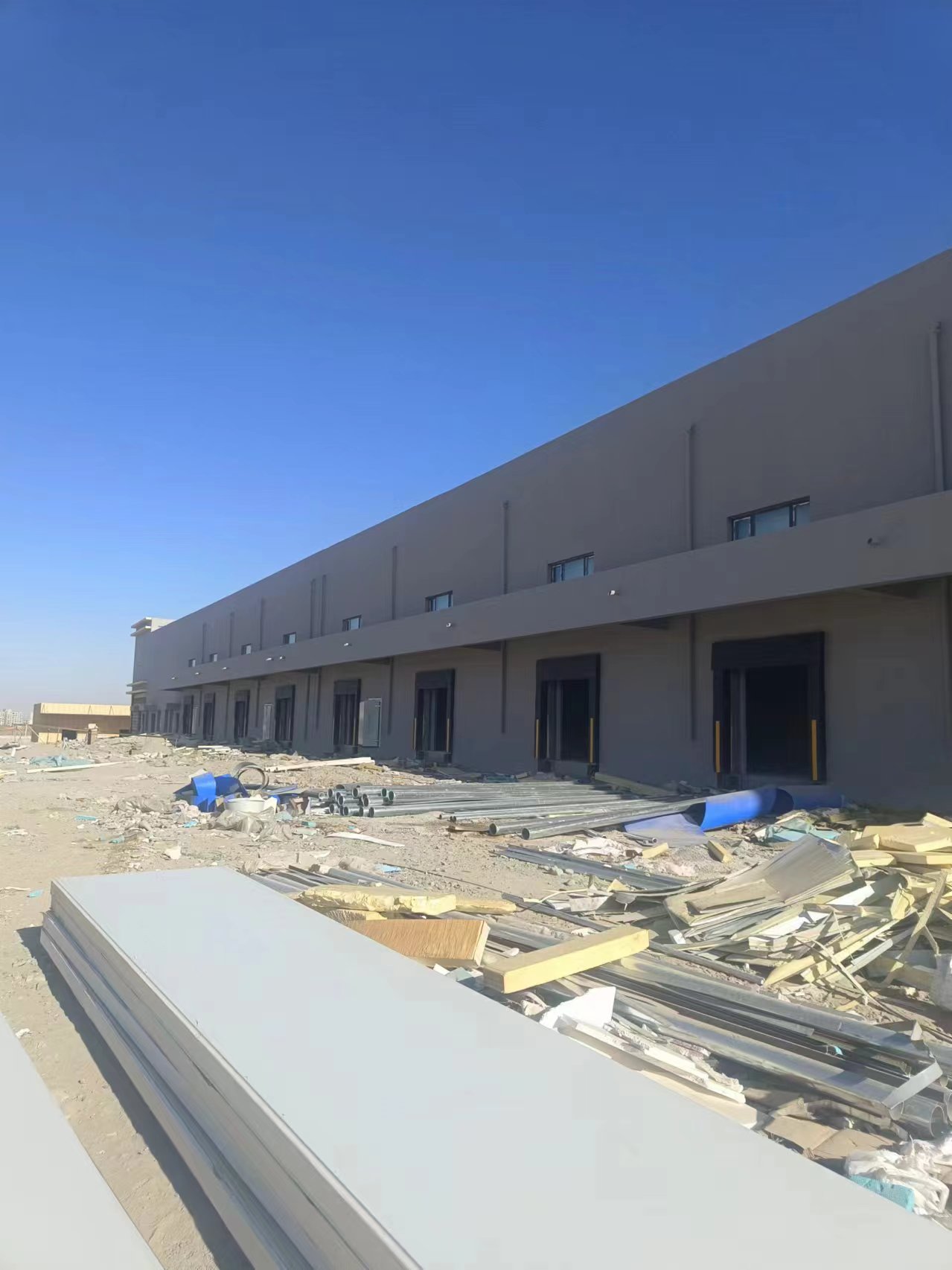
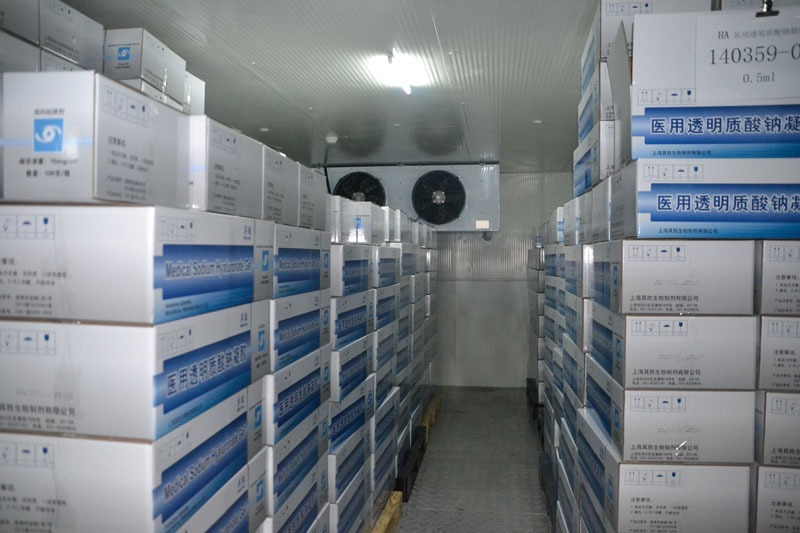
This project sits within Guigu Park Industrial Zone, Jiashan County, Zhejiang Province. We built a finished drug cold storage warehouse for Zhejiang Lanyi Pharmaceutical Co., Ltd. with a total volume of 3,500 m³. The design temperature range is 2–8°C, and the controlled relative humidity is 35%–75% RH. Construction broke ground on October 10, 2025, with a 55-day construction timeline. The project scope covers warehouse insulation system, refrigeration system, electrical automatic control system as well as temperature and humidity monitoring system. It is fitted with an automatic dual-power transfer switch and SMS alert triggers for out-of-spec temperature and humidity values. The facility successfully passed third-party GSP temperature & humidity validation, supporting large-volume storage of the company’s cold-stored pharmaceuticals including injections and probiotic preparations.
Zhejiang Lanyi Pharmaceutical is a pharmaceutical enterprise specializing in the R&D, production and manufacturing of chemical pharmaceutical preparations and microecological biological products, with its products distributed through pharmaceutical circulation channels across more than 20 provinces and municipalities in China. Following the company’s capacity expansion in recent years, its original outdated cold storage warehouse with a volume of 1,200 cubic meters faces a storage capacity shortage of over 60%. In addition, the old warehouse is only equipped with a single power supply circuit and one refrigeration unit without redundant backup systems. Its maximum temperature control deviation reaches 1.8°C, which fails to meet the uniformity and traceability requirements for pharmaceutical cold chain warehousing stipulated in the latest version of GSP (Good Supply Practice), posing quality risks of unstable drug potency.
A new 3,500-cubic-meter cold storage warehouse is constructed for this project, mainly used to store injections, probiotic API (Active Pharmaceutical Ingredients) and finished biological products that require storage at 2–8°C. The construction objectives are as follows: complete functional zoning planning within the limited space of the existing factory building; restrict indoor temperature fluctuation within ±1°C; build dual-redundancy power supply and refrigeration systems; establish a complete system of compliance validation documents to support the company’s finished product turnover demands for the next three years, and ensure smooth passing of the annual on-site GSP inspection.
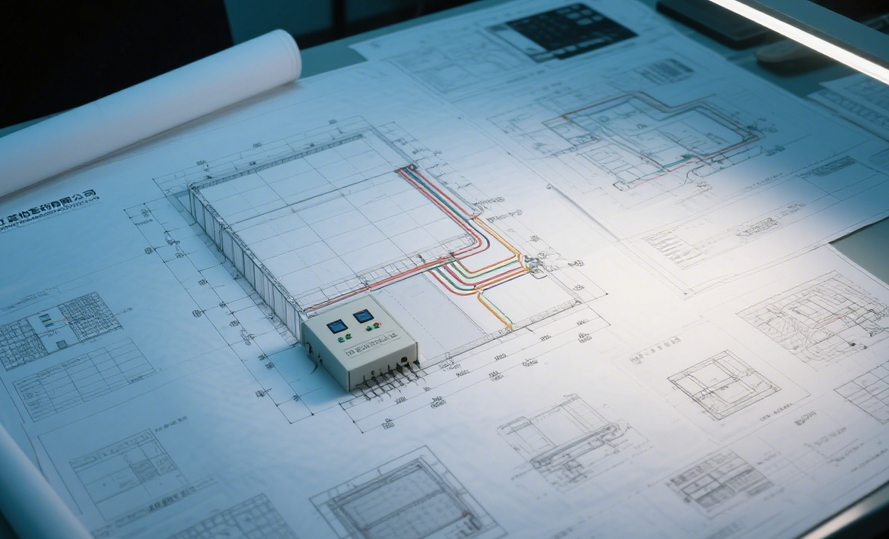
The available depth inside the renovated factory building is merely 28 meters. In compliance with GSP standards, four independent functional zones must be designated: quarantine zone, qualified product zone, non-conforming product zone, and shipment review zone. Meanwhile, a 3-meter-wide forklift passage and equipment maintenance space need to be reserved. A conventional layout design would reduce effective storage volume by over 15%, failing to hit the client’s storage capacity target. Striking a balance between regulatory compliance and storage space utilization within the fixed building footprint constitutes the core difficulty of the warehouse layout design.
Per the appendices of the Good Supply Practice for Pharmaceutical Products, temperature readings at all monitoring points inside cold storage warehouses must remain steadily within the 2–8°C range with a temperature uniformity deviation no greater than 1°C. Temperature and humidity data must be continuously traceable and retained for a minimum of 5 years, as required by Hainan Provincial Administration for Market Regulation.Air distribution systems adopted in standard civilian cold storage facilities can only limit temperature differentials to around 2°C, falling short of pharmaceutical-grade precision. Temperature deviations at structural columns or blind spots under racks inside the warehouse will directly result in failed validation and bring risks of partial drug deterioration.
The National Medical Products Administration explicitly mandates that warehouses for refrigerated pharmaceuticals must be fitted with dual-circuit power supply systems or backup generators to prevent refrigeration shutdown caused by power outages.For this project, the client requires that refrigeration units and monitoring systems must not activate shutdown protection during switchover between two municipal power supplies, with the switchover latency controlled within hundreds of milliseconds. Excessively long switchover delays that trigger compressor shutdowns will push warehouse temperature above compliance thresholds during restart, potentially causing scrappage of entire batches of medicines. An interface for backup generators is also reserved to address extreme scenarios where both municipal power circuits fail simultaneously.
The lease contract for the client’s original cold storage warehouse expires in mid-December 2025. The project must finish construction, commissioning and third-party validation within 55 days, representing a 20% shorter timeline compared to projects of equivalent scale.Moreover, the construction zone sits inside the client’s production plant. Equipment delivery, pipeline welding and material stacking must not disrupt regular logistics flow in production workshops. Refined scheduling of daily working hours and material entry routes is required to eliminate cross-interference between construction and manufacturing activities.
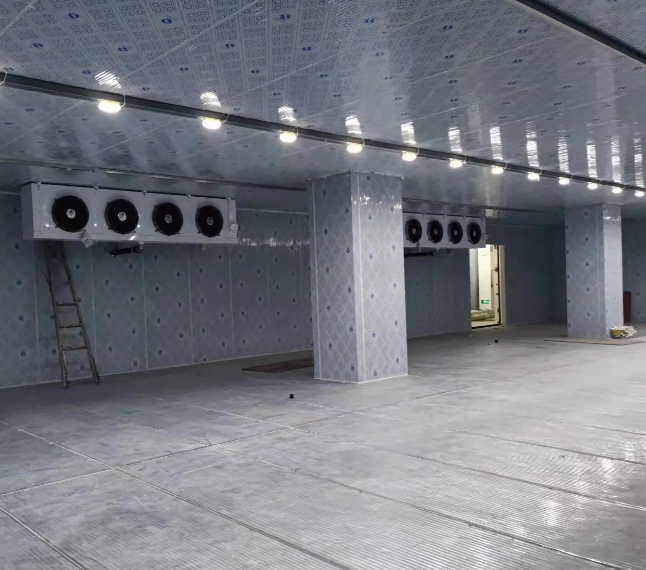
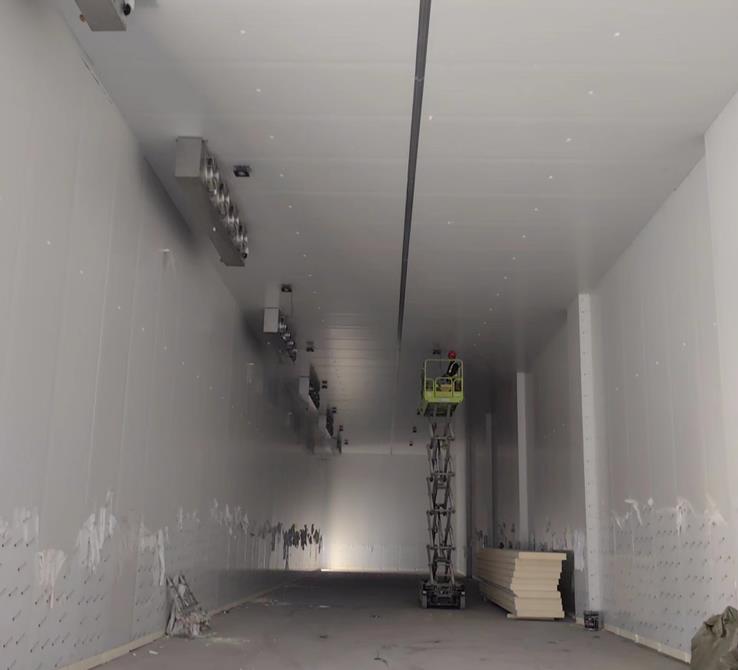
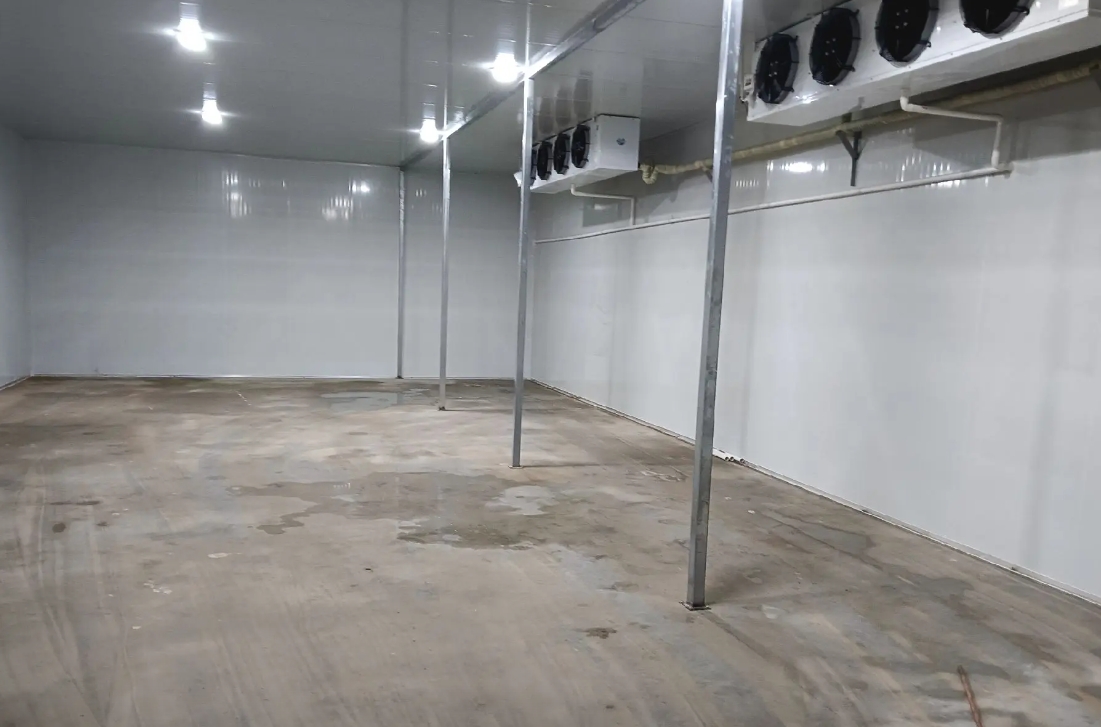
In terms of temperature control logic, a top-air-supply and side-air-return air distribution layout is adopted. Six ceiling-mounted air coolers are evenly arranged along the longitudinal direction of the warehouse, with air return outlets installed at the lower wall corners. Forced air circulation eliminates temperature stratification around structural columns and rack blind spots. Electronic expansion valves adjust refrigerant flow in real time, limiting the temperature difference across all monitoring points to within 0.9°C under full-load conditions. An independent dehumidification module is equipped for humidity control to counter high humidity during the plum rain season, steadily maintaining relative humidity (RH) between 40% and 65%.
The refrigeration system features a primary-standby dual-unit configuration. A single 20HP Bitzer piston compressor can fully meet the cooling demand under full load. The two units alternate startup and shutdown during daily operation to reduce wear on individual equipment. Built-in automatic fault switching logic enables the standby unit to start and connect to the refrigeration circuit within 30 seconds if the operating unit malfunctions (such as abnormal pressure or overload), requiring no manual intervention throughout the process.
The redundant power supply system uses Schneider PC-class automatic transfer switches connected to two independent municipal power circuits. The switchover time is ≤100 ms, far shorter than the power-off protection delay of the refrigeration unit electrical control system. Units keep running during power switching without obvious warehouse temperature fluctuations. An emergency generator interface is reserved on the main distribution box for quick connection of backup power if both municipal power supplies fail, ensuring power supply for refrigeration and monitoring systems under extreme operating conditions.
| Equipment Name | Brand & Model | Core Function |
|---|---|---|
| Semi-hermetic Piston Refrigeration Compressor | Bitzer 4NES-20 | Provides power for the refrigeration cycle; 2 units (1 primary, 1 standby). Single unit cooling capacity satisfies full-load storage requirements at 2–8°C |
| Air-cooled Condensing Unit | Integrated matching Bitzer unit | Integrates condenser, liquid receiver and oil separator to realize refrigerant heat dissipation and circulation; 2 sets in total |
| High-efficiency Ceiling-mounted Air Cooler | Condato S3HC Series | Delivers forced convection heat exchange inside the warehouse; 6 units deployed to guarantee temperature uniformity |
| PLC Electric Control System | Siemens S7-1200 | Manages unit startup/shutdown logic, closed-loop temperature & humidity regulation, fault alerts and data storage |
| Automatic Dual Power Transfer Switch | Schneider WATSN Series (PC-class) | Enables seamless switchover between two municipal power supplies within ≤100 ms to ensure uninterrupted power supply |
| Temperature & Humidity Sensor | Rotronic HC2A | 12 sensors total, installed in all functional zones, entrances/exits and blind spots per GSP standards with ±0.1°C precision |
| Polyurethane Insulated Sandwich Panel | 150mm double-sided color steel plate, Class B1 flame retardant | Forms warehouse enclosure; thermal conductivity ≤0.022 W/(m·K) to minimize cold loss |
| Industrial SMS Alarm Module | Custom terminal | Sends alert SMS messages to 3 designated administrators upon temperature/humidity overruns, equipment faults or power switching events |
Prior to installing insulation panels, the ground moisture barrier is laid and leveled. Wall panels are connected via plug-in joints, with polyurethane foam injected into all panel gaps. Angle steel reinforces connections between ceiling and wall panels, and neutral silicone sealant is applied externally to all seams to guarantee warehouse airtightness. A 3mm thick anti-slip patterned steel plate is laid over the ground insulation layer to withstand forklift loads and prevent insulation compression damage.
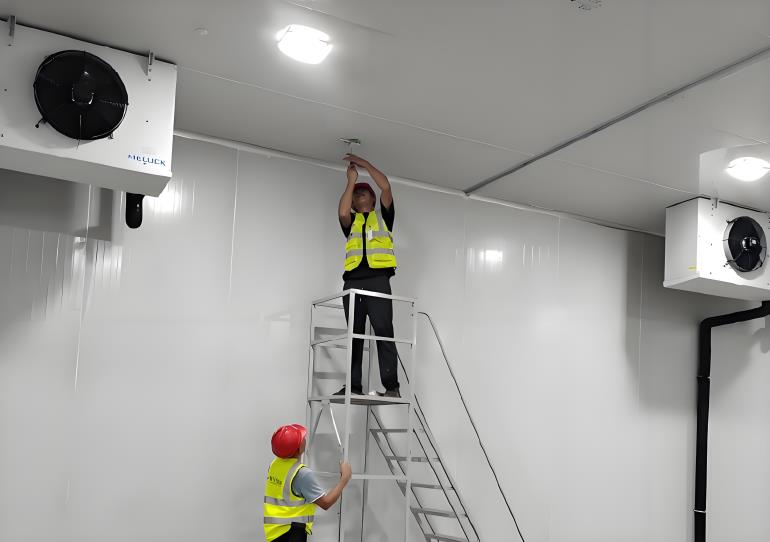
For refrigeration equipment installation, outdoor compressor units are fixed on section steel shock-absorbing bases with a minimum 80cm maintenance clearance reserved. Indoor air coolers are hung with corrosion-resistant suspension rods and calibrated by level gauges to limit installation deviation within 2mm. Seamless copper tubes are used for refrigeration piping joined by silver brazing. After pipe installation, 1.6MPa nitrogen is filled for a 24-hour pressure hold test; a pressure drop ≤0.02MPa qualifies the pipeline. Passing the pressure test is followed by vacuum pumping down to -0.1MPa, held for 2 hours with no pressure rebound. Finally, pipes are wrapped in 20mm thick rubber-plastic insulation cotton to prevent condensation.
Electrical systems are routed through galvanized cable trays, with power and signal cables separated in independent troughs to avoid electromagnetic interference. Explosion-proof LED cold storage lamps are deployed for indoor lighting to adapt to low-temperature and high-humidity environments. All grounding resistance tests register ≤4Ω, complying with electrical safety codes.
Commissioning proceeds in three phases: no-load, half-load and full-load, each running continuously for 72 hours while temperature and humidity data are synchronously collected from all 12 monitoring points.
No-load phase: Verify unit cooling rate and temperature uniformity in an empty warehouse
Half-load phase: Test temperature control stability under 50% inventory load
Full-load phase: Place simulated cargo at actual stacking heights to validate temperature deviation under the most adverse operating conditions
Three core functional tests are conducted:
Unit fault switching test: Simulate high-pressure faults on the active unit to verify standby unit startup time and warehouse temperature rise range
Dual power switching test: Cut off the primary power supply to record switchover duration and unit operating status
Alarm trigger test: Simulate temperature/humidity threshold overruns to check SMS alert delay and notification accuracy
The acceptance workflow follows this sequence: internal self-inspection → temperature & humidity validation by a third-party metrology institute → overall project completion acceptance. A full set of documents is handed over simultaneously, including as-built drawings, equipment manuals, calibration certificates, validation reports and operation & maintenance handbooks. All documents meet GSP filing standards.
The GSP validation report issued by a third-party metrology institute indicates that during 72 consecutive hours of full-load operation, temperatures at all 12 monitoring points in the warehouse remained within 2.2–7.7°C. The temperature uniformity was controlled at ≤0.9°C with temperature fluctuation limited to ±0.7°C; relative humidity stayed steady between 42% and 63% RH. All indicators fully comply with the requirements of the Good Supply Practice for Pharmaceutical Products.
In the dual power switchover test, the actual switchover time recorded was 72 ms. No shutdown protection was activated on the refrigeration units, and the warehouse temperature fluctuation during switching was ≤0.1°C, eliminating any compliance risks.
In the three months since project handover and commissioning, the refrigeration system has maintained stable operation. The two units alternate operation on a daily basis with 5 to 6 startup-shutdown cycles per day, keeping equipment wear and tear within a reasonable range.
The temperature and humidity monitoring system delivers stable data transmission with a 5-minute collection interval. All data is backed up both locally and on the cloud for traceable inquiries. During operation, one brief outage occurred on a single municipal power circuit; the dual power supply system completed automatic switchover without manual intervention, and warehouse temperatures never exceeded regulatory thresholds.
The effective storage volume of the new warehouse is 2.1 times larger than that of the original cold storage facility. It can accommodate the company’s finished product storage demands over the next three years, eliminating the need to rent additional external cold chain warehouses and cutting annual rental expenses by approximately RMB 280,000.
The warehouse’s functional zoning and material flow layout fully align with GSP management standards. Integrated with the WMS (Warehouse Management System), the warehouse enables refined control over drug batches and expiry dates, boosting inbound and outbound handling efficiency by 32%.
The complete dual-redundancy design and standardized compliance validation system allowed the enterprise to pass the annual GSP inspection in a single review, significantly lowering quality risks of drug scrappage and expenses incurred by compliance rectifications.
No matter your industry, no matter how complex your refrigeration needs, XNAIR Cold Storage can provide you with customized, energy-efficient solutions. Contact us now to start your successful project!
Contact XNAIR Cold Storage Now →Hedong Canteen Cold Storage Project at East China Normal University: Customized catering cold storage solution with German Bitzer system, -18℃ and 2-8℃ dual-temperature zones, energy-efficient design...
View Details →Shanghai XNAIR builds climate-resilient seed cold storage for Wuwangnong Seed in Lishui, maintaining 0-10℃ stability at 43℃ ambient with 48hr backup power, ensuring genetic resource security....
View Details →XiangNing Cold Storage provided EPC solutions for Hetian Eheng's agricultural cold chain logistics center in Pishan County, including thermal insulation materials, installation, and intelligent contro...
View Details →Shanghai XNAIR delivers 5-10℃ adjustable cold storage for Xihekang's semiconductor silicone raw materials in Xuhui, using Embraco compressors and modular design to ensure material stability for el...
View Details →Shanghai Haohai Biotech's 2024 pharmaceutical cold storage project, featuring German Bitzer refrigeration & Schneider control systems, meets GMP/ISO standards for high-precision medical storage....
View Details →Shanghai XNAIR delivers fire-resistant 0-5℃ tobacco leaf cold storage for Jiangxi Tobacco Research, using German GEA refrigeration and B1-grade insulation to meet agricultural research & food safe...
View Details →Phone
+86 180 1742 6215Tel
Shanghai XiangNing Electromechanical Equipment Co., LTD XML