Shanghai XNAIR builds Taizhou's first semiconductor-grade cold storage with -10℃~0℃ flexibility and HEPA 14 filtration for Mingxin Microelectronics, ensuring raw material stability for power devic
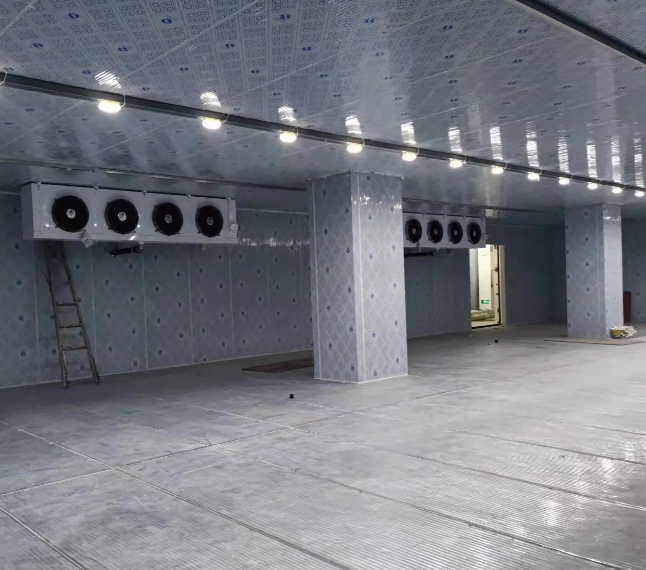
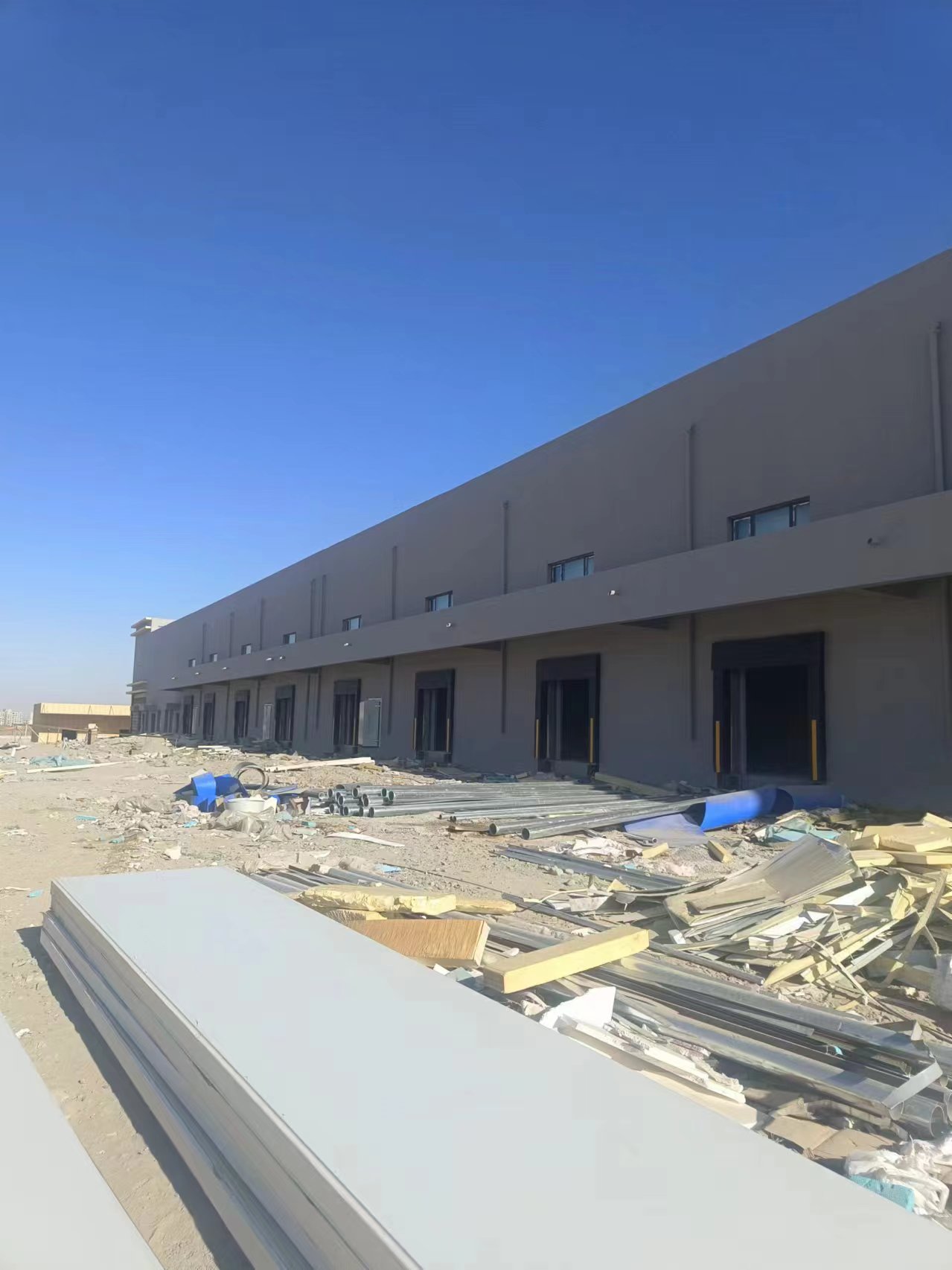
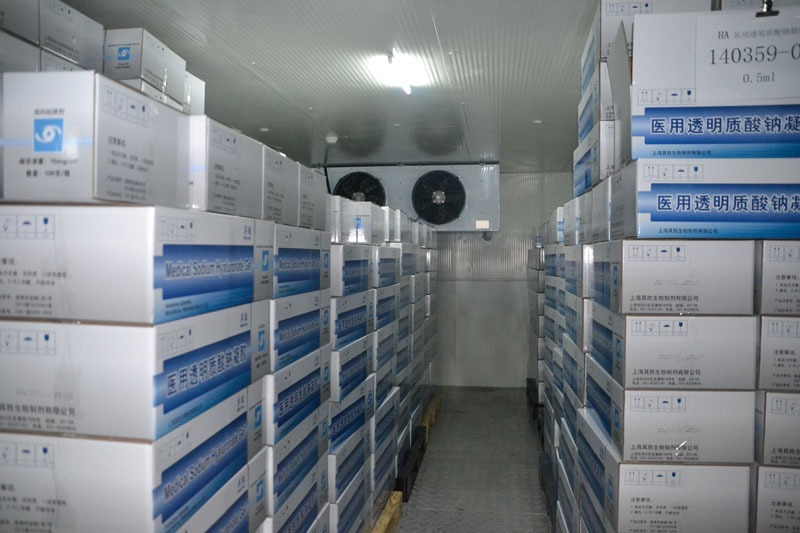
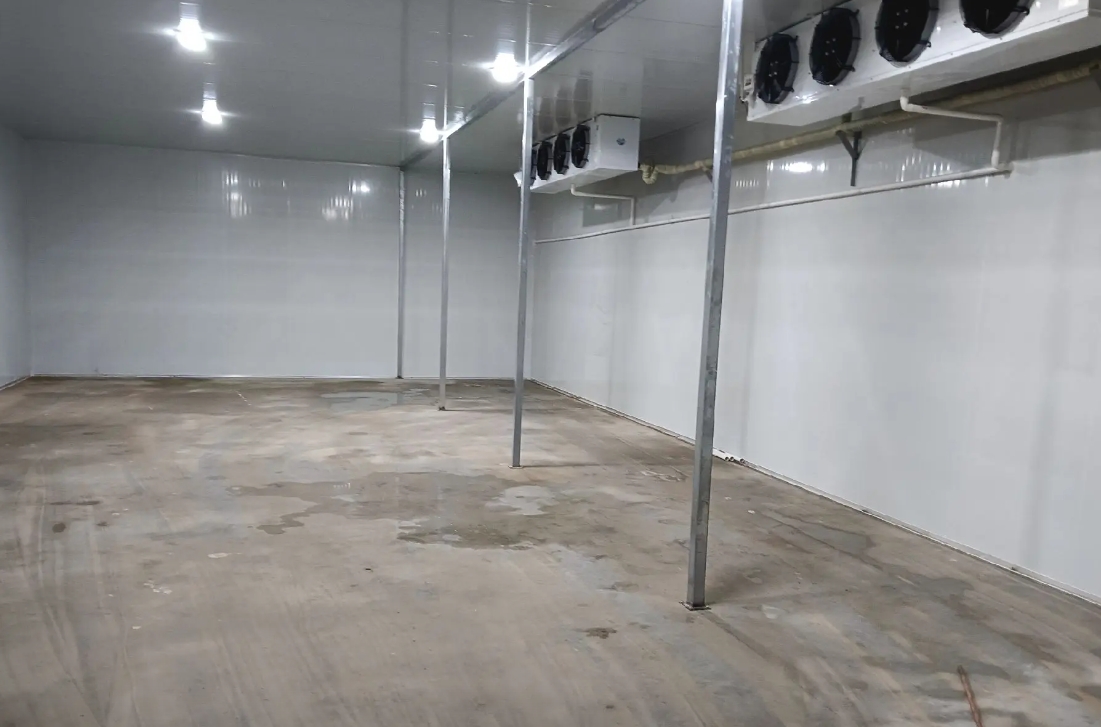
This project is located in Taizhou, Zhejiang Province, serving Mingxin Microelectronics, a manufacturer of semiconductor devices. We constructed a new 917-cubic-meter clean cold storage with multiple independently adjustable temperature zones ranging from -10°C to 0°C, and the entire warehouse meets ISO Class 8 cleanliness standards. XNAIR delivered a full turnkey solution covering design, construction and commissioning within a total 45-day construction schedule. The core objective is to meet the low-temperature clean storage requirements for semiconductor production materials including photoresists and low-temperature electronic pastes, supporting the capacity expansion of the company’s 12-inch packaging line.
Project Background
Mingxin Microelectronics is a local Taizhou manufacturer specializing in power semiconductor packaging and testing. Its core operations include wafer thinning, plastic encapsulation and finished product testing, with products widely adopted in industrial control and consumer electronics. Following the launch of its new packaging production line in 2024, the company’s consumption of materials such as photoresists, electronic-grade epoxy resin and low-temperature storage conductive silver paste surged by 120% year-on-year.
These semiconductor materials have extremely stringent storage environment requirements. Any temperature fluctuation beyond permissible limits or excessive airborne particles will degrade material performance and directly reduce the yield of packaged components. The company’s original ordinary low-temperature warehouse suffered insufficient storage capacity and failed to meet cleanroom classification standards for production. Critical raw materials had to be circulated via third-party cold chain warehouses, which brought high logistics costs, long material delivery lead times and complicated batch traceability. To address these pain points, the enterprise decided to build an on-site clean cold storage complying with semiconductor industry standards for centralized low-temperature material storage and standardized management.
Key Challenges
Challenge 1: Integrated Delivery of Cleanroom & Refrigeration Systems Within a Tight Timeline
The overall project timeline is limited to only 45 days, requiring simultaneous construction of the cleanroom enclosure, installation of refrigeration equipment, and deployment of electrical and monitoring systems. Cross-working of multiple processes demands highly sophisticated construction scheduling. Cleanroom panel installation has strict limits on on-site dust and humidity, while refrigeration pipe brazing and equipment hoisting tend to generate airborne dust. Poor process coordination will not only delay the schedule but also compromise the airtightness and cleanliness of the finished clean cold storage.
Challenge 2: Compatibility Between Low-Temperature Operation & ISO Class 8 Cleanliness Standards
Conventional cleanrooms mostly operate at ambient temperature, whereas this warehouse maintains a minimum temperature of -10°C, greatly raising difficulties in air distribution and contamination control under cryogenic conditions. Air supply from cooling units can disrupt laminar clean airflow. In addition, water droplets and frost particles generated from defrosting evaporator fins act as particle contaminants. Large temperature differentials between the interior and exterior of return air ducts also cause condensation and blockages, preventing compliance with cleanliness specifications.
Challenge 3: Independent Precise Temperature Regulation & Minimal Temperature Drift Across Multiple Zones
The project requires independently adjustable temperature zones ranging from -10°C to 0°C, and semiconductor materials mandate temperature fluctuation held within ±0.5°C. Significant heat load discrepancies exist between different temperature zones, which easily trigger temperature overshoot during regulation. Heat ingress from frequent door opening and closing also creates short-term temperature deviations. Standard cold storage temperature control algorithms cannot deliver the required precision.
Challenge 4: Cold Bridge Elimination & Anti-Condensation Design for Low-Temperature Clean Storage
Cold bridges tend to form at joints of 150mm polyurethane insulated panels, pipe wall penetrations and door frames. The maximum temperature difference between indoor and outdoor sides can exceed 30°C, leading to condensation and water seepage on exterior cold bridge surfaces. This not only elevates refrigeration energy consumption but also introduces moisture that impairs warehouse cleanliness. Sealing solutions used for ordinary cold storage fail to satisfy both thermal insulation and cleanroom requirements simultaneously.
| Equipment Name | Brand & Model | Function |
|---|---|---|
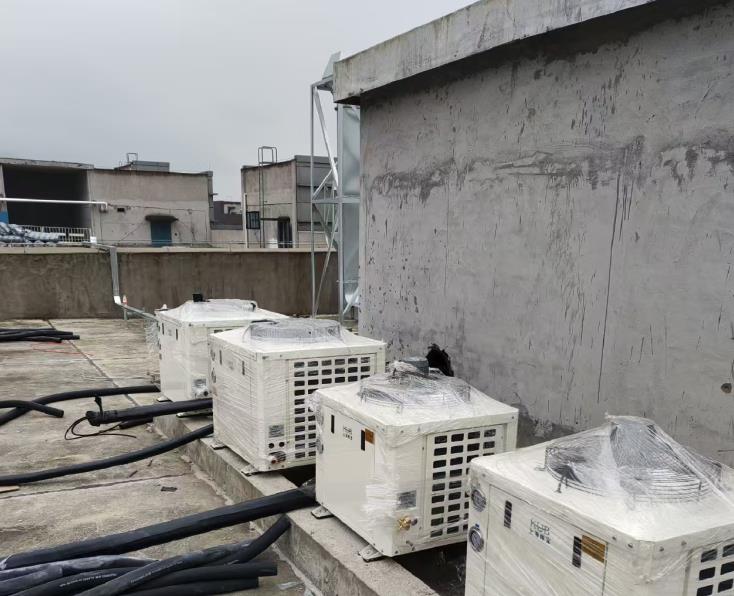
| Piston Condensing Unit | Bitzer 4TES-9Y-40P | Provides power for refrigeration cycles in each zone, suitable for -10°C low-temperature operation |
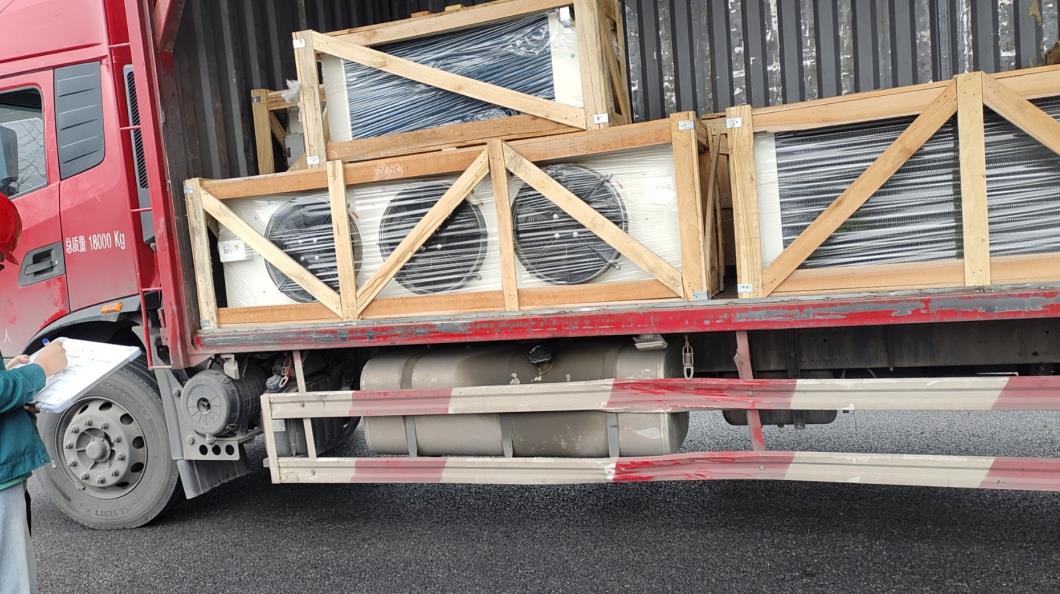
| Ceiling-mounted Cleanroom Air Cooler | Lu-Ve SHC 20-6 | Executes indoor air heat exchange and uniform air supply; stainless steel housing meets cleanroom standards |
| Backup Piston Compressor | Bitzer 4TES-8Y-40P | Takes over operation when primary units break down to sustain stable temperature control |
| PLC Temperature Control Cabinet | Siemens S7-1200 | Collects temperature data, controls unit startup/shutdown and defrost logic, supports remote communication |
| High-efficiency Clean Air Supply Outlet | AAF 595*595-H14 | Filters supply air to maintain ISO Class 8 cleanliness inside the warehouse |
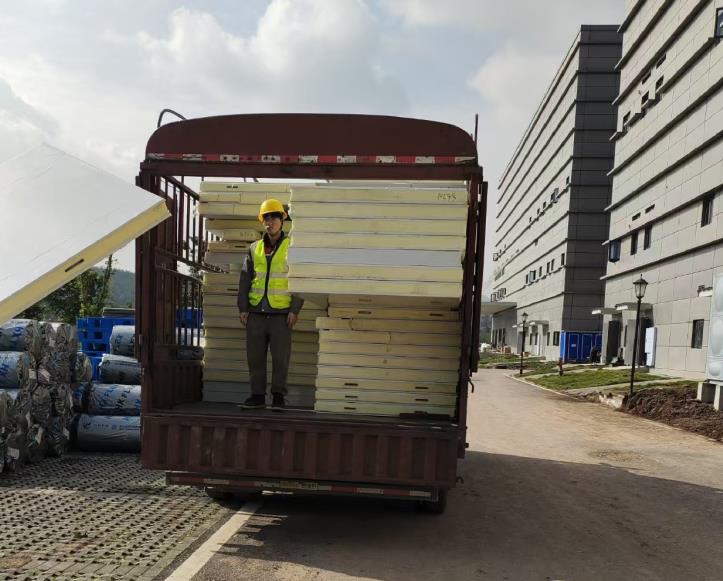
| Polyurethane Clean Insulated Panel | 150mm double-sided 304 stainless steel polyurethane panel | Provides thermal insulation for warehouse enclosure; smooth surface prevents dust buildup for cleanroom use |
Construction Process
Insulation Panel Installation
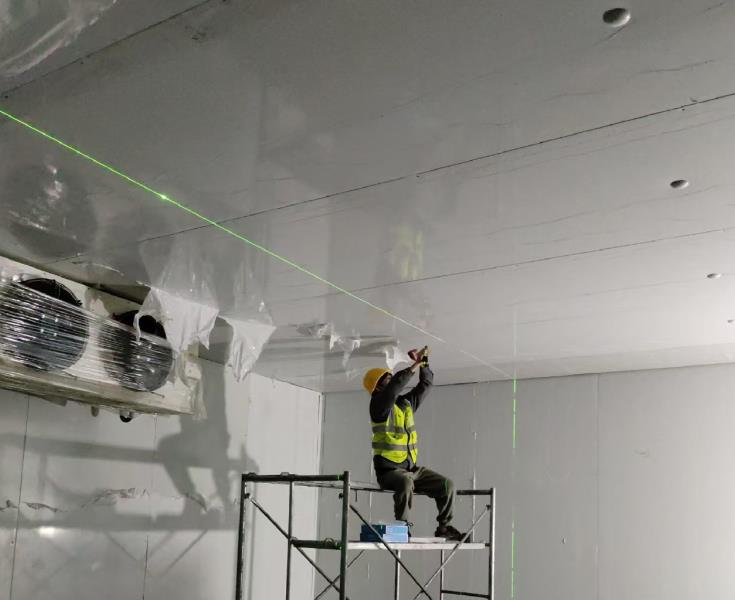
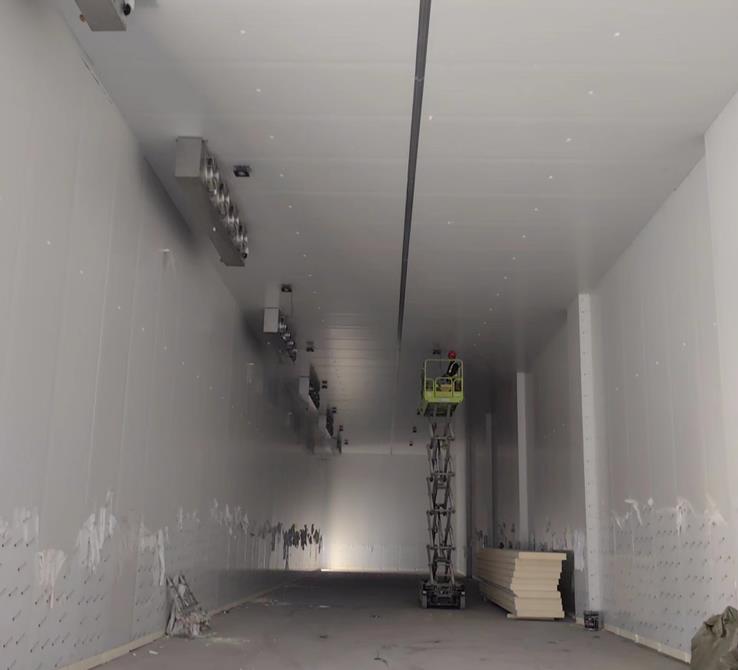
Factory prefabricated 150mm double-sided stainless steel polyurethane clean panels are used for on-site tenon-and-groove assembly. Polyurethane foam fills all panel joints, followed by neutral silicone sealant sealing. A 100mm extruded polystyrene insulation layer and moisture barrier are laid on the ground first, then covered with self-leveling epoxy resin. All internal and external corners are finished with curved aluminum trim to eliminate dust dead zones.
Refrigeration Equipment Installation
Outdoor units are mounted on concrete vibration-damping bases to reduce vibration transmission. Indoor air coolers are suspended with galvanized hangers; foam sealing is applied at junctions between coolers and wall panels to eliminate cold bridges. After piping installation, 2.8MPa nitrogen is injected for a 24-hour pressure retention test; a pressure drop ≤0.02MPa is deemed qualified.
Piping & Electrical Works
Seamless copper tubes are used for refrigeration pipelines connected via nitrogen-filled brazing. Suction lines are wrapped with 20mm rubber-plastic insulation cotton. Power cables and signal cables are routed in separate cable troughs to avoid signal interference. IP65-rated cleanroom LED lights are installed indoors, and 12 temperature sensors are arranged in layers across all temperature zones.
Commissioning & Acceptance
Temperature Testing
Under no-load conditions, the three zones are set to their respective target temperatures and operated continuously for 72 hours. Temperature readings from all monitoring points are logged to verify temperature uniformity and fluctuation range. Door opening/closing cycles of 5 minutes each are simulated to test temperature rise magnitude and recovery duration.
Operational Testing
Simulated loads filling 80% of storage capacity are placed for a 168-hour full-load test. Data including unit start-stop frequency, defrost cycles and energy consumption are recorded. Manual backup unit switchover tests are performed to validate response speed and temperature control performance.
Acceptance Workflow
The construction team completes self-inspection and issues self-test reports
covering pipeline pressure retention, electrical insulation and temperature
data. Joint acceptance is then carried out by the client’s engineering, quality
and production departments to verify equipment configuration and construction
workmanship. On-site cleanliness and temperature performance tests are
conducted. Acceptance documents are signed once all indicators pass, with
operation manuals and maintenance procedures delivered simultaneously.
Validation Results
Temperature validation data shows that during the 72-hour no-load test, temperature fluctuations within all three zones were controlled within ±0.3°C, and the temperature uniformity deviation of all monitoring points in each zone was ≤0.5°C, meeting the temperature control standards for semiconductor material storage. Cleanliness testing demonstrated that under static conditions, the concentration of 0.5μm particles inside the warehouse was lower than 352,000 particles/m³, complying with ISO Class 8 cleanroom criteria.
During the 168-hour full-load operation test, all units ran stably. During the intelligent defrost cycle executed every 8 hours, warehouse temperature rose by no more than 1.2°C and recovered to the set value within 20 minutes. The average switchover response time of the backup unit was 22 seconds, and temperatures returned to the target range within 10 minutes after switching.
Actual Operational Performance
Since the project was put into operation three months ago, temperatures in all zones have remained consistent with daily fluctuations kept within ±0.4°C, with no over-temperature alarms triggered. The remote monitoring system enables real-time viewing of readings at all temperature sensors, unit operating status and fault alerts, and supports one-click export of historical data to satisfy batch traceability requirements for raw materials. All equipment maintains reliable operation with balanced runtime across primary units and zero unexpected malfunctions. Routine maintenance only involves regular cleaning of condenser fins and replacement of filter driers.
Project Benefits
Warehouse Efficiency
Centralized on-site storage of low-temperature semiconductor materials has been realized. Material picking lead time has been cut from 24 hours via external third-party delivery to under 2 hours, lifting material response speed by over 80% while eliminating rental and logistics expenses for off-site cold chain warehouses.
Management Optimization
Automated temperature regulation and data logging have replaced manual patrols and paper-based recording, reducing daily workload for warehouse staff by 40%. Automatically archived temperature data can be directly submitted for quality system audits.
Compliance & Quality
The clean low-temperature storage environment fully conforms to semiconductor industry specifications for raw material warehousing. The scrap rate of materials damaged by substandard storage conditions has dropped by 65% compared with the previous third-party warehouse setup, effectively stabilizing production line yield.
No matter your industry, no matter how complex your refrigeration needs, XNAIR Cold Storage can provide you with customized, energy-efficient solutions. Contact us now to start your successful project!
Contact XNAIR Cold Storage Now →Hedong Canteen Cold Storage Project at East China Normal University: Customized catering cold storage solution with German Bitzer system, -18℃ and 2-8℃ dual-temperature zones, energy-efficient design...
View Details →Shanghai XNAIR builds climate-resilient seed cold storage for Wuwangnong Seed in Lishui, maintaining 0-10℃ stability at 43℃ ambient with 48hr backup power, ensuring genetic resource security....
View Details →XiangNing Cold Storage provided EPC solutions for Hetian Eheng's agricultural cold chain logistics center in Pishan County, including thermal insulation materials, installation, and intelligent contro...
View Details →Shanghai XNAIR delivers 5-10℃ adjustable cold storage for Xihekang's semiconductor silicone raw materials in Xuhui, using Embraco compressors and modular design to ensure material stability for el...
View Details →Shanghai Haohai Biotech's 2024 pharmaceutical cold storage project, featuring German Bitzer refrigeration & Schneider control systems, meets GMP/ISO standards for high-precision medical storage....
View Details →Shanghai XNAIR delivers fire-resistant 0-5℃ tobacco leaf cold storage for Jiangxi Tobacco Research, using German GEA refrigeration and B1-grade insulation to meet agricultural research & food safe...
View Details →Phone
+86 180 1742 6215Tel
Shanghai XiangNing Electromechanical Equipment Co., LTD XML